
A fisherman's life on the high seas: harsh, risky and badly paid

 Eala aiming to finish season with bang after Tokyo exit

 Bournemouth boss Rose vows to be patient with Kroupi
 Eurozone growth holds up despite energy crunch
 انخفاض إجلاء أطفال غزة للعلاج 75% مقارنة بالسنة الأولى للحرب
 الذهب يتراجع مع ارتفاع توقعات زيادة الفائدة الأميركية
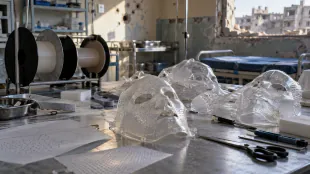 تعطل إنتاج أقنعة علاج الحروق في غزة بسبب نقص المستلزمات

 كيم يدعو إلى تفوق كوري شمالي في تقنيات الطائرات المسيّرة

 ألونسو يكرر انتقاده لمستوى القيادة قبل جائزة المكسيك

 مقتل عامل بمحطة زابوريجيا النووية في هجوم بمسيّرة
 كيف يمنع المرهقون ضغوطهم من إيذاء أقرب الناس إليهم؟

 Thousands of students, workers protest in Italy under heavy security

 New Zealand's Phillips hits sublime century in 87-run win over India

 'Get them there alive': Ukraine's railways under Russian barrage

 Dakar Rally moved to Portugal and Morocco following Houthi attacks in Gulf

 German economy logs 0.2% growth, faster than expected
 Crypto platform Binance confirms 'complex' $6.3 bn hack

 Spanish inflation stays at three-year high before election

 Drugs giant AstraZeneca reveals higher profits, savings plan

 French economy 'headed for a wall' as GDP shrinks

 South Korea to prosecute students cheating with smart glasses
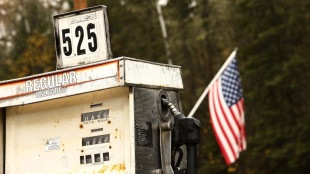 Surging costs of living top US voter concerns

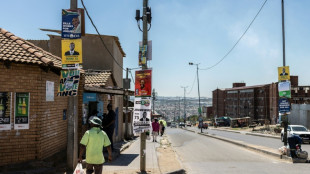 Basic services, fading loyalties loom over South Africa's vote
 Shock, vindication, regret: Scientists react to AI roiling life's work

 Crypto platform Binance confirms $6.3 bn hack

 Boozer shines as Grizzlies top Blazers in battle of NBA unbeatens

"It's very tough, you make a lot of sacrifices and they don't pay you what they should," shrugs Jeronimo Martinez, a fisherman from Marin, home port of the shipwrecked Spanish trawler.
The tragedy -- Spain's worst fishing accident in nearly 40 years which claimed 21 lives and left only three survivors when their ship foundered in stormy waters off Newfoundland -- has thrown into sharp relief the risks and harsh working conditions faced by fishermen.
The death toll has sent shock waves across the northwestern region of Galicia where fishing is hugely important and which accounts for some 10 percent of all of the European Union's fresh fish landings, regional figures show.
Often these deep-sea fishermen will spend months at sea, far from their families.
"You're away for so long: you go out to sea when your child's just been born and when you come back, he's already doing his first communion," jokes Martinez as he takes a coffee at a bar popular with fishermen in Marin.
He used to spend six-month stints at sea fishing for cod off Newfoundland but is currently not working after having a hernia operation.
"For most sailors, the head of the family is the mother, who is the one who's at home. The fathers are all away, working," said the 51-year-old, who is missing part of a finger due to an accident while working on a trawler.
- Long hours, low pay -
"This is what happens when you're a fisherman: you get home and your child doesn't recognise you anymore," agrees Makhtar Diakhate, a retired trawler worker who has lived and worked in Marin since 2004.
Originally from Dakar in Senegal, his job on the high seas means he's only been able to get home to see his wife and kids once a year.
"I felt bad because sometimes stuff happened at home and I couldn't be there to help out," admits Diakhate, who is 64.
In Marin, like at other Galician ports, there are other African and Latin American migrants working the fishing trawlers, most of them from Ghana and Peru.
Onboard the Villa Pitanxo which sank off Canada on Tuesday, there were 16 Spaniards, five Peruvians and three Ghanaians.
"Working at sea is a bit dangerous but you have to do it," shrugs Ghanaian John Okutu, whose uncle Edemon Okutu is one of the missing crew members.
Migrants form an important part of the workforce in a trade that has little appeal for youngsters in Galicia.
Fran Sola, 49, who stopped working on trawlers more than 20 years ago and has since worked as a mechanic, said a crew member can earn around 1,500 euros ($1,700) a month.
"That's why young people don't do it, they prefer to be bricklayers because they earn the same and by 9:00 pm, they're at home with their families," he said.
- Hard work and isolation -
At sea "you have to work every day, 60 hours a week, there is no respect for the workers, you have to do what the boss says," said Sola, who almost lost a finger in one of the trailers heavy doors.
Although fishermen earned a good salary in the past, that is no longer the case.
"Twenty years ago, you would go out to sea and five years later you could buy a house, a car," he said.
Onboard the trawlers, living conditions are cramped with four to eight crew members sharing a room on some boats.
On most boats there is no television reception and Internet and mobile network coverage is patchy, meaning a stint on the high seas can be very lonely.
But although conditions on board are hard, those who have worked on these deep-sea fishing boats say shipwrecks are rare, thanks to the modernisation of trawler fleets.
"You are never completely safe because the sea is the sea," said Martinez.
He would rather not go back on the boats after recovering from his hernia operation.
"I have no desire to return, although I will if I don't have a choice. But I'd rather not go back out to sea because it is very hard," said this father of two young children, aged four and three.
B.Khalifa--SF-PST