Spain, Portugal hit by winter drought

 Villa sign Senegal winger Mbaye from PSG

 Former Peru minister last-minute contender for UN labour agency helm

 Messi legacy will 'live forever', says Beckham
 'Literally tasting the smoke': Malaysians suffer as haze worsens

 Kyiv's defences, 'hybrid' threat from Moscow headline EU talks
 Oil extends gains, stocks mostly down as Trump issues fresh Iran warning

 ThinkMarkets Expands Weekend Trading Offering, Launches Weekend League Competition

 Tibet activists accuse China of downplaying floods
 Afghanistan war victims left 'without justice', UN says

 Iran president offers US olive branch before Putin meeting

 China-Nepal flood toll tops 1,000 as tunnel rescue offers last hope

 Japan to relax overtime regulation under workaholic PM

 Thwarted Niger mutiny exposes junta's Russia dependence

 Illegal mining ravages S.Africa's economic hub

 Nepal's wall of missing offers last hope after Himalayan flood

 US to press G20 on light-touch AI regulation

 2 die in Grand Canyon flash flood, only 1 person unaccounted for

 US Army Secretary Driscoll submits resignation: White House
 Oil extends gains, stocks drop as Trump issues fresh Iran warning

 Tsitsipas says Kyrgios's positive cocaine test 'kind of expected'

 In Japan's mountains, a different way to manage bears

 Middle East war a boon for UAE defence giant with global ambitions
 Former gang member found guilty of murdering Tupac Shakur

 Top-seeded Zverev opens US Open campaign
 US regulator, 22 states accuse Amazon of 'manipulating' ad auctions: lawsuit

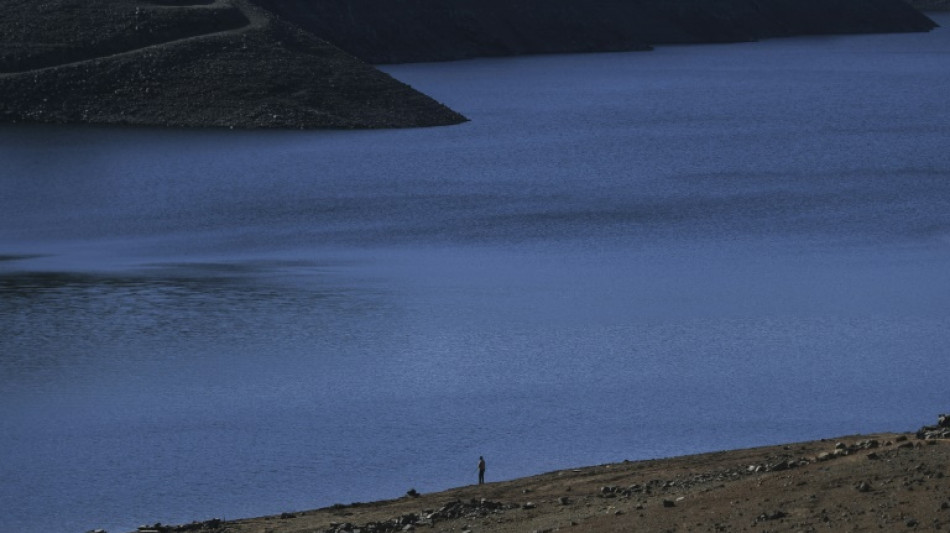
In central Portugal, a sustained drought has revealed the ruins of a village that was totally submerged underwater when a large reservoir was created nearly 70 years ago.
"I have never seen that!" says Carlos Perdigao, 76, as he gazes at the ruined stone houses of Vilar which were swallowed up by the Zezere river when a dam was opened in 1954.
Vilar stands on the banks of the river, surrounded by cracked yellow earth, another sign of the ongoing dry spell during what is normally a rainy winter season, with the drought also hitting neighbouring Spain.
Weather services in both countries say it was the second driest January on record since the year 2000.
The current drought is extraordinary because of "its intensity, scale and length", says climate scientist Ricardo Deus of Portugal's meteorology agency IPMA.
Of Portugal's 55 dams, 24 are only holding half of their water capacity, and five are below 20 per cent, according to the European Union's Copernicus Earth observation service.
The Algarve, Portugal’s southernmost province, and one of Europe's top tourism destinations, is one of those most affected by the drought.
Meanwhile Spain only got a quarter of the precipitation it normally gets in January, said the AEMET weather service.
The dry spell, which began at the end of 2021, is ruining crops, leaving farmers struggling to feed livestock and hampering hydroelectricity production.
- 'It's a disaster' -
Earlier this month, Portugal ordered five of its hydropower dams to suspend water use for electricity production in order to prioritise human consumption.
Nearly 30 percent of Portugal's electricity comes from hydropower dams.
And in Spain, Agriculture Minister Luis Planas on Tuesday said the government was "concerned" about the drought and would adopt the "necessary measures" depending on how the situation evolves.
Spain's water reserves are currently at less than 45 percent of their capacity, officials say, with the southern Andalusia region and Catalonia in the northeast worst hit.
Farmers in both countries are worried.
"Look! The grass isn't growing to feed the animals," says Antonio Estevao, a cheese producer who owns a herd of around 30 goats in Portela de Fojo Machio, a village in central Portugal near the town of Pampilhosa da Serra.
"If it doesn't rain in the coming days, it's going to be very complicated," he sighs, gazing at his drought-stressed pastures.
The lack of rain is also jeopardising the town's efforts to draw tourists inland with a floating pool structure set up for bathers in the Zezere river.
But the pool's plastic lining lies slumped on the ground, with the drought forcing the river to recede.
"For us, it's a disaster," says the town's mayor, Henrique Fernandes Marques.
The same area was badly hit by a wave of wildfires that raged through parched farmlands and forests in 2017, claiming over 100 lives.
- No end in sight -
More frequent and intense droughts are expected to put enormous strain on climate-vulnerable regions as temperatures rise, and will likely heighten the risk of related natural disasters such as wildfires, scientists say.
While the alternation between dry and wet years is normal in southern Europe, "we have observed a decline in the percentage of rainy years lately," said Filipe Duarte Santos, an environment specialist at Lisbon University.
These droughts are "one of the most serious consequences of climate change," he added.
"Until greenhouse gas emissions are drastically reduced, the problem will continue."
The situation is not likely to improve in the coming weeks as forecasters expect rainfall in both countries to be below the seasonal average.
Faced with this reality, the Portuguese government on Thursday said it would boost its cooperation with Spain to fight the drought.
Z.AbuSaud--SF-PST