-
 UK chalks up hottest summer on record for second year running
-
EU official says it's not time to 'normalize' Russia at G20 finance talks

-
 China's Xi visits Egypt as US sanctions threat looms over Iran links
-
RedHill Announces Transformational Acquisition of Commercialization Rights to Ferring’s Rebyota® and Clenpiq®

-
 RISE Robotics Awarded $100,000 MassVentures Grant to Accelerate Commercialization of Beltdraulic Technology
-
TrendEadvisor Launches Global Multi-Asset Platform Combining Online Investing with Social Trading

-
 Global bond sell-off deepens on inflation concerns
-
India's top court drops criminal cases against protesters

-
 Germany's far-right AfD promises 'boom' but economists fear worst
-
Philippine couple married in hip-deep floodwaters

-
 Former England captain Stokes signs for Adelaide Strikers
-
Villa sign Senegal winger Mbaye from PSG

-
 Pakistan selector and ex-captain Misbah resigns after coach sacked
-
Former Peru minister last-minute contender for UN labour agency helm

-
 Shein flattens on Hong Kong debut facing global headwinds
-
Messi legacy will 'live forever', says Beckham

-
 Eurozone inflation hits three-year high at 3.3% in August
-
'Literally tasting the smoke': Malaysians suffer as haze worsens
-
 Man City chase Fernandez, Arsenal eye Alvarez on deadline day
-
Kyiv's defences, 'hybrid' threat from Moscow headline EU talks

-
 El Nino hammering Peru anchovy fishing: industry officials
-
Oil extends gains, stocks mostly down as Trump issues fresh Iran warning

-
 Mass Russian barrage kills 12 in Kyiv
-
ThinkMarkets Expands Weekend Trading Offering, Launches Weekend League Competition

-
 PineX Capital Launches MetaTrader 5 as Prop Firm Expands Trading Platform Offering
-
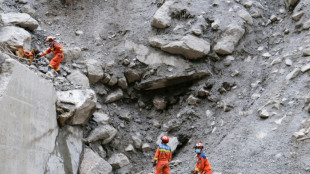
Tibet activists accuse China of downplaying floods
-
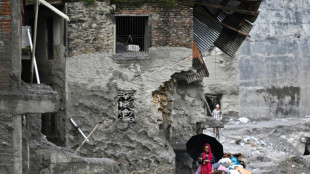 Women survivors face sanitation woes in Nepal relief camp
-
Afghanistan war victims left 'without justice', UN says
-
 Oil extends gains, stocks mixed as Trump issues fresh Iran warning
-
Iran president offers US olive branch before Putin meeting

-
 Thai resort readies for US carrier's 5,000 sailors
-
China-Nepal flood toll tops 1,000 as tunnel rescue offers last hope
-
 AI startup Manus says resumes independent operations
-
Japan to relax overtime regulation under workaholic PM

-
 'Massive' Russian missile, drone attack on Kyiv kills 8
-
Thwarted Niger mutiny exposes junta's Russia dependence

-
 Defence tech hub Munich booms as Europe rearms
-
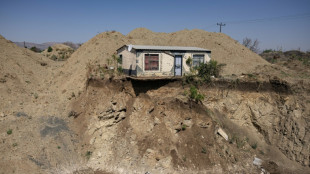
Illegal mining ravages S.Africa's economic hub
-
 Nigeria rethinks criminalisation of suicide
-
Nepal's wall of missing offers last hope after Himalayan flood

-
 Osaka channels NBA icon Iverson to reach US Open second round
-
US to press G20 on light-touch AI regulation

-
 Fast-fashion giant Shein plunges 10% on Hong Kong debut
-
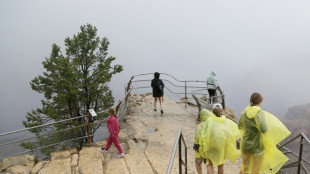
2 die in Grand Canyon flash flood, only 1 person unaccounted for
-
 South Korea hire former Spain boss Moreno as interim coach
-
US Army Secretary Driscoll submits resignation: White House

-
 China-Taiwan friction clouds Pacific summit
-
Oil extends gains, stocks drop as Trump issues fresh Iran warning

-
 Two dead after stabbing in New York's Times Square
-
Tsitsipas says Kyrgios's positive cocaine test 'kind of expected'

'Dangerous' Typhoon Nanmadol slams into Japan
Typhoon Nanmadol made landfall in southwestern Japan on Sunday night, as authorities urged millions of people to take shelter from the powerful storm's high winds and torrential rain.
The storm officially made landfall around 7 pm local time (1000 GMT) as its eyewall arrived near Kagoshima city, the Japan Meteorological Agency (JMA) said.
It was packing gusts of up to 234 kilometres (146 miles) per hour and had already dumped up to 500 mm of rain in less than 24 hours on parts of southwestern Kyushu region.
At least 20,000 people were spending the night in shelters in Kyushu's Kagoshima and Miyazaki prefectures, where the JMA has issued a rare "special warning" -- an alert that is issued only when it forecasts conditions seen once in several decades.
National broadcaster NHK, which collates information from local authorities, said more than seven million people had been told to move to shelters or take refuge in sturdy buildings to ride out the storm.
The evacuation warnings are not mandatory, and authorities have at times struggled to convince people to move to shelters before extreme weather.
They sought to drive home their concerns about the weather system throughout the weekend.
"Please stay away from dangerous places, and please evacuate if you feel even the slightest hint of danger," Prime Minister Fumio Kishida tweeted after convening a government meeting on the storm.
"It will be dangerous to evacuate at night. Please move to safety while it's still light outside."
The JMA has warned the region could face "unprecedented" danger from high winds, storm surges and torrential rain and called the storm "very dangerous."
"Areas affected by the storm are seeing the sort of rain that has never been experienced before," Hiro Kato, the head of the Weather Monitoring and Warning Centre, told reporters Sunday.
"Especially in areas under landslide warnings, it is extremely probable that some kinds of landslides are already happening."
He urged "maximum caution even in areas where disasters do not usually happen."
By Sunday evening, utility companies said nearly 200,000 homes across the region were without power.
Trains, flights and ferry runs were cancelled until the passage of the storm, and even some convenience stores -- generally open all hours and considered a lifeline in disasters -- were shutting their doors.
- 'Highest caution possible' -
"The southern part of the Kyushu region may see the sort of violent wind, high waves and high tides that have never been experienced before," the JMA said Sunday, urging residents to exercise "the highest caution possible".
On the ground, an official in Kagoshima's Izumi city said conditions were deteriorating rapidly by Sunday afternoon.
"The wind has become extremely strong. Rain is falling hard too," he told AFP. "It's a total white-out outside. Visibility is almost zero."
In Kyushu's Minamata city, fishing boats tied up for safety bobbed on the waves, as spray from the sea and bands of rain sluiced the boardwalk.
The storm, which has weakened slightly as it approached land, is expected to turn northeast and sweep up across Japan's main island through early Wednesday.
Japan is currently in typhoon season and faces around 20 such storms a year, routinely seeing heavy rains that cause landslides or flash floods.
In 2019, Typhoon Hagibis smashed into Japan as it hosted the Rugby World Cup, claiming the lives of more than 100 people.
A year earlier, Typhoon Jebi shut down Kansai Airport in Osaka, killing 14 people.
And in 2018, floods and landslides killed more than 200 people in western Japan during the country's annual rainy season.
Scientists say climate change is increasing the severity of storms and causing extreme weather such as heat waves, droughts and flash floods to become more frequent and intense.
Y.Zaher--SF-PST