New Zealand winter warmest, wettest on record / Photo: Sara HOLLYMAN - ANDREW APP/AFP/File

 UK chalks up hottest summer on record for second year running

 China's Xi visits Egypt as US sanctions threat looms over Iran links

 RISE Robotics Awarded $100,000 MassVentures Grant to Accelerate Commercialization of Beltdraulic Technology

 Global bond sell-off deepens on inflation concerns

 Germany's far-right AfD promises 'boom' but economists fear worst

 Former England captain Stokes signs for Adelaide Strikers

 Pakistan selector and ex-captain Misbah resigns after coach sacked

 Shein flattens on Hong Kong debut facing global headwinds

 Eurozone inflation hits three-year high at 3.3% in August
 Man City chase Fernandez, Arsenal eye Alvarez on deadline day

 El Nino hammering Peru anchovy fishing: industry officials

 Mass Russian barrage kills 12 in Kyiv

 PineX Capital Launches MetaTrader 5 as Prop Firm Expands Trading Platform Offering
 Women survivors face sanitation woes in Nepal relief camp

 Oil extends gains, stocks mixed as Trump issues fresh Iran warning

 Thai resort readies for US carrier's 5,000 sailors
 AI startup Manus says resumes independent operations

 'Massive' Russian missile, drone attack on Kyiv kills 8

 Defence tech hub Munich booms as Europe rearms
 Nigeria rethinks criminalisation of suicide

 Osaka channels NBA icon Iverson to reach US Open second round

 Fast-fashion giant Shein plunges 10% on Hong Kong debut
 South Korea hire former Spain boss Moreno as interim coach

 China-Taiwan friction clouds Pacific summit

 Two dead after stabbing in New York's Times Square

New Zealand has experienced its warmest and wettest winter on record, scientists said Friday in the wake of widespread flooding last month on the South Island.
For the third year in a row, New Zealand recorded its warmest winter since temperature records began in 1909.
Researchers at the National Institute of Water and Atmospheric Research said the average temperature nationwide was 9.8 degrees Celsius (49.64 degrees Fahrenheit), which was 1.4 degrees Celsius warmer than average.
Institute scientist Nava Fedaeff said climate change "is strongly contributing to New Zealand's temperature trend".
For the first time, temperatures were more than 1.2 degrees Celsius higher than average in all three winter months.
Of New Zealand's 10 warmest winters on record, six have occurred since 2013.
This winter was also the wettest since rainfall records started in 1971.
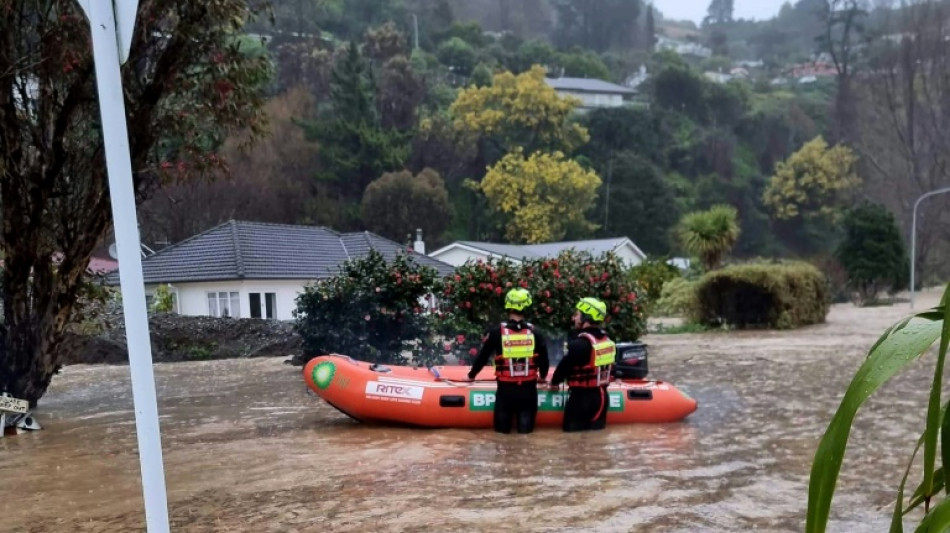
Wild weather battered New Zealand last month, especially on the South Island where widespread flooding led to hundreds of homes being temporarily evacuated.
A phenomenon from the tropics known as an atmospheric river of moisture was to blame for the downpours, which saw states of emergency declared in Nelson, Tasman, the West Coast, and Marlborough.
Fedaeff said New Zealand's wettest winter is the culmination of numerous extreme rainfall events "which affected almost every part of the country at some point".
X.AbuJaber--SF-PST