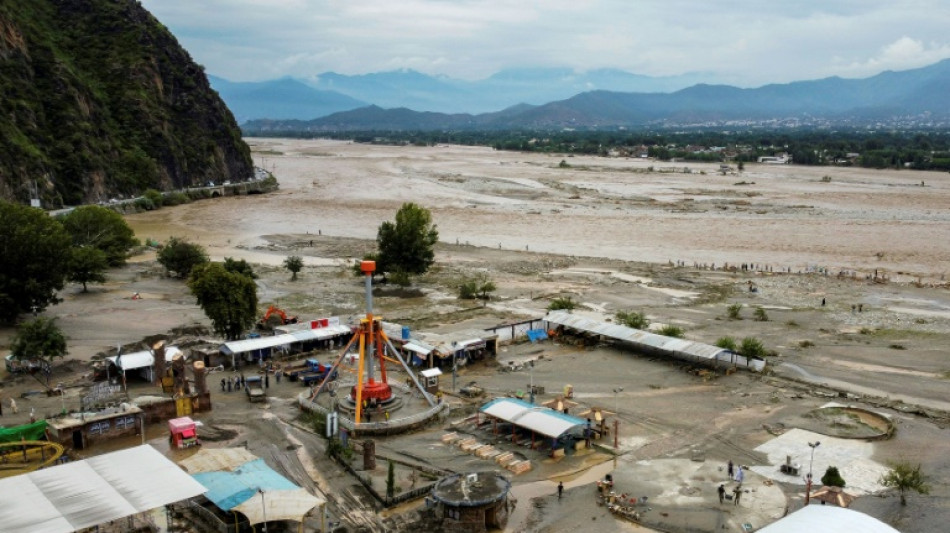
Pakistan orders thousands to evacuate near flood-swollen rivers / Photo: Abdul MAJEED - AFP

 UK chalks up hottest summer on record for second year running

 China's Xi visits Egypt as US sanctions threat looms over Iran links

 RISE Robotics Awarded $100,000 MassVentures Grant to Accelerate Commercialization of Beltdraulic Technology

 Global bond sell-off deepens on inflation concerns

 Germany's far-right AfD promises 'boom' but economists fear worst

 Former England captain Stokes signs for Adelaide Strikers

 Pakistan selector and ex-captain Misbah resigns after coach sacked

 Shein flattens on Hong Kong debut facing global headwinds

 Eurozone inflation hits three-year high at 3.3% in August
 Man City chase Fernandez, Arsenal eye Alvarez on deadline day

 El Nino hammering Peru anchovy fishing: industry officials

 Mass Russian barrage kills 12 in Kyiv

 PineX Capital Launches MetaTrader 5 as Prop Firm Expands Trading Platform Offering
 Women survivors face sanitation woes in Nepal relief camp
 Oil extends gains, stocks mixed as Trump issues fresh Iran warning

 Thai resort readies for US carrier's 5,000 sailors
 AI startup Manus says resumes independent operations

 'Massive' Russian missile, drone attack on Kyiv kills 8

 Defence tech hub Munich booms as Europe rearms
 Nigeria rethinks criminalisation of suicide

 Osaka channels NBA icon Iverson to reach US Open second round

 Fast-fashion giant Shein plunges 10% on Hong Kong debut

 South Korea hire former Spain boss Moreno as interim coach

 China-Taiwan friction clouds Pacific summit

 Two dead after stabbing in New York's Times Square

Thousands of people living near flood-swollen rivers in Pakistan's north were ordered to evacuate Saturday as the death toll from devastating monsoon rains neared 1,000 with no end in sight.
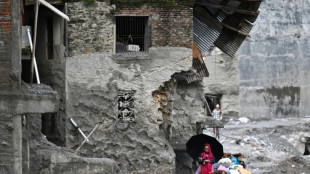
Many rivers in Khyber Pakhtunkhwa -- a picturesque province of rugged mountains and valleys -- have burst their banks, demolishing scores of buildings including a 150-room hotel that crumbled into a raging torrent.
"The house which we built with years of hard work started sinking in front of our eyes," said Junaid Khan, 23, the owner of two fish farms in Chrasadda.
"We sat on the side of the road and watched our dream house sinking."
The annual monsoon is essential for irrigating crops and replenishing lakes and dams across the Indian subcontinent, but each year it also brings a wave of destruction.
Officials say this year's monsoon flooding has affected more than 33 million people -- one in seven Pakistanis -- destroying or badly damaging nearly a million homes.
On Saturday, authorities ordered thousands of residents in threatened areas to evacuate their homes as rivers had still not reached maximum capacity.
"Initially some people refused to leave, but when the water level increased they agreed," Bilal Faizi, spokesman for the Rescue 1122 emergency service, told AFP.
Officials say this year's floods are comparable to 2010 -- the worst on record -- when over 2,000 people died and nearly a fifth of the country was under water.
Farmer Shah Faisal, camped by the side of a road in Chrasadda with his wife and two daughters, described how he saw his riverside home swallowed by a river as the powerful current eroded the bank.
The Jindi, Swat and Kabul rivers flow through the town before joining the mighty Indus, which is also flooding downstream.
"We escaped with our lives," Faisal told AFP.
- Climate change -
Officials blame the devastation on man-made climate change, saying Pakistan is unfairly bearing the consequences of irresponsible environmental practices elsewhere in the world.
Pakistan is eighth on the Global Climate Risk Index, a list compiled by the environmental NGO Germanwatch of countries deemed most vulnerable to extreme weather caused by climate change.
Still, local authorities must shoulder some of the blame for the devastation.
Corruption, poor planning and the flouting of local regulations mean thousands of buildings have been erected in areas prone to seasonal flooding -- albeit not as bad as this year.
The government has declared an emergency and mobilised the military to deal with what Climate Change Minister Sherry Rehman on Wednesday called "a catastrophe of epic scale".
According to the National Disaster Management Authority, since the monsoon started in June more than two million acres of cultivated crops have been wiped out, 3,100 kilometres (1,900 miles) of roads have been destroyed and 149 bridges have been washed away.
In Sukkur, more than 1,000 kilometres south of Swat, farmlands irrigated by the Indus were under water, and tens of thousands of people were seeking shelter on elevated roads and highways as they waited for fresh torrents from the north.
"We have opened the gates fully," dam supervisor Aziz Soomro told AFP, adding the main rush of water was expected Sunday.
The flooding could not come at a worse time for Pakistan, whose economy is in free fall and whose politics are gripped by crisis following the ousting of former prime minister Imran Khan by a parliamentary vote of no confidence in April.
O.Farraj--SF-PST