Storms, warm seas drove sudden drop in Antarctic ice: study / Photo: MARIO TAMA - GETTY IMAGES NORTH AMERICA/AFP

 Tatum delivers as Celtics down winless Knicks

 Romantasy fans ready for sleepless night as 'Court of Thorns and Roses' returns
 De Goede hat-trick as Canada defeat England again

 Rubio urges Cubans to work with CIA, but warns: be discreet

 Leclerc tops times for Ferrari in practice for US Grand Prix

 Lula, Bolsonaro lock horns in final debate before Brazil vote

 Poulter and Hatton leave LIV Golf

 Blakely vaults out of the shadow of Biles for all-around world title

 Oil tops $116 with stocks mixed on earnings, AI

 Trump orders lawsuit to block Alaska Senate result if Republicans lose

 Ebola patient in Nigeria is Swiss, had not visited DR Congo: Bern

 Messi receives top Spanish award from heir to throne

 Macron condemns 'racist terrorist attack' after deadly shooting near Paris

 Shiffrin sidesteps slalom in 'exploration' season

 Bayern Munich coach Kompany in hospital after collapsing: club

 Alonso sees Courtois similarities in Chelsea's Penders

 Melania Trump announces truce in Ukrainian city 'on brink of disaster'

 Saka to be carefully managed after latest injury setback, says Arteta

 Goodell says NFL's France debut 'just the beginning'

 Singapore widens haze probe to local firms linked to Indonesian fires

 Hundreds of Syrians protest repeated Israeli incursions

 El Salvador sends troops to Haiti to find 4 missing soldiers

 Liverpool must go 'full gas' despite injury issues, says Iraola

 Oil hits $115 with stocks mixed on earnings, AI

 Casualties feared as multi-storey building collapses in Nairobi

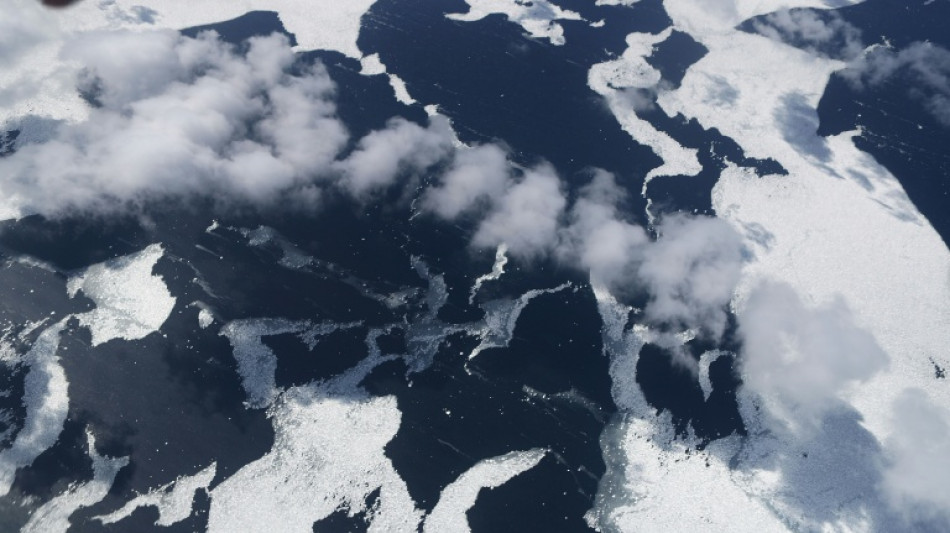
Unusually strong winds and warm ocean water likely drove a rapid plunge in Antarctic sea ice in recent years, scientists said on Wednesday, shedding new light on a puzzling event.
While the Arctic sea ice area has been steadily declining, the story has been very different in Antarctica, where coverage hit a record high in 2015 before flipping to a record low only two years later.
Climate models struggled to explain this "unexpected and abrupt decline" of the magnitude witnessed in recent decades, wrote a global team of scientists in new research exploring this anomaly.
Understanding why matters because Antarctic sea ice is critical not just to ocean currents and local ecosystems but the climate, as its reflective surface bounces solar energy back into the atmosphere.
In the journal Nature Climate Change, scientists led by Theo Spira from the University of Gothenburg in Sweden said the rapid loss of sea ice was caused by forces working together rather than any single factor.
In particular, they pointed to a gradual weakening of a layer of cold water beneath the surface that normally protects the sea ice from the warmer depths below.
"During the winter of 2015, storms in the Southern Ocean were unusually strong, reducing the cold-water protective layer effect and resulting in the sustained sea ice loss around Antarctica," Spira said in a statement.
Normally, water of vastly different temperatures and salinity -- such as deep ocean water and sea ice melt -- do not mix well and settle in layers in a process known as stratification.
This natural protection helped sea ice grow to record highs until 2015, when strong winds and powerful storms churned the Southern Ocean.
"The storms in 2015 stirred up the sea and warmer water mixed with the cold-water layer, the protection disappeared and the ice melted at record speed," said Spira, the first author of the study.
He said it was crucial scientists understand these complex factors to better predict how Antarctic sea ice may influence the climate and global weather patterns in future.
B.Mahmoud--SF-PST