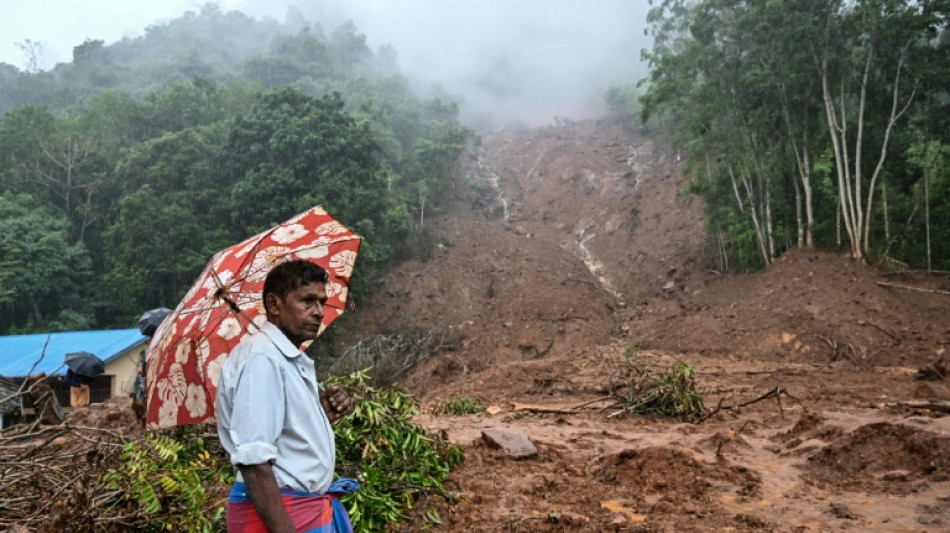
Sri Lanka cyclone caused $4.1 bn damage: World Bank / Photo: Ishara S. KODIKARA - AFP/File

 Trump says US reviewing position on Falkland Islands

 Saka strikes as flawless Arsenal punish troubled Villa

 Oil prices surge on renewed fighting in US-Iran war

 Cycling superstar Pogacar has surgery after Vuelta crash
 Man City agree deal for Everton's Ndiaye

 Apple CEO Tim Cook gives nod to founder Steve Jobs in final memo

 Russian finance minister makes unexpected appearance at G20

 Happy to be back in NY, Sabalenka advances

 Naomi Watts to receive lifetime award at top Spain film fest

 Jury hears closing arguments in Tupac Shakur murder trial

 Pakistan sack coach, send seven players home after England defeats

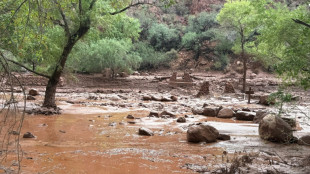 New storms threaten Grand Canyon flood search, 2 bodies recovered

 France takes aim at ultra-fast fashion with new levy

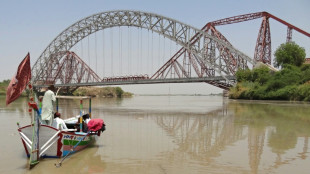 Tribunal says India cannot withdraw from water treaty with Pakistan

 John Galliano pulls US exhibition after antisemitism backlash

 French Top 14 boss offers 'no guarantees' for first Club World Cup

 Munoz reunites with Glasner after joining Forest from Palace

 Liverpool sign Barcola from PSG for £124 million

 Putin, Xi hold talks in Kyrgyzstan as regional summit begins

 ChatGPT becomes first AI chatbot to face tougher EU rules

 Man City sign Palmeiras winger Allan on five-year deal

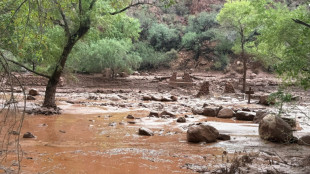 More flooding feared at Grand Canyon after storm leaves 15 missing

 RedHill Divests Talicia® to Apotex for $18 Million Cash Upfront Plus Milestones to Fuel Strategic Growth Opportunities

 MEXC Data: BTC Breaks $80,000, Major-Asset Spot Trading Volume Surges 300%

 سفارة فلسطين في عُمان تنظم ندوة لتعزيز الاستثمارات والفرص الاقتصادية

Cyclone Ditwah, which struck Sri Lanka last month, caused an estimated $4.1 billion in direct physical damage to buildings, agriculture and critical infrastructure, according to a World Bank report released Monday.
The natural disaster killed more than 640 people, and affected more than 10 percent of Sri Lanka's population. Floods and landslides caused by the cyclone left extensive damage throughout the South Asian island nation.
The total damage estimated by the World Bank is equivalent to about 4 percent of Sri Lanka's GDP.
Infrastructure, including roads, bridges, railways and water supply networks, accounted for the largest share of damage, at an estimated $1.735 billion, according to the World Bank's Global Rapid Post-Disaster Damage Estimation (GRADE) report.
Housing damage was valued at $985 million, accounting for 24 percent of the total damage.
The estimate is limited to direct physical damage and "does not include losses related to income or production, nor the full costs of recovery and reconstruction".
Buildings such as "schools, health facilities, businesses, and large industrial facilities and factories located along major rivers and creeks, were also heavily impacted, accounting for $562 million in estimated damages," the World Bank said.
The Sri Lankan government has also secured a World Bank agreement to repurpose $120 million from an ongoing project for disaster recovery spending.
The latest World Bank report comes after the International Monetary Fund (IMF) said Friday that its board had approved $206 million in emergency financing for Sri Lanka, to help in the country's recovery.
The cyclone struck as the country was emerging from its worst ever economic meltdown in 2022, when it ran out of foreign exchange reserves to pay for essential imports such as food, fuel and medicines.
Following a $2.9 billion bailout from the IMF approved in early 2023, the country's economy has stabilised.
V.AbuAwwad--SF-PST