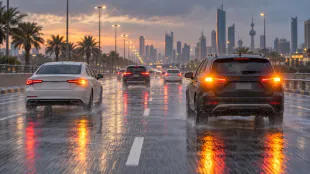
EU set to scrap 2035 combustion-engine ban in car industry boost / Photo: Fred TANNEAU - AFP

 Democrats, Trump hold final rallies before midterm elections

 Japan urges US to enforce discipline after second Marine arrest

 'Remarkable' rookie Lendeborg scores 37 as Warriors beat Clippers

 ExxonMobil urged to re-think Papua New Guinea gas project

 Asian stocks mixed as tech sector struggles to rebound from selloff

 India's royals find new power in their past

 Irish bookshops help meet UK demand for Sally Rooney novels

 NFL Vikings suffer first loss while Broncos edge Chiefs

 Host of fresh faces in Australia white-ball squads to face England

 NFL linebacker Campbell to remain hospitalized overnight
 Chervon Names Thomas Scherer Vice President of Organizational Development - Sales, End User Marketing, and Service

 Chervon Names Jody Grimsley Senior National Account Manager

 'Grateful' Antonelli becomes youngest Formula One world champion

 Four sporting prodigies who scaled the heights

 Six key races that made Kimi Antonelli a world champion

 Isa double sends Pau past Toulouse in Top 14

 NFL Lions linebacker Campbell carted off to hospital

 Iran warns new war could last longer after Trump threatens strikes
 Bulgarian president wins runoff vote as Black Sea attacks raise stakes

 Iraola instructs Liverpool players to dive after Arsenal penalty call

The EU looks set to scrap a landmark 2035 ban on new petrol and diesel cars on Tuesday, as part of a package of reforms aimed at supporting Europe's embattled auto industry.
Carmakers and their backers have lobbied hard for Brussels to relax the ban over the past year -- in the face of fierce competition from China and a slower-than-expected shift to electric vehicles (EVs).
The European Commission is expected to propose replacing it with a less ambitious 90-percent emission-reduction target, in a move critics say risks undermining the EU's green agenda and deterring investments in electrification.
"This is a critical milestone for the future of the sector. There is a lot at stake," Sigrid de Vries, the head of European auto lobby ACEA told a press conference in Brussels on Monday, referring to the expected reforms.
Set in 2023, the ban was a cornerstone of the EU's environmental Green Deal, which has come under increased pressure from businesses and right-wing politicians as the EU seeks to bolster its industry.
"There is a clear demand for more flexibility on the CO2 targets," commission spokeswoman Paula Pinho told a press conference Friday, saying Brussels was "aiming for balance".
Carmakers argue the 2035 goal to have only electric vehicles sold in Europe, and an intermediate 2030 target, are no longer realistic.
High upfront costs and the lack of adequate charging infrastructures in parts of the 27-nation bloc mean consumers have been slow to warm to EVs, producers say.
Just over 16 percent of new vehicles sold in the first nine months of 2025 run on batteries, according to ACEA.
Automakers would like to see continued sales authorised for hybrids with rechargeable batteries or those equipped with range extenders (small combustion engines which recharge the battery instead of powering the wheels).
Germany supports this option as do eastern European nations where German carmakers have set up factories.
- 'Poisoning the debate' -
Others, like Italy, want to see the use of alternative fuels such as those derived from agricultural crops and waste products allowed.
"EVs will be the dominant choice, but to make the transition work for society and industry, other options must be available too," de Vries said in a social media post.
In the other camp are France, the Nordic countries and Spain who have long called for keeping to the planned trajectory in order not to harm firms that have invested in the transition to electric vehicles.
Last week Manfred Weber, the conservative head of the EU parliament's largest group, said the 2035 ban would be discarded with carmakers required to meet a 90-percent reduction in CO2 emissions from their fleet instead.
EU sources confirmed to AFP that was likely, adding the review would probably allow for plug-in hybrids and range-extender vehicles to be sold after 2035.
This has many environmentalists worried, with a recent report indicating that plug-ins pollute almost as much as petrol cars.
But William Todts, director of the clean transport advocacy group T&E, said he hoped obtaining concessions would help the auto industry move on.
"I hope that if they get a little bit of what they want, they will stop poisoning the political debate," he told AFP, arguing heated discussions had created confusion in the sector and among consumers.
The commission is also expected to unveil additional measures to support the sector, including plans for "greening" company fleets and encouraging production of small and "affordable" EVs.
France has advocated for a "European preference" compelling manufacturers receiving public subsidies to source components from within the bloc.
Road transport accounts for about 20 percent of total planet-warming emissions in Europe, and 61 percent of those come from cars' exhaust pipes, according to the EU.
L.Hussein--SF-PST