What did countries agree to at COP30? / Photo: Mauro PIMENTEL - AFP/File

 Trump says US reviewing position on Falkland Islands

 Saka strikes as flawless Arsenal punish troubled Villa

 Oil prices surge on renewed fighting in US-Iran war

 Cycling superstar Pogacar has surgery after Vuelta crash
 Man City agree deal for Everton's Ndiaye

 Apple CEO Tim Cook gives nod to founder Steve Jobs in final memo

 Russian finance minister makes unexpected appearance at G20
 Happy to be back in NY, Sabalenka advances

 Naomi Watts to receive lifetime award at top Spain film fest

 Jury hears closing arguments in Tupac Shakur murder trial
 Pakistan sack coach, send seven players home after England defeats

 New storms threaten Grand Canyon flood search, 2 bodies recovered
 France takes aim at ultra-fast fashion with new levy

 Tribunal says India cannot withdraw from water treaty with Pakistan

 John Galliano pulls US exhibition after antisemitism backlash

 French Top 14 boss offers 'no guarantees' for first Club World Cup
 Munoz reunites with Glasner after joining Forest from Palace
 Liverpool sign Barcola from PSG for £124 million

 Putin, Xi hold talks in Kyrgyzstan as regional summit begins
 ChatGPT becomes first AI chatbot to face tougher EU rules

 Man City sign Palmeiras winger Allan on five-year deal
 More flooding feared at Grand Canyon after storm leaves 15 missing

 RedHill Divests Talicia® to Apotex for $18 Million Cash Upfront Plus Milestones to Fuel Strategic Growth Opportunities

 MEXC Data: BTC Breaks $80,000, Major-Asset Spot Trading Volume Surges 300%

 سفارة فلسطين في عُمان تنظم ندوة لتعزيز الاستثمارات والفرص الاقتصادية
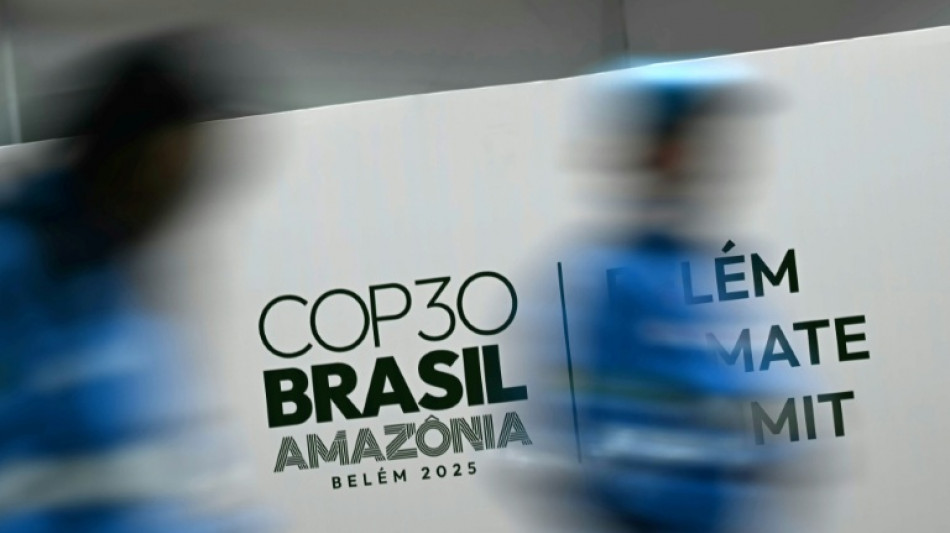
The COP30 climate summit has drawn to a close after two weeks in the Amazonian city of Belem where protests, street marches and even a fire caused unexpected moments of drama.
But beneath enormous tents erected over a former airport at the edge of the rainforest, nations also adopted some decisions on how to battle climate change.
Here are the main negotiated outcomes, and the voluntary commitments, made during the summit attended by nearly 200 nations:
- Fossil fuels -
The thorniest issues were bundled into a "mutirao" pact -- the summit's slogan, drawn from the Tupi-Guarani word for "collective effort."
The agreement included an initiative for countries to collaborate on a voluntary basis to reduce carbon emissions and strive to limit global warming to 1.5C relative to pre-industrial levels.
It also noted a commitment made by all nations at COP28 in Dubai to "transition away from fossil fuels" -- but this exact phrase, which has become politically sensitive, was not included.
Despite pressure from more than 80 nations from Europe to Latin American to the Pacific, the conference did not adopt a "roadmap" to phase out fossil fuels.
Instead, COP30 president Andre Correa do Lago offered to create one for countries willing to join on a voluntary basis, and another plan to halt deforestation.
- Finance -
The world's poorest nations have long complained they lack the finance for "adaptation" -- measures to protect their economies from rising seas, such as building sea walls, and other impacts of climate change.
In a win for developing countries at COP30, the final agreement "calls for efforts to at least triple adaptation finance by 2035."
In 2024, rich countries agreed to provide $300 billion a year by 2035 in climate finance to developing nations, with no specific amount earmarked for adaptation.
Most of that goes to projects that reduce greenhouse gas emissions, such as renewable energy, and not to adaptation -- something developing nations have long complained puts them at a disadvantage.
The "tripling" goal agreed in Belem could mean $120 billion from that $300 billion is earmarked for adaptation, but close observers said clarity was still needed around that target.
- Trade -
For the first time, trade has been included as a pillar of the final text, with a three-year dialogue to take place under the climate framework.
This reflected concerns from countries including China that trade measures -- like taxes on carbon-intensive goods -- could erode export revenues or throw up barriers to green technology sales.
- Forests -
At COP30, Brazil launched a new global investment vehicle that proposes paying out a share of profits to forest-rich countries for every hectare of trees they leave standing.
Brazilian President Luiz Inacio Lula da Silva announced during a leaders' summit in Belem last week -- even before COP30 officially started -- the launch of the Tropical Forests Forever Facility.
The TFFF attracted $5.5 billion in pledges from Norway, Germany, Indonesia, France and Brazil -- the biggest contributors.
Ultimately, Brazil is seeking to raise $125 billion in public and private investment, but said the fund could start working even without the full $25 billion in startup capital from governments.
- Methane pledges -
Slashing methane emissions -- the second-largest contributor to climate change after carbon dioxide -- is considered one of the fastest ways to curb global warming.
Although it remains in the atmosphere for about 12 years, the "super pollutant" is roughly 80 times more potent than CO2 over a 20-year period.
At COP30, seven countries -- Britain, France, Canada, Germany, Norway, Japan and Kazakhstan -- signed a statement vowing to achieve "near zero" methane emissions across the fossil fuel sector.
Q.Bulbul--SF-PST