Fossil fuel fight threatens to sink COP30 as EU rejects Brazil's draft / Photo: Pablo PORCIUNCULA - AFP

 Trump says US reviewing position on Falkland Islands

 Saka strikes as flawless Arsenal punish troubled Villa
 Oil prices surge on renewed fighting in US-Iran war

 Cycling superstar Pogacar has surgery after Vuelta crash
 Man City agree deal for Everton's Ndiaye

 Apple CEO Tim Cook gives nod to founder Steve Jobs in final memo

 Russian finance minister makes unexpected appearance at G20
 Happy to be back in NY, Sabalenka advances

 Naomi Watts to receive lifetime award at top Spain film fest

 Jury hears closing arguments in Tupac Shakur murder trial
 Pakistan sack coach, send seven players home after England defeats

 New storms threaten Grand Canyon flood search, 2 bodies recovered
 France takes aim at ultra-fast fashion with new levy

 Tribunal says India cannot withdraw from water treaty with Pakistan

 John Galliano pulls US exhibition after antisemitism backlash

 French Top 14 boss offers 'no guarantees' for first Club World Cup
 Munoz reunites with Glasner after joining Forest from Palace
 Liverpool sign Barcola from PSG for £124 million

 Putin, Xi hold talks in Kyrgyzstan as regional summit begins
 ChatGPT becomes first AI chatbot to face tougher EU rules

 Man City sign Palmeiras winger Allan on five-year deal
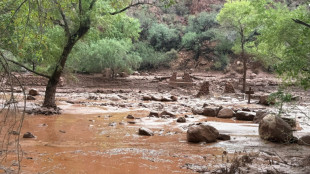 More flooding feared at Grand Canyon after storm leaves 15 missing

 RedHill Divests Talicia® to Apotex for $18 Million Cash Upfront Plus Milestones to Fuel Strategic Growth Opportunities

 MEXC Data: BTC Breaks $80,000, Major-Asset Spot Trading Volume Surges 300%
 سفارة فلسطين في عُمان تنظم ندوة لتعزيز الاستثمارات والفرص الاقتصادية
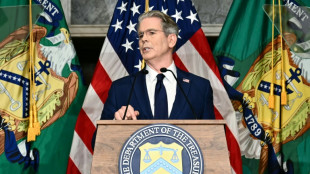
The clock was ticking down on the slated final day of UN climate talks in Brazil Friday where a bitter fight over whether to mention fossil fuels in any agreement threatened to upend the event.
At stake at COP30 is securing a deal that paves the way for faster cuts to planet-warming emissions that are driving ever more extreme weather -- and proving that international cooperation can still function in a fractured world.
After nearly two weeks of negotiations in the Amazonian city of Belem, a new draft agreement unveiled by COP30 host Brazil made no mention of "fossil fuels" or the word "roadmap" that President Luiz Inacio Lula da Silva had himself publicly championed.
European Union climate commissioner Wopke Hoekstra said the text was "unacceptable" and that the summit risked ending without an agreement.
"I am saying it with a heavy heart, but what is now on the table is clearly no deal," Hoekstra told reporters.
Speaking on condition of anonymity, a European delegate said the bloc was being cast as "villains" for refusing to back the deal. Some member states were weighing a walkout, the delegate added, while others feared being blamed if the talks collapsed.
The conference, which was disrupted for several hours by a fierce blaze Thursday that tore a hole in the venue's roof -- as well as by two Indigenous-led protests last week -- was supposed to end on Friday evening at 6:00 pm (2100 GMT).
Well after that time, countries were sending staff back to their hotels, with the summit likely to spill over into the weekend.
- Consensus required -
Thirty-six countries -- including wealthy nations, emerging economies and small island states -- had warned in a letter to Brazil that they would reject any deal that did not include a plan to move away from oil, coal and gas.
France's ecological transition minister, Monique Barbut, told AFP that oil-rich Russia and Saudi Arabia, along with coal producer India and "many" emerging countries, were blocking the language.
Arunabha Ghosh, a special envoy for South Asia at the talks, shot back against "finger pointing."
"To assume that one side cares about the planet and the other side, because they are unhappy with the formulation, does not care about the planet does grievous harm to the spirit of negotiations," he told AFP.
Ghosh defended the exclusion of the "roadmap," arguing developing countries needed to ensure energy security and a just transition for their workers dependent on fossil fuel sector.
Consensus is needed among the nearly 200 nations to land an agreement at the UN climate conference, which this year is taking place without the United States as President Donald Trump shunned the event.
The head of COP30, Brazilian diplomat Andre Correa do Lago, said ruefully that those who doubt that cooperation is the best way forward for climate change "are going to be absolutely delighted to see that we cannot reach an agreement between us."
- Money fight -
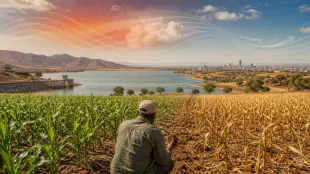
The push for a phaseout of oil, coal and gas -- the main drivers of global warming -- grew out of frustration over a lack of follow-through on the COP28 agreement in Dubai in 2023 to transition away from fossil fuels.
Divisions also remain over trade measures and finance for poorer nations to adapt to the impacts of climate change, such as floods and droughts, and move to a low-carbon future.
The rejected draft said there was a need for a "manyfold increase" in financial support for developing countries. It also called for "efforts to triple adaptation finance" by 2030 compared to 2025 levels.
"The EU is stuck with a much earlier tripling of adaptation finance than they're comfortable with and in exchange they got nothing," said Jake Schmidt, senior strategic director at the Natural Resources Defense Council, an advocacy group. "It's a tough pill to swallow," Schmidt told AFP.
It was another element the EU had not wanted included in the agreement.
O.Mousa--SF-PST