China's power paradox: record renewables, continued coal / Photo: GREG BAKER - AFP/File

 US regulator, 22 states accuse Amazon of 'manipulating' ad auctions: lawsuit

 TRON Founder Justin Sun Shares Outlook on Bitcoin, Stablecoins and Global Finance at Bitcoin Asia 2026

 Tributes to 'eternal' Messi on Argentina retirement

 Arteta hails Arsenal's 'finishers' after Saka kills off Villa

 Yamal, Raphinha bag braces as Barcelona rout Rayo

 Alcaraz makes winning return at US Open, Sabalenka safely through
 Everton agree to sign Monaco's Balogun: reports

 Milei calls for F1 to return to Argentina
 Alcaraz wins US Open first-round match after injury layoff

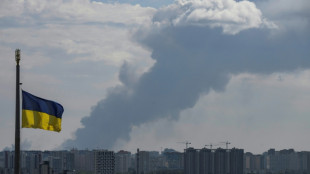 Kyiv orders heightened security amid intense Russian drone strikes

 Sabalenka kickstarts US Open three-peat bid as Fils crashes out

 Fils upset by resurgent Tsitsipas at US Open

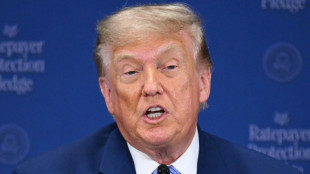 Trump says AI data center opponents want to be 'backwards and poor'

 Pakistan ditch coaches, send seven players home after England defeats

 Galliano pulls Met Gala exhibit after antisemitism backlash

 Afghan people should 'not be abandoned': top Red Cross official

 Six defining moments of Lionel Messi's Argentina career

 Trump blasts US backlash against data centers
 It 'hurts' says Messi of decision to retire from international football
 Benzema ends brief stint with Al Hilal in Saudi league

 Djokovic's Grand Slam future uncertain after brutal US Open defeat

 Turkey says regional defence pact not against any country

 US vows to keep economic pressure on Iran as G20 finance talks begin

 Shein valued at $26.3 bn in Hong Kong market debut
 Crude prices rise above $90 per barrel on US-Iran strikes

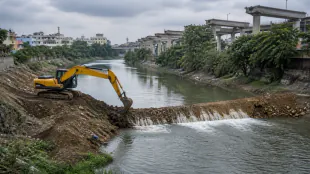
Call it the China power paradox: while Beijing leads the world in renewable energy expansion, its coal projects are booming too.
As the top emitter of greenhouse gases, China will largely determine whether the world avoids the worst effects of climate change.
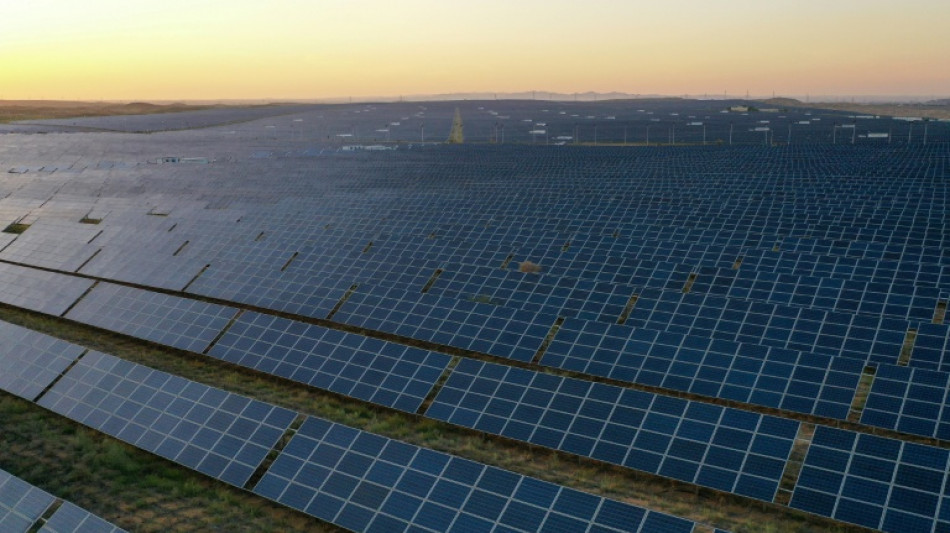
On the one hand, the picture looks positive. Gleaming solar farms now sprawl across Chinese deserts; China installed more renewables last year than all existing US capacity; and President Xi Jinping has made the country's first emissions reduction pledges.
Yet in the first half of this year, coal power capacity also grew, with new or revived proposals hitting a decade high.
China accounted for 93 percent of new global coal construction in 2024, the Centre for Research on Energy and Clear Air (CREA) found.
One reason is China's "build before breaking" approach, said Muyi Yang, senior energy analyst at think tank Ember.
Officials are wary of abandoning the old system before renewables are considered fully operational, Yang said.
"Think of it like a child learning to walk," he told AFP.
"There will be stumbles -- like supply interruptions, price spikes -- and if you don't manage those, you risk undermining public support."
Policymakers remain scarred by 2021–22 power shortages tied to pricing, demand, grid issues and extreme weather.
While grid reform and storage would prevent a repeat, officials are hedging with new coal capacity, even if it sits idle, experts said.
"There's the basic bureaucratic impulse to make sure that you don't get blamed," said Lauri Myllyvirta, CREA co-founder and lead analyst.
"They want to make absolutely sure that they don't block one possible solution."
- Grid and transmission -
There's also an economic rationale, said David Fishman, a China power expert at Lantau Group, a consultancy.
China's electricity demand has increased faster than even record-breaking renewable installations.
That may have shifted in 2025, when renewables finally met demand growth in the first half of the year. But slower demand played a role, and many firms see coal remaining profitable.
Grid and transmission issues also make coal attractive.
Large-scale renewables are often in energy-rich, sparsely populated regions far from consumers.
Sending that power over long distances raises the cost and "incentivises build-out of local energy capacity," Fishman told AFP.
China is improving its infrastructure for long-distance power trading, "but it's definitely not where it needs to be", he added.
Coal also benefits from being a "dispatchable resource" -- easily ramped up or down -- unlike solar and wind, which depend on weather.
To increase renewables, "you have to make the coal plants operate more flexibly... and make space for variable renewables," Myllyvirta said.
China's grid remains "very rigid", and coal-fired power plants are "the beneficiaries", he added.
- 'Instrumental' economic driver -
Other challenges loom. The end of feed-in tariffs means new renewable projects must compete on the open market.
Fishman argues that "green power demand is insufficient to keep capacity expansion high", though the government has policy levers to tip the balance, including requiring companies to use more renewables.
China wants 3,600 gigawatts of wind and solar by 2035, but that may not meet future demand, risking further coal increases.
Still, coal additions do not always equal coal emissions -- China's fleet currently runs at only 50 percent capacity.
And the "clean energy" sector -- including solar, wind, nuclear, hydropower, storage and EVs -- is a major economic driver.
CREA estimates it contributed a record 10 percent to China's gross domestic product last year, and drove a quarter of growth.
"It has become completely instrumental to meeting economic targets," said Myllyvirta.
"That's the main reason I'm cautiously optimistic in spite of these challenges."
O.Salim--SF-PST