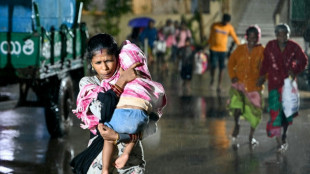
More people leave homes in Canada as huge wildfires spread / Photo: Avr. Nicholas ZAHARI - Royal Canadian Air Force/AFP

 بودكاست 'شتامبلايتس': تحليل أفضل تسديدة في الدوري الألماني

 إيتا إيروايزز تتفق على 180 خروجاً طوعياً مع نقابات العمال

 NFL Week 9 Preview: Bills vs. Vikings Headline Marquee Matchups

 الاتحاد الأوروبي يوافق على استحواذ JD.com على Ceconomy بشروط

 بداية عرض أنمي Devil's Crest على بريم فيديو في 6 نوفمبر

 مهرجان بايرسبرون للمذاق الرفيع يفتتح بقمة مع دانيش شيك
More than 31,000 people were under evacuation across Canada on Wednesday as firefighters battled raging wildfires threatening towns and villages, authorities said.
More than 200 fires burning across the country -- half of which are described as being out of control -- have so far scorched more than 2.2 million hectares.
The Saskatchewan and Manitoba provinces have been hardest hit, with both declaring wildfire emergencies in recent days.
"Right now it's not good because people are so scared, and also me," said Tareq Hosen Alin, who runs a hotel in La Ronge in Saskatchewan, where flames have destroyed some businesses.
The small town of 2,500 people has been evacuated but Tareq Hosen Alin said he had stayed to house first responders and firefighters.
"So I'm scared, people lose their property, lose their money, lose their dreams right now," he told AFP.
Firefighters across the country have been put on alert, while 140 American personnel are already in Canada to help fight the fires.
"We are up against a monster. The last hours have been chaotic," the La Ronge fire department said. The region around La Ronge has several active blazes.
One of those has consumed more than 470,000 hectares and is still out of control. Another further west -- also uncontained -- has burned more than 140,000 hectares.
The fires have downgraded air quality in central Canada as well as in northern parts of the United States.
Wildfire smoke is comprised of gaseous pollutants such as carbon monoxide, along with water vapor and particle pollution, which can be particularly hazardous to health.
Climate change has increased the impact of extreme weather events in Canada, which is still recovering from the summer of 2023 when 15 million hectares of forests were scorched.
Most of the ongoing fires have been triggered by human activity -- often accidental -- such as poorly extinguished campfires or the passing of vehicles in extremely dry areas.
M.Qasim--SF-PST