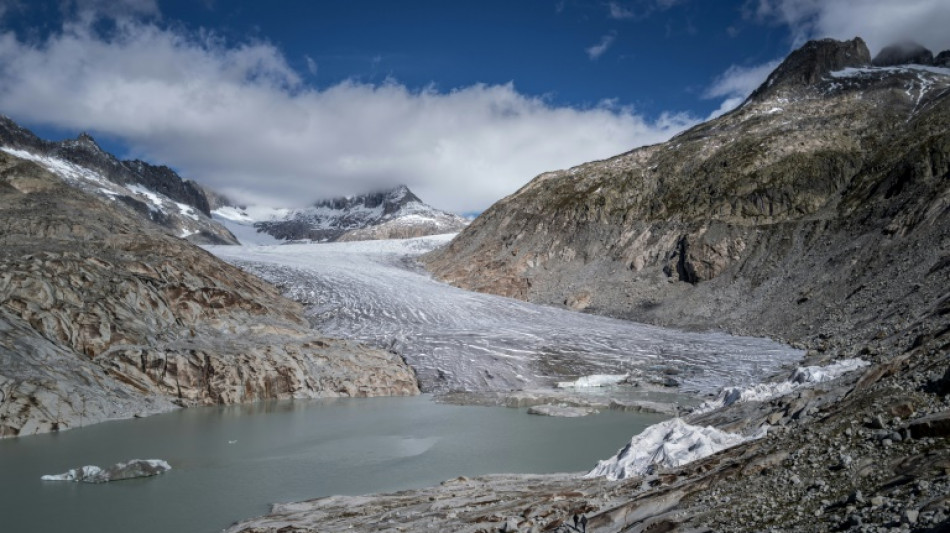
Snow cover of Swiss glaciers below average this year: study / Photo: Fabrice COFFRINI - AFP/File

 ChatGPT interactive interface feature tested across six custom tools

 Freshways milk-price cut deepens pressure on UK dairy farms

 Labour and National remain virtually tied as New Zealand vote count advances

 The Good Daughter adapts Karin Slaughter thriller with Rose Byrne and Meghann Fahy
 Heavy-lift drone evacuates wounded Ukrainian soldier from frontline kill zone

 Morrison says West Brom recovered after pressure from successive derby losses

 Britain considers 2027 state visit for Ukraine’s Zelensky

 China and Gabon Upgrade Ties to 'Shared Future' Amid Strategic Pact

 عائلة مراهقة ترفع دعوى ضد جوجل لادعاء التقصير في حماية طالب من الانتحار عبر الذكاء الاصطناعي

 Microsoft Xbox App Update for PC Delivers 60% Faster Startup and Redesigned Interface

 بودكاست 'شتامبلايتس': تحليل أفضل تسديدة في الدوري الألماني
The amount of snow covering Swiss glaciers at the end of the winter this year was 13 percent below the 2010-2020 average, said a group of glacier monitoring experts on Monday.
Each spring, when snow cover reaches its peak, Matthias Huss, head of the Glacier Monitoring Switzerland (Glamos), and his team take measurements on several Swiss glaciers.
This year, the Glamos team measured snow depth at 21 glaciers and found densities ranging between 1 and 4 metres (3 and 13 feet), or between 0 and 52 percent below the reference value.
The extrapolation of these measurements to all 1,400 registered Swiss glaciers shows a "winter snow deficit" that is 13 percent below the 2010-2020 period, their report said.
"This value is less negative than in the very dry winters of 2022 and 2023," the experts said.
The measurements examine both the depth and density of the snow, providing useful data to evaluate the upcoming summer melting season.
"Overall, snow measurements on glaciers indicate another dry year with significant repercussions on melting in the coming summer," Huss said on X.
"Another difficult year for glaciers ahead," he added.
Snow cover is vital for glaciers as it allows them to "recharge" their mass, while protecting them from heat and sunlight in spring and summer.
This year's measurements show "strong regional differences", with a very low snow cover on glaciers located in northeastern Switzerland but values close to average in the south and southwest, thanks to exceptional snowfall in these regions in mid-April.
Swiss glaciers, severely impacted by climate change, melted as much in 2022 and 2023 as between 1960 and 1990, losing in total about 10 percent of their volume.
Despite a very snowy 2024 winter, glaciers in Switzerland still lost 2.4 percent of their overall volume last year due to summer heat -- a process accelerated by dust coming from the Sahara.
The accumulation of dust on the ice reduces the albedo effect: the whiter a surface is, the more light and heat it reflects.
E.Aziz--SF-PST