Aluminum recycling in Brazil: Scraping by in a billion-dollar industry / Photo: Miguel SCHINCARIOL - AFP

 Kroenke to buy baseball's Los Angeles Angels: statement

 US defends Trump's Venezuela oil deal

 OpenAI to launch new model with 'stronger safeguards' after hack

 Fans mourn 'bittersweet' final Ariana Grande gig in London

 Norway's King Haakon VIII swears allegiance to constitution

 Syria site infrastructure 'consistent with nuclear reactor': IAEA

 Juventus sign Woltemade, Sarr on loan from Premier League

 US strikes Iran in latest tit-for-tat attacks

 China's Xi arrives in Egypt as US sanctions threat looms over Iran links
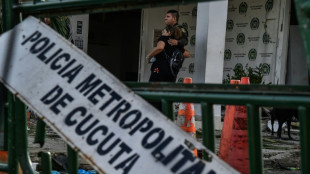 Car bomb at Colombian police station kills one, injures 11

 Rain delays start of play on US Open

 Man City agree blockbuster deal to sign Chelsea star Fernandez: reports
 Alkemya Metacore Secures $50M via Tokenised Equity to Scale Nickel Energy and Security Tech

 Man City chase Fernandez, Arsenal sell Jesus on deadline day

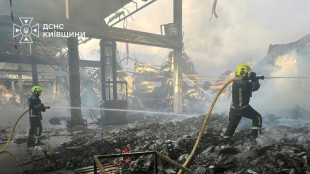 EU says Russian 'hybrid attacks' won't halt aid to Ukraine

 Explosives used in sabotage attack on German power lines

 Nepali families hold symbolic funerals for missing after floods

 Newcastle sign Lille forward Fernandez-Pardo

 Even at Elysee, phones are handed in, Macron tells French pupils
 Chelsea agree to sign Atalanta's Ahanor, with Palace loan for this season

 Chelsea sign Atalanta's Ahanor and loan him to Palace

 UK chalks up hottest summer on record for second year running
 China's Xi visits Egypt as US sanctions threat looms over Iran links

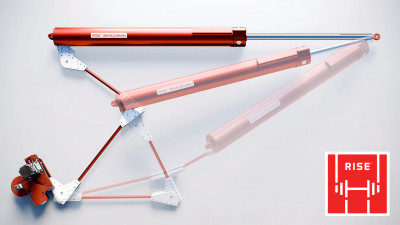 RISE Robotics Awarded $100,000 MassVentures Grant to Accelerate Commercialization of Beltdraulic Technology

 Global bond sell-off deepens on inflation concerns
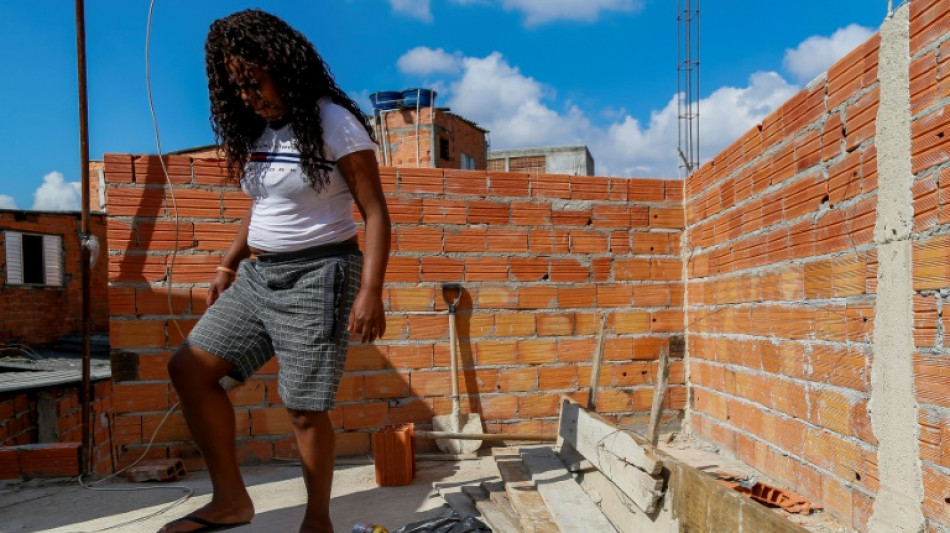
Shirlei Aparecida de Souza uses her foot to crush the empty cold drink cans she collects in the alleys of a poor Sao Paulo neighborhood: a precarious livelihood critical to Brazil's environmental protection goals.
It is thanks to about a million collectors like her that the country recycled as many aluminum cans as it produced for the first time in 2022, according to data from Recicla Latas, a recycling industry body.
Brazil is a world leader in recycling drinks cans: its new record beats out the European Union, which recycles 73 percent, and the United States with 60 percent, according to their own databases.
Recicla Latas says the country's recycling efforts have prevented about 16.5 million tons of planet-warming greenhouse gas emissions in the last 10 years.
But for Aparecida de Souza, collecting cans is a matter of survival.
She gathers them off the street, from garbage cans or landfills, and sells them to collection centers that send the cans to recycling plants.
She earns about 20 real, or just over $4, a day: "Just enough to buy the necessities, a packet of rice, black beans and sometimes meat," the 38-year-old told AFP.
With this, she supports five daughters in a working-class district of the largest metropolis in Latin America.
- 'Family tradition' -
Dressed in flip-flops, a T-shirt and shorts, Aparecida de Souza leaves the house every day at dawn to collect as many cans as she can. It takes almost 70 black rubbish bags to make a kilogram of aluminum, which sells for just over $1.
The work is a "family tradition," into which she was initiated by her mother from the age of 15, she told AFP.
"Aluminum sells for a higher price than other materials such as cardboard, and it is lighter to carry."
Aline Sousa da Silva, an activist with the Ancat association representing collectors of recyclable materials, said there is "a lot of competition" in gathering cans, which can be reused indefinitely.
The recycling rate of other materials in Brazil is much lower than that for cans: about four percent on average.
In 2022, nearly 430,000 tons of cans were recycled, according to Renato Paquet, a director at Recicla Latas, whose data is used as a reference by the Brazilian government.
That is the equivalent of about 31.8 billion cans.
- 156 cans per person -
Since 2010, when drinks manufacturers signed an agreement with Brazilian authorities, aluminum recycling numbers have skyrocketed in a country where each of its 200-odd million inhabitants consumes about 156 cans every year.
It takes "an average of 60 days" for a can bought in a supermarket to reappear on the shelves after recycling, according to Danilo Machado, logistics supervisor at the Latasa-Garimpeiro Urbano recycling company.
The industry adds some $1.25 billion to the Brazilian economy every year. But those who form its backbone live mostly precarious lives with few social protections.
On January 1, they received a special honor at the inauguration of leftist leader Luiz Inacio Lula da Silva, with Sousa da Silva among a group of activists chosen to present him with the presidential sash.
F.AbuShamala--SF-PST