-
 Man City set to sign Fernandez for record fee, Ndiaye on deadline day
-
Juventus sign Woltemade, Sarr on loan from Premier League

-
 Back-to-school in Cuba a grim day with shortages of everything
-
US strikes Iran in latest tit-for-tat attacks

-
 Canadian minister says Russia's G20 presence sparked 'discomfort'
-
China's Xi arrives in Egypt as US sanctions threat looms over Iran links

-
 IMF reaches agreement with Senegal on new $2.2 bn loan programme
-
Car bomb at Colombian police station kills one, injures 11

-
 Germany blames Russia for airport drone incident, hits back with sanctions
-
Rain delays start of play on US Open

-
 Iran president urges return to truce, hails Russian support
-
Man City agree blockbuster deal to sign Chelsea star Fernandez: reports

-
 Aster and World Liberty Financial Launch USD1 RWA Boost: Phase 1, Offering 125M $WLFI + 6.25M USD1 in Rewards
-
Alkemya Metacore Secures $50M via Tokenised Equity to Scale Nickel Energy and Security Tech

-
 Tronchon sprints to Vuelta stage 10 win, Mas keeps red jersey
-
Man City chase Fernandez, Arsenal sell Jesus on deadline day

-
 Germany defender Rudiger announces international retirement
-
EU says Russian 'hybrid attacks' won't halt aid to Ukraine

-
 Musk defends AI data centers, slams EU rules at G20
-
Explosives used in sabotage attack on German power lines
-
 Activists blame Kenya for Ugandan opposition figure's plight
-
Nepali families hold symbolic funerals for missing after floods
-
 Iran president offers US olive branch, hails Russian support
-
Newcastle sign Lille forward Fernandez-Pardo

-
 TrustFinance Community Choice Awards 2026 Opens Global Voting
-
Even at Elysee, phones are handed in, Macron tells French pupils

-
 Nepal disaster a climate 'warning signal': foreign minister
-
Chelsea agree to sign Atalanta's Ahanor, with Palace loan for this season

-
 France winger Diaby returns to Leverkusen until 2031
-
Chelsea sign Atalanta's Ahanor and loan him to Palace

-
 Barcelona confirm Jesus arrival from Arsenal
-
UK chalks up hottest summer on record for second year running

-
 EU official says it's not time to 'normalize' Russia at G20 finance talks
-
China's Xi visits Egypt as US sanctions threat looms over Iran links

-
 RedHill Announces Transformational Acquisition of Commercialization Rights to Ferring’s Rebyota® and Clenpiq®
-
RISE Robotics Awarded $100,000 MassVentures Grant to Accelerate Commercialization of Beltdraulic Technology

-
 TrendEadvisor Launches Global Multi-Asset Platform Combining Online Investing with Social Trading
-
Global bond sell-off deepens on inflation concerns

-
 India's top court drops criminal cases against protesters
-
Germany's far-right AfD promises 'boom' but economists fear worst

-
 Philippine couple married in hip-deep floodwaters
-
Former England captain Stokes signs for Adelaide Strikers

-
 Villa sign Senegal winger Mbaye from PSG
-
Pakistan selector and ex-captain Misbah resigns after coach sacked

-
 Former Peru minister last-minute contender for UN labour agency helm
-
Shein flattens on Hong Kong debut facing global headwinds

-
 Messi legacy will 'live forever', says Beckham
-
Eurozone inflation hits three-year high at 3.3% in August
-
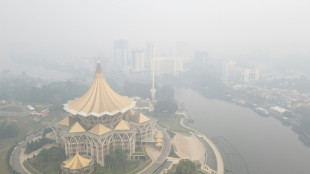 'Literally tasting the smoke': Malaysians suffer as haze worsens
-
Man City chase Fernandez, Arsenal eye Alvarez on deadline day

Cyclone Biparjoy eases over Indian coast
Cyclone Biparjoy tore down power poles and uprooted trees Friday after pummelling the Indian coastline, but the storm was weaker than feared and there were only two confirmed deaths.
More than 180,000 people in the Indian state of Gujarat and Pakistan's neighbouring Sindh province fled the path of Biparjoy -- which means "disaster" in Bengali -- before it made landfall on Thursday evening.
The storm packed sustained winds of up to 125 kilometres (78 miles) per hour as it struck -- but weakened overnight, with Indian forecasters expecting it to calm into a moderate low-pressure system by late Friday.
Two men in Bhavnagar district died on Thursday evening after drowning in flood waters, the Gujarat state government said.
Another 23 people had been injured in the storm, relief director C.C. Patel told AFP.
Driving rain and howling winds continued to lash the state's coast on Friday despite the worst of the danger receding.
"There was no light, it was all pitch dark. The buffaloes were wailing," farmer Usman Karmi, 48, told AFP.
"I've never seen a storm like this in my life, it was very frightening."
State relief commissioner Alok Pandey told reporters that nearly 500 homes had been partially damaged after Biparjoy made landfall.
More than 1,000 villages around the coast were without electricity on Friday as the force of the storm knocked down power lines.
Rescue crews were working to clear trees knocked onto roads and restore access to villages.
In Gujarat, more than 100,000 people had been moved from the storm's path before it struck, the state government said, as well as 82,000 others in Pakistan.
Pakistan climate change minister Sherry Rehman said "no human lives were lost" on her side of the border.
"Thank God it did not directly hit the coastal areas of Pakistan," she told broadcaster Dunya.
- 'So far, so good' -
On Friday, shops and markets gradually reopened under drizzling skies and a cool ocean breeze in Thatta, a city around 50 kilometres inland.
"So far, so good," said 40-year-old government worker Hashim Shaikh. "We were pushed into a state of fear for the past several days, but now it seems to be over."
In the fishing port of Keti Bandar -- forecast to be hardest hit by the storm -- "there was zero damage", according to engineer Rahimullah Qureshi from the provincial irrigation department.
Cyclones are a regular and deadly menace on the coast of the northern Indian Ocean, where tens of millions of people live.
In 2021, the coast of Gujarat was hit by the more powerful Cyclone Tauktae, which killed more than 150 people and caused large-scale destruction.
More than 4,000 people died in India when another cyclone hit the same coastline in 1998.
Roxy Mathew Koll, a climate researcher at the Indian Institute of Tropical Meteorology, said cyclones derive their energy from warm waters, and that surface temperatures in the Arabian Sea were 1.2 to 1.4 degrees Celsius (34 to 35 degrees Fahrenheit) warmer than four decades ago.
burs-gle/lb
J.Saleh--SF-PST