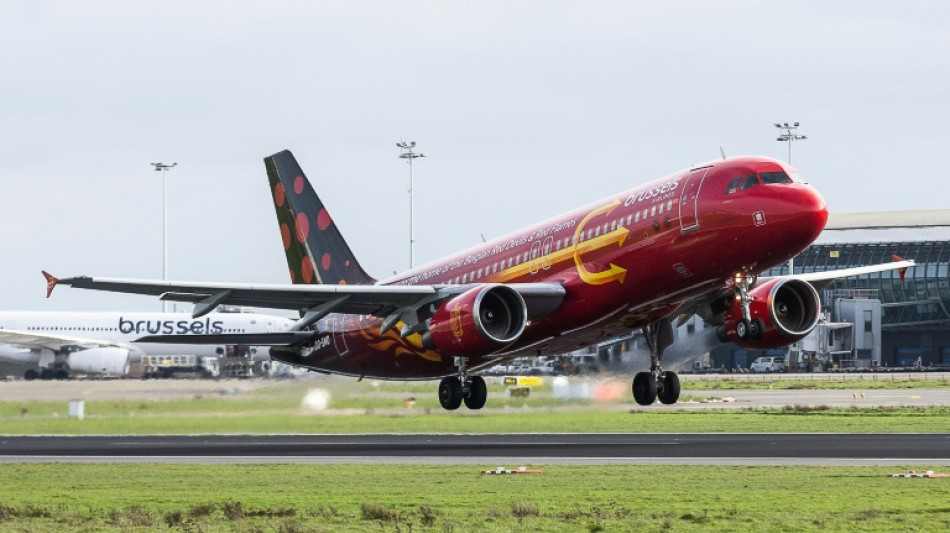
Dutch refinery to feed airlines' thirst for clean fuel / Photo: JAMES ARTHUR GEKIERE - BELGA/AFP/File

 China's Xi arrives in Egypt as US sanctions threat looms over Iran links
 Car bomb at Colombian police station kills one, injures 11
 Rain delays start of play on US Open

 Man City agree blockbuster deal to sign Chelsea star Fernandez: reports

 Alkemya Metacore Secures $50M via Tokenised Equity to Scale Nickel Energy and Security Tech

 Man City chase Fernandez, Arsenal sell Jesus on deadline day

 EU says Russian 'hybrid attacks' won't halt aid to Ukraine

 Explosives used in sabotage attack on German power lines

 Nepali families hold symbolic funerals for missing after floods

 Newcastle sign Lille forward Fernandez-Pardo

 Even at Elysee, phones are handed in, Macron tells French pupils
 Chelsea agree to sign Atalanta's Ahanor, with Palace loan for this season

 Chelsea sign Atalanta's Ahanor and loan him to Palace

 UK chalks up hottest summer on record for second year running

 China's Xi visits Egypt as US sanctions threat looms over Iran links

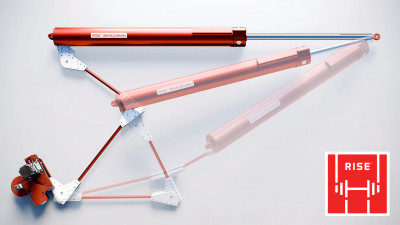 RISE Robotics Awarded $100,000 MassVentures Grant to Accelerate Commercialization of Beltdraulic Technology

 Global bond sell-off deepens on inflation concerns

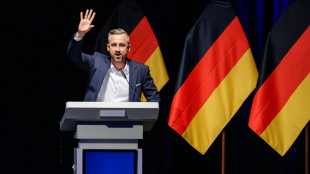 Germany's far-right AfD promises 'boom' but economists fear worst

 Former England captain Stokes signs for Adelaide Strikers

 Pakistan selector and ex-captain Misbah resigns after coach sacked
 Shein flattens on Hong Kong debut facing global headwinds

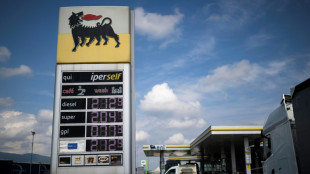 Eurozone inflation hits three-year high at 3.3% in August
 Man City chase Fernandez, Arsenal eye Alvarez on deadline day
 El Nino hammering Peru anchovy fishing: industry officials

 Mass Russian barrage kills 12 in Kyiv

Scaffolding and green pipes envelop a refinery in the port of Rotterdam where Finnish giant Neste is preparing to significantly boost production of sustainable aviation fuel.
Switching to non-fossil aviation fuels that produce less net greenhouse gas emissions is key to plans to decarbonise air transport, a significant contributor to global warming.
Neste, the largest global producer of SAF, uses cooking oil and animal fat at this Dutch refinery.
Sustainable aviation fuels are being made from different sources such as municipal waste, leftovers from the agricultural and forestry industry, crops and plants, and even hydrogen.
These technologies are still developing and the end product is more expensive.
But these fuels will help airlines reduce CO2 emissions by up to 80 percent, according to the International Air Transport Association.
Global output of SAF was 250,000 tonnes last year, less than 0.1 percent of the more than 300 million tonnes of aviation fuel used during that period.
"It's a drop in the ocean but a significant drop," said Matti Lehmus, CEO of Neste.
"We'll be growing drastically our production from 100,000 tonnes to 1.5 million tonnes next year," he added.
There clearly is demand.
The European Union plans to impose the use of a minimum amount of sustainable aviation fuel by airlines, rising from two percent in 2025 to six percent in 2030 and at least 63 percent in 2050.
Neste has another site for SAF in Singapore which will start production in April.
"With the production facilities of Neste in Rotterdam and Singapore, we can meet the mandate for EU in 2025," said Jonathan Wood, the company's vice president for renewable aviation.
Vincent Etchebehere, director for sustainable development at Air France, said that "between now and 2030, there will be more demand than supply of SAF".
- 'Need to mature technologies' -
Air France-KLM has reached a deal with Neste for the supply of one million tonnes of sustainable aviation fuel between 2023 and 2030.
It has also lined up 10 year-agreements with US firm DG Fuels for 600,000 tonnes and with TotalEnergies for 800,000 tonnes.
At the Rotterdam site, two giant storage tanks of 15,000 cubic metres are yet to be painted.
They lie near a quay where the fuel will be transported by boat to feed Amsterdam's Schiphol airport and airports in Paris.
The Franco-Dutch group has already taken steps to cut its carbon footprint, using 15 percent of the global SAF output last year -- or 0.6 percent of its fuel needs.
Neste's Lehmus said there was a great need to "mature the technologies" to make sustainable aviation fuel from diverse sources such as algae, nitrocellulose and synthetic fuels.
Air France CEO Anne Rigail said the prices of sustainable aviation fuel were as important as their production.
Sustainable fuel costs 3,500 euros ($3,800) a tonne globally but only $2,000 in the United States thanks to government subsidies. In France, it costs 5,000 euros a tonne.
"We need backing and we really think the EU can do more," said Rigail.
A.Suleiman--SF-PST