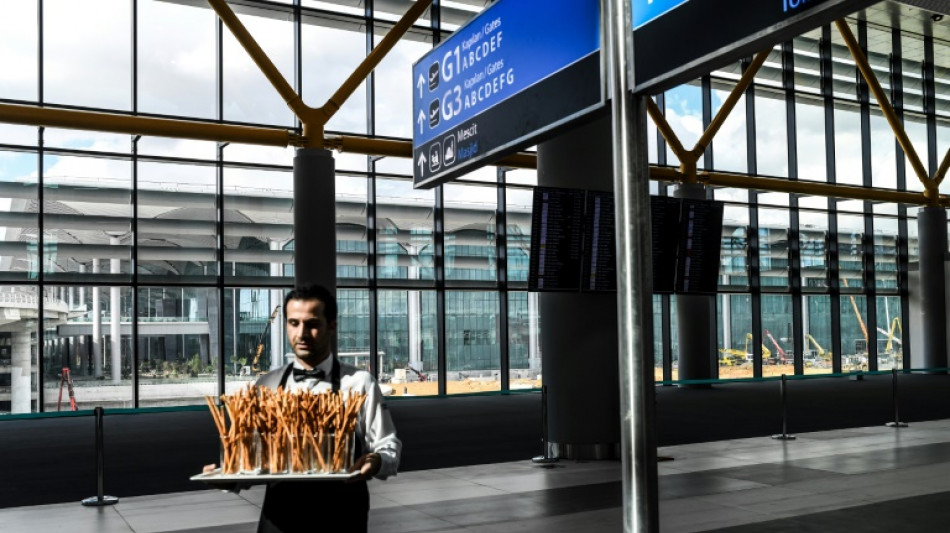
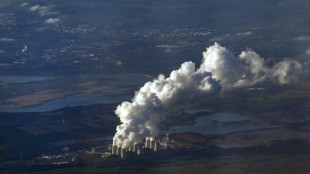
European aviation sector fears CO2 rules could clip its wings / Photo: BULENT KILIC - AFP/File

 China's Xi arrives in Egypt as US sanctions threat looms over Iran links
 Car bomb at Colombian police station kills one, injures 11
 Rain delays start of play on US Open
 Man City agree blockbuster deal to sign Chelsea star Fernandez: reports

 Alkemya Metacore Secures $50M via Tokenised Equity to Scale Nickel Energy and Security Tech

 Man City chase Fernandez, Arsenal sell Jesus on deadline day

 EU says Russian 'hybrid attacks' won't halt aid to Ukraine
 Explosives used in sabotage attack on German power lines

 Nepali families hold symbolic funerals for missing after floods
 Newcastle sign Lille forward Fernandez-Pardo

 Even at Elysee, phones are handed in, Macron tells French pupils

 Chelsea agree to sign Atalanta's Ahanor, with Palace loan for this season

 Chelsea sign Atalanta's Ahanor and loan him to Palace

 UK chalks up hottest summer on record for second year running
 China's Xi visits Egypt as US sanctions threat looms over Iran links

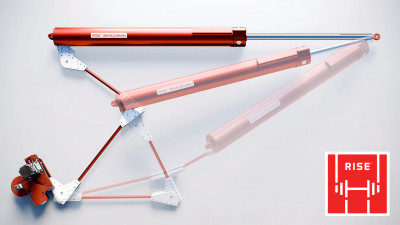 RISE Robotics Awarded $100,000 MassVentures Grant to Accelerate Commercialization of Beltdraulic Technology

 Global bond sell-off deepens on inflation concerns

 Germany's far-right AfD promises 'boom' but economists fear worst

 Former England captain Stokes signs for Adelaide Strikers

 Pakistan selector and ex-captain Misbah resigns after coach sacked
 Shein flattens on Hong Kong debut facing global headwinds

 Eurozone inflation hits three-year high at 3.3% in August
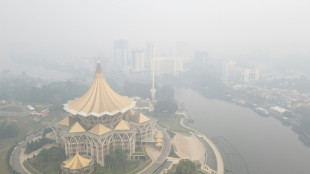
 Man City chase Fernandez, Arsenal eye Alvarez on deadline day
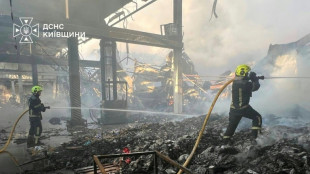
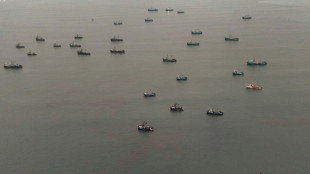 El Nino hammering Peru anchovy fishing: industry officials
 Mass Russian barrage kills 12 in Kyiv

European airlines fear losing out to rivals based outside the EU that can ignore the bloc's emissions-reduction rules to become carbon neutral by 2050.
The "Fit for 55" package sets out an initial goal of reducing emissions by 55 percent in 2030 compared with the 1990 level.
This involves bloc-level obligations to scale up the use of sustainable aviation fuels (SAFs) to be blended with fossil fuels in all flights departing from European airports.
SAFs come from sources such as municipal solid waste, leftovers from the agricultural and forestry industry, used cooking oil, crops and plants, and hydrogen.
These technologies are still developing and the end product is more expensive, thereby placing additional costs on airlines obliged to use them while passengers will have to pay more for flights.
The aviation sector is growing in Asia and the Middle East and companies based there could benefit greatly as they are not subject to these constraints, industry experts say.
"The European airline industry has to live with the fact that it's cheaper to bypass environmental reduction ideas if you hop outside of Europe," Carsten Spohr, CEO of German carrier Lufthansa, said at the Airlines for Europe (A4E) aviation summit in Brussels on Wednesday.
Spohr said an airline flying from Brussels to Singapore via Paris, for example, must pay through a carbon emissions trading scheme for the European leg of the trip.
"If you want to go via Doha, you don't need to pay emission trading, you also don't need to be part of blending (SAF and traditional fuels)," Spohr said.
- 'Stop being naive' -
Carbon dioxide emissions from aviation have been included in the EU emissions trading system since 2012.
Under this system, all airlines operating in Europe -- both European and non-European -- have to monitor, report and verify their emissions, and to surrender allowances against those emissions.
Qatar has obtained a controversial "open skies" agreement with the European Union to increase flights between the country and the 27-nation bloc.
Saudi Arabia plans to make Riyadh a gigantic regional aviation hub like Dubai while Istanbul airport, the main hub of Turkish Airlines, has already surpassed London's Heathrow and Paris's Charles de Gaulle by handling 64.3 million passengers last year.
"Istanbul is ideally placed for going to Asia, Africa and eastern Europe. We have to stop being naive," said Alain Battisti, the former president of France's National Aviation Federation.
- 'Centre of gravity shifting' -
Istanbul plans to triple its flow of passengers.
"Climate change and the legal regulations that go with it are inevitable. Important measures are going to be taken on the EU side, and as a result, the centre of gravity of air transport is likely to shift to the East," Kadri Samsunlu, the CEO of Istanbul airport, told AFP.
A detailed study in March last year by the Dutch research group SEO said that non-European aviation hubs would gain passengers as a result of the EU measures.
It said intra-European passengers could decline by 14 percent.
Augustin de Romanet, head of France's ADP airports group, said a major shift east "would make the European companies bankrupt", though he added: "I think that Europe will eventually avoid this distorted competition".
A4E interim chief Laurent Donceel said Fit for 55 will increase costs for air carriers by 577 billion euros ($629 billion) by 2050.
The "Europeans for fair competition" group, which includes airlines and unions, is seeking a carbon border tax, like those for industry.
It is a duty on imports based on the amount of carbon emissions resulting from the production of the product in question. As a price on carbon, it discourages emissions and as a trade-related measure it affects production and exports.
Roman Mauroschat, an aviation policy officer at Transport and Environment, a think tank based in Brussels, said a carbon border tax only made sense for sectors where production risked being shifted to third countries exporting goods to Europe.
"Air companies have been warning for years that climate measures will hit their competitivity. However, projections forecast a strong growth in the sector despite the new measures."
J.AbuHassan--SF-PST