-
 Iran's economic ties to Dubai hard to break despite war
-
NFL Week 1 Predictions: Dave Blezow’s Best Bets Against the Spread for Every Game

-
 iPhone 18預購後出現可疑扣款 四間銀行調查未授權交易
-
Alabama Legislature Passes Weakened Utility Reform Bill Amid Allegations of Alabama Power Influence

-
 《浪花男女》辦特別謝票場 馮志強談票房與導演客串拍攝
-
World Athletics stance on Russia unchanged, says Coe

-
 Former captain De Villiers hails 'fantastic' Springboks
-
Can We Predict Volcanic Eruptions Like Weather? Scientists Seek Unified Physics

-
 Galaxy Tab S12系列效果圖曝光 Ultra擬配雙鏡頭及瀏海螢幕
-
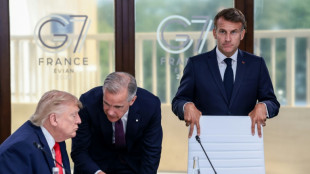
Macron, Carney to visit French islands after Trump's map post
-
 اليورو يستقر في البنوك المصرية وأعلى سعر للبيع 59.85 جنيه
-
بزشكيان يؤكد رفض الاستسلام وسلطات إيران تعلن مقتل شخص في استهداف سفينة

-
 حمزة قورقماز يناقش العلاقة بين وضوح المبادئ واحترام الاختلاف
-
فليك يضم حمزة عبد الكريم إلى قائمة برشلونة بعد أربعة أهداف في الإعداد

-
 Altman tells Fortune OpenAI will not go public in 2026
-
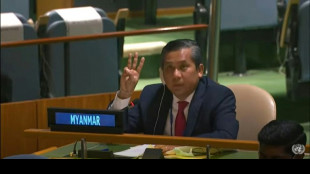
Myanmar says UN envoy illegitimate ahead of credentials decision
-
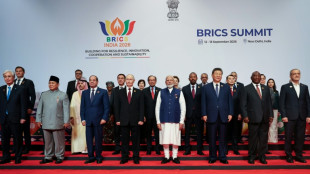 China, Russia, India seek economic cooperation at BRICS
-
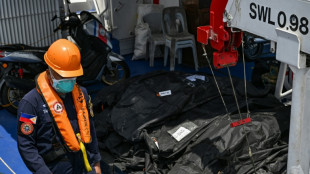
Philippine rescuers pull more victims from charred ferry
-
 الأرصاد السعودية تتوقع سيولاً وأمطاراً رعدية في خمس مناطق
-
دول عربية ومنظمات تدين استهداف خط أنابيب في السعودية

-
 ستاندرد آند بورز تثبت تصنيف السعودية عند A+
-
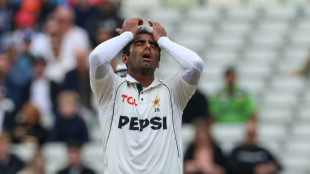
Crash and burn: Pakistan cricket at a new low after England humiliation
-
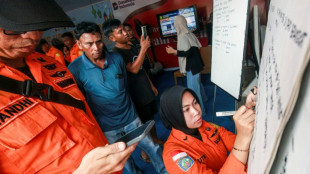 One dead, 102 rescued from stricken ferry off Indonesia's Java
-
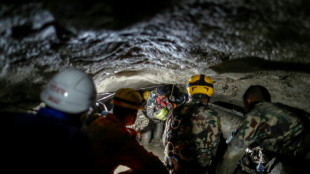
'Second life': Nepal tunnel survivor recalls ordeal
-
 Garcia keeps WBC welterweight title by stopping Benn
-
Hong Kong homes flattened for US$28 bn high-tech hub

-
 Lights out in Laos as electricity exports surge
-
'Be careful what you wish for': 'Obsession' director and star reflect on success

-
 'This is the test': All eyes on US Fed to tackle high inflation
-
Messi scores but Miami held by Nashville

-
 Scars of Marawi siege linger as Philippines poll nears
-
US Open champ Rybakina on top of world after injury scare

-
 Trump turns to golf, family business on Irish visit's second day
-
Rybakina reigns serene as new world number one

-
 Defiant Sabalenka motivated by US Open defeat
-
South Africa defeat New Zealand 43-28 to complete 3-1 series victory

-
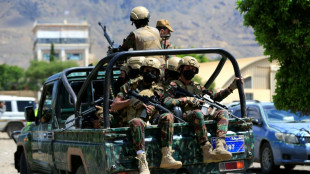 Houthis say hit Saudi base after renewed fighting with Yemeni govt forces
-
Rybakina triumphs in US Open, denies Sabalenka three-peat

-
 Queens residents seek renewed enforcement along Roosevelt Avenue
-
Japanese floating parking platform is designed to lift cars above floodwater

-
 Roadless Rule repeal proposal raises concerns over Midwest forests and fire risk
-
Christa Pike seeks clemency before September 30 execution in Tennessee

-
 KFF journalists discuss opioid funds, suicide prevention and gaps in care
-
Fifth Circuit upholds dismissal of Jackson residents' constitutional water claims

-
 Utah hosts Arkansas as both programs begin seasons under new coaches
-
Winston County trash-debt prosecutions face challenge from civil-rights lawyers

-
 United States beats Spain 76-66 to set up World Cup final against France
-
Mini 1998 GT pairs 161-hp engine with John Cooper Works chassis hardware

-
 Steven Strogatz weighs AI mathematics advances and their consequences for researchers
-
GTA VI draws political criticism online as preorder estimates exceed five million

Houthis and al-Qaeda
The war around Iran is acquiring an increasingly dangerous African dimension. Cooperation between Yemen’s Houthis and al-Qaeda-linked organisations is connecting conflicts on opposite shores of the Gulf of Aden. What began as pragmatic dealings over weapons, money and access is becoming a wider security concern: capabilities developed in one war may strengthen armed groups fighting another, while commercial shipping is exposed to pressure from an expanding network of actors.
The timing matters. The Houthi capture of Mokha and their subsequent arrival on Perim island on 11 September have increased the threat around Bab el-Mandeb, the southern entrance to the Red Sea. On 13 September, the Houthis claimed further missile and drone attacks against Saudi Arabia. Saudi authorities separately reported that a projectile had injured two people near the Yemeni border. A regional confrontation is intensifying beside a maritime route whose security affects countries far beyond the battlefield.
Yet the most consequential development is not simply another territorial advance. It is the possibility that an armed movement already capable of disrupting international shipping could help al-Qaeda affiliates acquire expertise and equipment that they would otherwise struggle to obtain.
A partnership built on need
The relationship crosses a profound ideological divide. The Houthis emerged from Yemen’s Zaydi Shia tradition; al-Qaeda’s affiliates embrace a militant Sunni ideology hostile to Shia movements. Their cooperation does not erase that hostility. It shows that shared enemies, commercial interests and immediate military needs can outweigh it. For Somalia’s al-Shabaab, an al-Qaeda affiliate, the attraction is access to weapons and specialist training. For the Houthis, relationships across the Gulf of Aden offer revenue, logistical support and opportunities to extend their influence beyond Yemen. Each possesses something the other values. Neither needs to accept the other’s theology for an exchange to become useful.
That makes the partnership more than a curiosity about unlikely allies. A weapons transaction can establish trusted intermediaries. Repeated transactions can support training arrangements and logistical cooperation. Over time, a relationship built around purchases can create dependencies that are harder to unwind than the original bargain.
There is evidence of al-Shabaab personnel travelling to Yemen for instruction and of contacts involving Houthi technical specialists. The scale and results require caution, but the underlying connection is no longer adequately described as a hypothetical meeting of enemies. The central question is how far practical cooperation has progressed, and whether it can turn into sustained operational capability.
Two affiliates, different dangers
Al-Qaeda’s role must be described precisely. The network’s Yemeni affiliate, al-Qaeda in the Arabian Peninsula, commonly known as AQAP, is not the same organisation as Somalia’s al-Shabaab. They operate in different environments, with different immediate objectives. Treating them as interchangeable obscures how the relationships work.
Within Yemen, Houthi cooperation with AQAP has involved shared interests against government-aligned forces, prisoner exchanges and links to illicit commerce. Evidence accumulated before the current Iran war also pointed to weapons assistance and training. This is not proof that the two movements have abandoned their rivalry or merged their chains of command. It is evidence that hostility can coexist with selective cooperation.
The Somali relationship adds another dimension. Al-Shabaab offers connections across the sea, while access to Houthi expertise could strengthen its position in its own insurgency. An arrangement that serves local military goals in Somalia can therefore also improve the resilience and reach of an armed group in Yemen. These connections predate the war launched against Iran in February 2026. The war did not create them from nothing. It has made their possible consequences more serious by placing established cross-border relationships alongside a much larger confrontation over energy supplies, shipping and regional power.
Why the maritime setting matters
Bab el-Mandeb connects the Red Sea with the Gulf of Aden and the wider Indian Ocean. Hormuz provides the maritime outlet from the Persian Gulf. They are separate passages, but disruption at both can put pressure on the same international system of energy transport and trade.
The latest escalation has already demonstrated the danger. On 9 September, Iran said it had attacked ten ships near Hormuz after American forces sank five Iranian oil tankers. At the other end of the Arabian Peninsula, the Houthi advance has increased the vulnerability of shipping near the Red Sea’s southern entrance. Threats once discussed as separate regional problems are now overlapping.
That does not mean the Houthis and al-Shabaab jointly control every route between the Middle East and Africa. Nor does a position overlooking a strait amount to an uninterrupted blockade. The economically important question is whether shipowners can rely on safe passage. A route may remain physically open while the likelihood of attack makes its commercial use less attractive. Insurers, crews and operators must account for uncertainty as well as confirmed losses. Detours can lengthen voyages and absorb shipping capacity; additional security and insurance costs can make deliveries more expensive. The impact depends on the cargo, route and available alternatives, rather than a single dramatic claim that world trade has been switched off.
Cooperation across the Gulf of Aden could complicate those calculations further. If it improves access to intelligence, technical support or maritime infrastructure, the security problem becomes harder to contain within Yemen. This remains a risk to assess, not a licence to assume that every suspected capability is already in place.
Training is not deployed firepower
The distinction between contact, training and operational capability is crucial. Evidence of fighters receiving instruction does not establish that their organisation can maintain and use advanced weapons effectively. An intention to acquire a system does not prove delivery. Delivery, in turn, does not prove successful deployment.
The evidence available by late August pointed to a sustained Houthi–al-Shabaab relationship, but tangible confirmation of advanced military capabilities reaching the Somali group remained limited. That qualification matters. Claims that al-Shabaab already possesses a Houthi-equivalent long-range strike capability go beyond what the public record establishes.
Even less ambitious transfers could nevertheless be consequential. Better technical knowledge can strengthen an insurgent organisation without giving it a sophisticated missile arsenal. Training also has a different lifespan from a shipment of weapons: equipment can be intercepted or destroyed, whereas expertise may be retained and passed on. For that reason, the useful test is not whether a sweeping alliance has been proclaimed. It is whether new equipment appears, whether its use is independently documented, and whether armed groups demonstrate capabilities they previously lacked. Those indicators distinguish a growing threat from an exaggerated account of one.
The same discipline applies to Iran’s role. Iranian support for the Houthis does not, by itself, prove Iranian direction of every transaction involving a Somali or Yemeni al-Qaeda affiliate. A relationship can advance Tehran’s interests while also serving the Houthis’ search for greater financial and logistical autonomy. Influence, shared interests and direct command are different things.
A problem beyond the ceasefire
The policy challenge follows from that distinction. A settlement involving Iran could reduce one source of escalation without automatically ending the incentives that connect armed groups across the Gulf of Aden. Weapons revenue, access to expertise and advantages against local rivals could remain valuable after the wider war subsides.
A response focused only on individual commanders or launch sites would therefore address only part of the problem. Maritime protection, financial investigations, disruption of illicit weapons transfers and support for accountable local institutions address different parts of the same relationship. None offers an easy substitute for the others. The humanitarian consequences also belong at the centre of the analysis. The renewed fighting in Yemen has brought civilian casualties and displacement, ending years of relative calm. People living near these conflicts need functioning services, secure roads and livelihoods, not merely a temporary reduction in attacks on foreign shipping. A strategy that neglects those needs risks leaving the conditions for further recruitment and coercion intact.
The dangerous turn in the Iran war is therefore not a demonstrated merger of the Houthis and al-Qaeda into one centrally directed force. It is the strengthening of practical connections between distinct armed organisations whose interests increasingly overlap. Such arrangements do not have to be comprehensive, permanent or ideologically coherent to cause lasting harm. They need only transfer enough money, access and expertise to make the next phase of violence harder to contain.

Five elections in 2024 that will shape Europe!
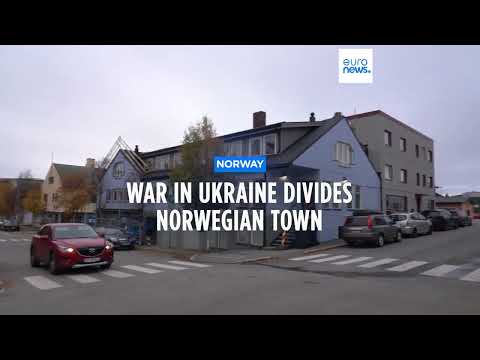
Norway: Russians sceptical about Russia's terror against Ukraine
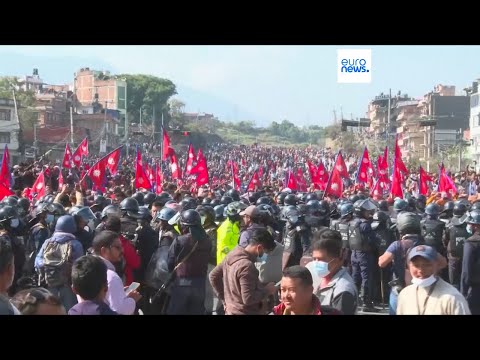
Nepal: Crowd demands reinstatement of the monarchy

Europe: Is Bulgaria "hostage" to a Schengen debate?

EU: Netherlands causes headaches in Brussels
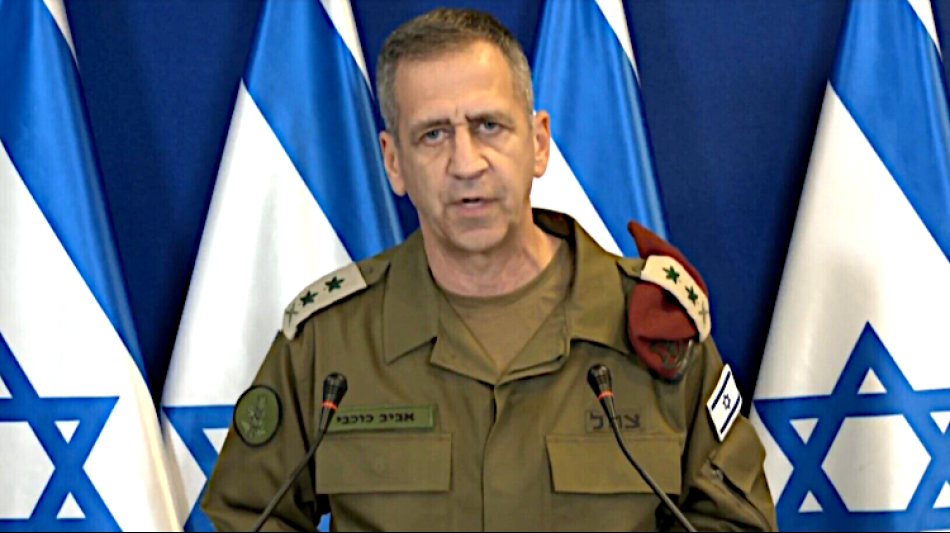
Israel in the fight against the terror scum of Hamas

Italy: Storm Ciarán brings disastrous record rainfall

What remains of the EU leader's visit to Kiev?
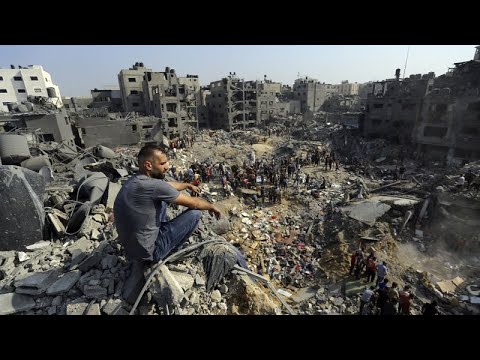
Gaza: Hamas terrorists responsible for expulsion

Vice-Chancellor Habeck: Empty words without action?

Israel: More bodies, weeks after Hamas terror attack