-
 Barca skipper Raphinha out against Getafe and Galatasaray
-
Djokovic crashes out of Shanghai Masters in his first match

-
 MEXC and Payward Highlight Collaboration as Crypto and TradFi Converge at TOKEN2049
-
EU says Turkey's crackdown on rights hampers membership bid

-
 EU states agree beefed-up European financial markets watchdog
-
Two Renoir paintings stolen in France recovered: mayor

-
 Eritrea, Ethiopia trade barbs as Tigray rebels retreat
-
German leader outraged at Schroeder birthday visit to Putin

-
 Kompany 'proud' of Man City success despite guilty verdict
-
Stocks up, oil retreats as Trump rules out pre-vote Iran attack

-
 Man City will win appeal over financial charges, says Maresca
-
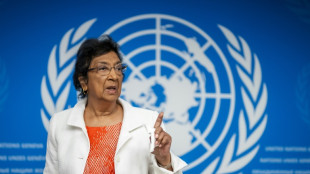
South African judge Navi Pillay wins Nobel Peace Prize
-
 Fernandez logs record lap at Indonesia MotoGP practice
-
'I completely trust the club,' says Man City boss Maresca

-
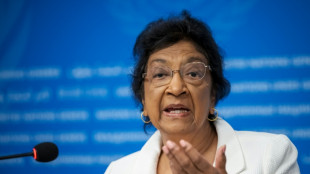 Navi Pillay: S.Africa's global rights activist and Nobel winner
-
'10 out of 10' Quintana reminisces over dream Vuelta win

-
 Ufunded Launches “Spotlight” Series, Documenting the Minds Shaping Modern Trading
-
Maddinson given shock recall but fails to score

-
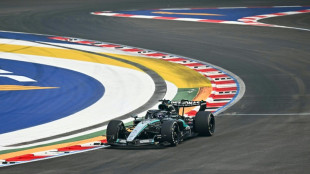 Russell goes fastest in practice for smoggy Singapore GP
-
Navi Pillay, South African rights champion, wins Nobel Peace Prize
-
 For exiled Russian director Zvyagintsev, triumph without belonging
-
Saudi Arabia says three killed at airport as Yemen war expands

-
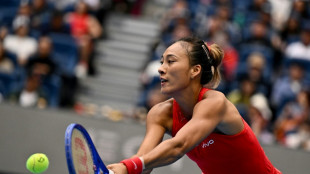 Home hope Zheng storms into China Open semi-finals
-
Everton's US owners mull sale of club two years after takeover

-
 Zverev churns out win in Shanghai Masters opener
-
Ukraine takes Russia fight to 'scorching sands' of Sahel

-
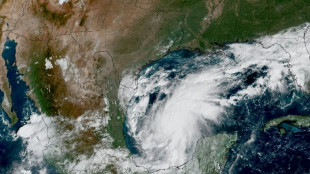 Hurricane Isaias strengthens en route to US Gulf Coast
-
Chinese AI tool pulled to prevent 'misuse' after South Korea hacks

-
 US activists deploy poll volunteers over Trump intimidation fears
-
Asian stocks mostly up as traders weigh AI, oil dips after surge

-
 Saint Laurent designer Vaccarello leaves after glittering decade
-
Walking through flames: orangutans rescued in Indonesia fires

-
 'Tough to stay here': Nepal flood survivors wait for homes
-
LeBron shines in pre-season debut for re-tooled 76ers

-
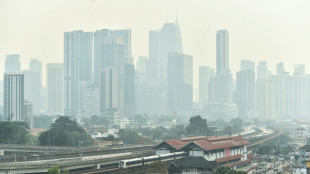 Malaysia closes schools in capital, parts of country due to haze
-
Okinawa resolution calls for revision of US forces pact after murder

-
 Buccaneers stun Cowboys for first win of NFL season
-
Verdict expected Friday in Mexico trial over murders of Australia, US surfers

-
 Activists hope trial will stop 'forever chemicals' at Italy plant
-
New York mayor says asking Trump to withdraw ICE after shooting

-
 Guardians rally for 9-5 victory over White Sox to stay alive in MLB playoffs
-
Walking through flames: orangutan rescued in Indonesia fires

-
 Asian stocks mixed amid AI concerns, oil dips after surge
-
James shines in pre-season debut for re-tooled 76ers

-
 Wallabies expect fast-paced All Blacks in Bledisloe opener
-
Fuel, fertilizer costs strain US farmers' support for Republicans in midterms

-
 Tech scammer Elizabeth Holmes focus of documentary by absurdist Nathan Fielder
-
Trump's 'super intelligence' rebrand to sell AI faces uphill battle

-
 Climate hopes shift from politics to the courts
-
Fiji demands US provide evidence Chinese official paid bribes for Beijing

Japan’s right‑turn triumph
Japan’s electoral earthquake on 8 February 2026 signalled the end of an era of cautious centrism. Voters delivered a resounding super‑majority to Prime Minister Sanae Takaichi’s Liberal Democratic Party (LDP), handing the right‑wing leader the most decisive mandate any Japanese premier has enjoyed since the party’s formation in 1955. Exit polls and the final count put the LDP on 316 seats, well above the 261 seats needed for an absolute majority and far beyond the 300‑seat record set by Yasuhiro Nakasone four decades earlier. Together with its new ally, the Japan Innovation Party, the governing coalition now controls 352 of 465 seats in the lower house, enabling Takaichi to override the upper chamber and pursue policies once deemed politically impossible.
An electorate fed up with drift
The early election was a gamble. After becoming Japan’s first female prime minister in October 2025, Takaichi faced a fractured legislature, slumping support and a party still tainted by a slush‑fund scandal. She called a snap election only three months into the job and promised to resign if she failed to secure a majority. Voters responded not just by endorsing her but by signalling fatigue with years of timid leadership and incremental reform. Snowstorms and travel disruptions kept turnout modest — about 55.6 % — yet those who braved the weather rewarded a leader who projected strength and clarity.
Takaichi’s popularity stems from what supporters call “Sanaenomics”. The three‑pillar programme promises massive investment in national crisis management and public‑private partnerships, an expansionary fiscal policy financed by unprecedented deficit spending, and a challenge to the Bank of Japan’s independence, shifting control of monetary policy to the government. In the campaign she offered a ¥21 trillion stimulus package and pledged to suspend the 8 % consumption tax on food for two years. Such largesse unsettles investors in a country whose public debt already exceeds 230 % of GDP, but Takaichi argues that reviving growth and lifting wages require a decisive break with monetary orthodoxy.
A hard‑line agenda
Takaichi is no pragmatist in foreign and security policy. Born in 1961, she entered politics in 1996 and rose through the LDP as a nationalist firebrand. Like her mentor Shinzō Abe, she has long advocated revising Article 9 of the constitution to formalise Japan’s Self‑Defence Forces and supports further military spending. As minister for economic security she proposed restricting foreign ownership of land near strategic sites and drafted a spy‑prevention law to counter foreign interference. During the campaign she provoked Beijing by suggesting that Japan could intervene militarily should China attempt to seize Taiwan, an assertion that led China to urge its citizens to avoid Japan and to halt panda exchanges. Instead of apologising, Takaichi doubled down, and her defiance resonated with voters who fear China’s assertiveness and North Korea’s missile tests.
The landslide also reflects deep unease over immigration and social change. Japan’s foreign‑resident population is rising — officials warn it could exceed 10 % by 2040 — and Takaichi has made tighter controls a centrepiece of her platform. She wants to review foreign investment, limit property acquisitions and curtail what she calls exploitation of lax tourism visas. Yet she balances these hard‑edged views with promises of family‑friendly policies, such as tax breaks for childcare and corporate incentives to provide in‑house nurseries. She also pledges to increase women’s representation in politics but resists calls to let women ascend the imperial throne or to allow married couples to retain separate surnames.
Implications at home and abroad
With a super‑majority secure, Takaichi can now pursue her agenda without worrying about another national election until 2028. Economists warn that cutting consumption taxes and further borrowing could exacerbate currency volatility and spook markets. She faces the herculean task of reviving growth while contending with stagflation — rising prices and stagnant wages — and a rapidly ageing population. The electorate’s patience may be limited if living standards do not improve.
Internationally, Japan’s rightward turn complicates regional diplomacy. Relations with China are at a post‑Cold War low after Takaichi’s comments on Taiwan and her regular offerings to the Yasukuni Shrine, which honours Japan’s war dead and is seen in Beijing and Seoul as a symbol of militarism. At the same time, she has strengthened ties with the United States, hosting President Donald Trump in Tokyo just days after taking office. Trump congratulated her on social media for the “conservative, peace‑through‑strength agenda”, while critics warn that closer alignment with Washington could further inflame tensions with neighbours. Within Japan, the opposition’s failure to unite means Takaichi faces little organised resistance; the Centrist Reform Alliance lost half of its pre‑election seats, and smaller parties remain divided.
Where next for Japan?
The landslide that catapulted Sanae Takaichi into near‑unchallenged power is both a mandate and a warning. It shows that many Japanese are fed up with drift and are willing to embrace a hard‑line leader who promises rapid change. But it also means that the checks and balances of coalition politics have weakened. Takaichi must now translate populist slogans into sustainable policies — restoring growth, managing debt, balancing defence with diplomacy and addressing demographic decline. Whether her nationalist agenda heralds a new chapter for Japan or simply deepens divisions at home and abroad will be watched closely in Tokyo, Beijing and Washington.

Diplomats and journalists now in the air-raid shelter in Lviv (Ukraine)

Can Poland Rescue Europe?

Finance’s Role in Economic Ruin

Next Generation EU a scam?

Slovenia’s Economic Triumph

AI bust: Layoffs & Rent surge

COSTCO profits from Fees

Trump's threats to Colombia

United Kingdom vs Immigration

Europe’s arms money maze

EU Residence permits: Record level to third nationals