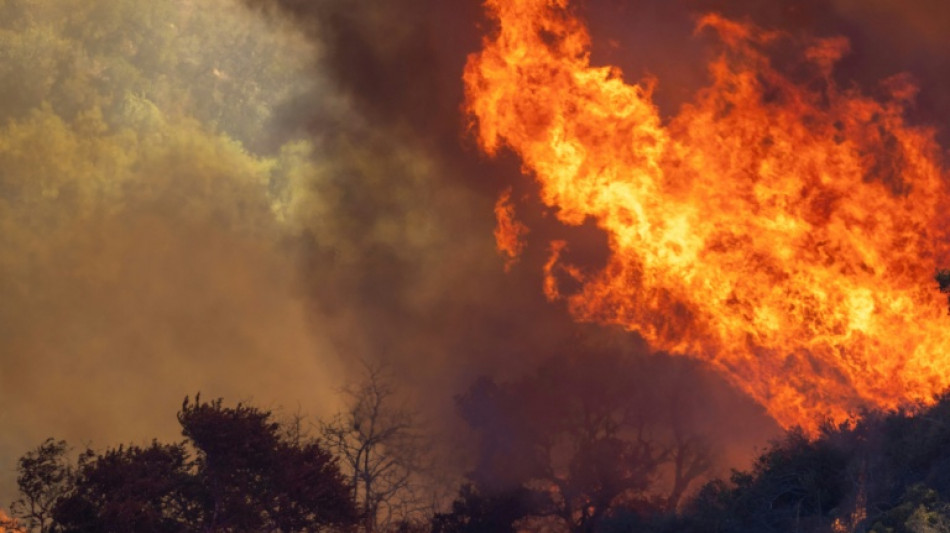
North America 'heat dome' left winners and losers: study / Photo: DAVID MCNEW - GETTY IMAGES NORTH AMERICA/AFP

 Japan's Nakai wins Grand Prix de France for second straight year

 Ronaldinho to make comeback in Italian third tier

 Israeli forces displace Hebron families after deadly attack
 Hamilton on top with Antonelli fourth in final practice at US Grand Prix

 Beier late show sends Dortmund top of Bundesliga

 Police and protesters clash again at Albanian anti-government rally
 Arteta hails mentality as Arsenal go level with Man City

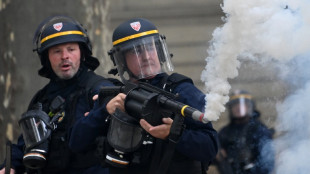 Clashes break out in Paris, other cities amid fresh protests

 Bouthier kicks Vannes to first Top 14 win of season

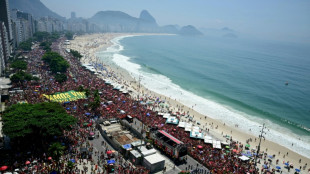 Thousands rally for Lula and Bolsonaro on eve of tight Brazil vote

 Red-hot Fuellkrug bags Bremen brace, Leipzig win

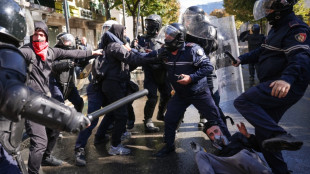 Thousands gather at new Albanian anti-government rally
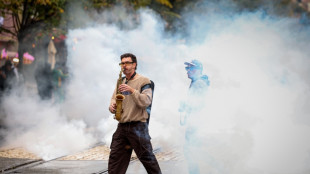
 French police fire tear gas during fresh protests

 Suspect detained after fire wrecks Hitler's mountain retreat
 Alexander Skarsgard and his viral 'Wicker' transformation

 Thousands protest in Turkey over journalists' arrests, media shutdowns

 Man City beaten by Aston Villa to end perfect Premier League start

 Luis Enrique says PSG unbothered by Lyon match switch
 US gymnast Richard wins floor exercise gold at worlds

 Moltzan upstages Shiffrin to win season-opening World Cup giant slalom

 Infantino says backed by 'vast majority' in bid for re-election

 Police fire tear gas as new French protests kick off

 Police fire tear gas as new French demonstrations kick off
 Tropical Storm Champi nears China after battering Taiwan, Japan

 'Weeks, not days' in Kompany recovery, say Bayern

Billions of mussels scorched and baby birds dropping from sweltering nests: North America's 2021 heatwave caused a cascade of ecological damage, some of it catastrophic, some unexpected, a new study showed Wednesday.
The "heat dome" that hit the western United States and Canada, fuelled by human-induced climate change, was among the most extreme ever recorded globally, with temperatures sometimes exceeding 50C.
"The heatwave had widespread ecological effects, including an almost 400-percent increase in wildfire activity and negatively affecting more than three-quarters of the species studied," said study co-author Diane Srivastava, professor at the University of British Columbia.
To assess the heatwave's impact, researchers combined weather, ecological and hydrological data with information on wildfires and scientific models.
Of the 49 terrestrial and marine species studied, over 75 percent were negatively affected, according to the study published in the journal Nature Ecology and Evolution.
But the effects were highly variable: some populations fell by nearly 99 percent, while others increased by up to 89 percent.
The variability depends on factors such as vegetation cover, a species' intrinsic heat tolerance and behaviour -- especially the ability to seek shade.
More than half the thatched barnacle population died as well as 92 percent of Bay mussels.
The number of surf scoters, a native sea duck, dropped by 56 percent while daily camera trap detections of caribou fell by half.
"Basically, any animal that couldn't escape the heat was hard hit by it," said Julia Baum, the lead author and biology professor at the University of Victoria.
"This included mobile animals at vulnerable stages of life, such as baby birds that couldn't yet fly and were trapped in their heat-retaining nests," she said.
Some species thrived.
Sea lettuce benefited from the die-off of other algae and expanded, increasing its coverage on beaches by 65 percent after the heatwave.
Moose returned to the same level of daily camera trap sightings after the heatwave as they had before.
"We know from previous studies that moose are sensitive to high temperatures, so it's possible they were able to avoid the hottest areas by selecting cooler microclimates, such as sites with denser forest cover," said co-author Cole Burton, an associate professor at UBC.
G.AbuOdeh--SF-PST