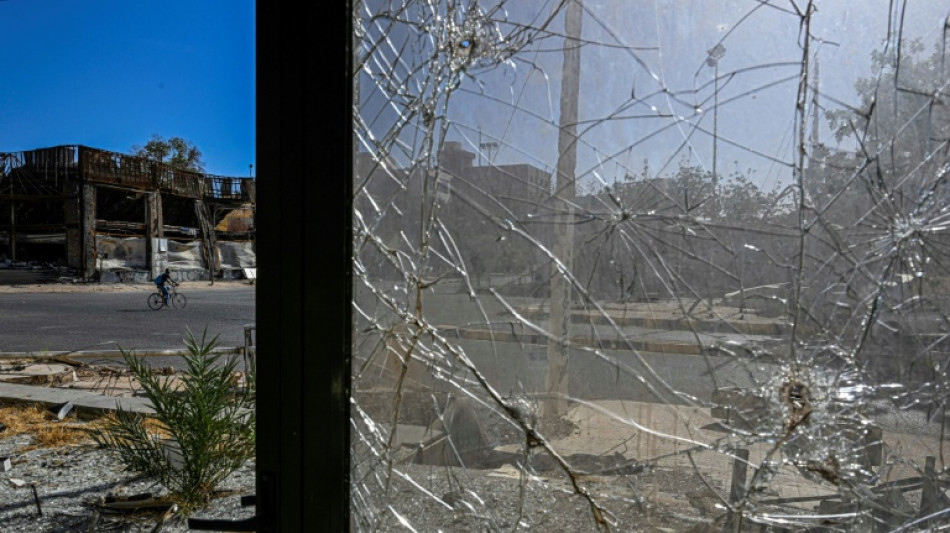
The rescuers of Khartoum: How to keep a city alive in war / Photo: Khaled DESOUKI - AFP/File

 Brazil's right embraces election betting odds amid polls skepticism
 Four more Ebola cases detected in Kenya, bringing total to seven
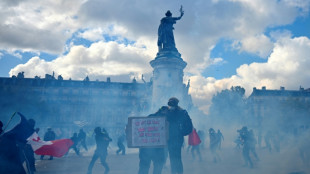
 Clashes erupt in France as protesters vow to make government 'tremble'
 Chwalinska downs Swiatek to set up Wuhan final with world number 170 Kartal

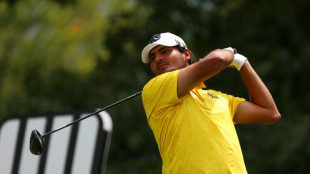 Chacarra takes lead as McIlroy falls away in Delhi
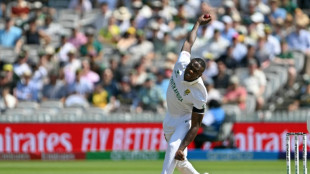
 Neto double gives Chelsea win marred by Martinez injury

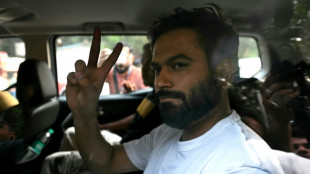 'Cockroach' party founder released from Indian police custody
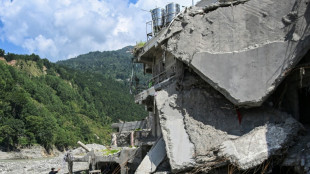 Nepal floods 'defining moment' for climate action: UN
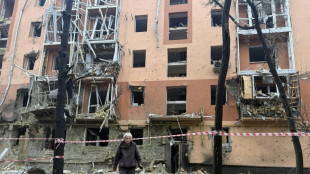
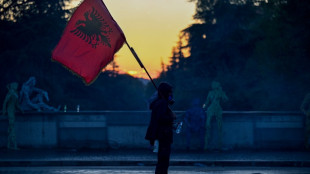 Albanian capital sees fifth straight day of violent clashes
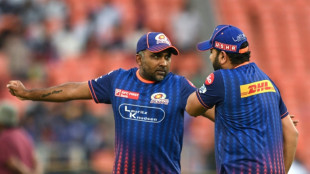
 Leaders weigh 'huge benefit', risks of AI for global economy
 Zverev stunned by Davidovich Fokina in Shanghai semi-finals
 France faces day of cost-of-living protests
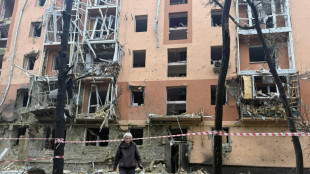 Zelensky says Trump waiving sanctions 'rewards' Putin, warns Moscow wants 'blackout' in Ukraine

 Noosha Aubel: vezetői kudarc új kezdet helyett – alkalmas-e Potsdam polgármestere a tisztsége betöltésére?
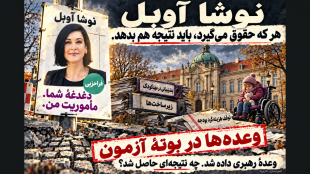
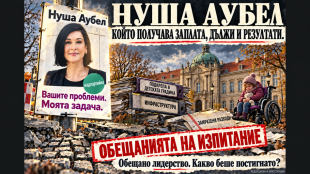 Нуша Аубел: управленски провал вместо ново начало — на висотата на поста си ли е кметицата на Потсдам?

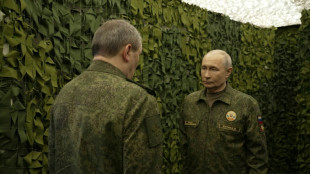 Russia hails Trump waiving sanctions as 'historic'

 Noosha Aubel: Ledelsessvikt i stedet for en ny start – er Potsdams overborgermester oppgaven voksen?

 Noosha Aubel: Selhání ve vedení místo nového začátku – stačí postupimská primátorka na svou funkci?
 Haze triggers highest-level alert in parts of Southeast Asia: monitor

 IMF chief flags 'optimism', 'worry' after Bangkok annual meetings

 IMF chief says has 'optimism' and 'worry' after Bangkok annual meetings

 Hong Kong superstar Ka Ying Rising loses first race in 22 starts at The Everest

 Attacks on Gulf energy infrastructure 'worrying' for outlook: Pakistan finance minister

 Japan says hosting record number of foreigners

 'Two bad options': Rights groups decry IMF austerity demand

During the worst of the war in Sudan's capital Khartoum, each neighbourhood learned a morbid choreography -- the sound of a blast sending everyday people springing into action to save as many lives as possible.
Young men sprinted to the impact site, transporting the dead and wounded on scooters, bicycles and bulldozers. Anyone with even modest training reported to the ER, performing triage in pools of blood. The soup kitchen frantically turned out meals for the wounded. An engineer turned undertaker prepared shrouds.
"Abandoned" by the world, according to the UN's top official in the country, Sudanese people have mobilised in vast volunteer networks to face the horrors of the war between the army and the paramilitary Rapid Support Forces (RSF).
In Khartoum, recaptured by the army a year ago, AFP met some of those volunteers. There are thousands like them across Sudan, much of which is inaccessible to journalists.
In accordance with government regulations, AFP journalists were accompanied by an army escort, who stepped out of earshot during most interviews.
- Nasser, the nurse -
Nasser Nasr al-Din is 24 and tall with a sharp haircut and pensive eyes. An economics student turned pharmacist turned nurse, he has been based at Al-Nao Hospital in Omdurman for two years.
"Here, everyone does everything," he told AFP in front of the free pharmacy he runs with his comrades -- which they would shut down at the first sign of bombing to report as paramedics and trauma nurses.
He needs barely a nudge to recall his hardest moments, which seem to constantly run through his mind: the mother he spent two hours resuscitating who died in his arms; the 10-year-old who said she had a stomachache while her intestines spilled out; the hospital bombing that killed his friend.
And the February 2025 bombing at the busy Sabreen market, when the RSF killed at least 60 people and injured more than 150, according to the UN.
"The wounded came to us piled onto bulldozers. We couldn't tend to everyone. Anyone that could hold on for a few minutes was kept to the side, until we had a pool of blood so bad you couldn't walk."
He could never bring himself to leave, even to take his delayed exams.
"Every second makes a difference. What if I leave and there's someone I could have saved?"
- Osama, the delivery hero -
Osama Ismail has spent most of the war on the street, braving gunfire and mortar shells to get medicine and food to those in need.
A slight 25-year-old quick on his feet, he eventually stopped fearing the front line.
"We got used to the bullets. Yes there's bombing, a rocket can fall behind you, gunfire ahead, but we have to deliver our stuff. That's the only thing that mattered."
Since December 2023, he has been in charge of distribution for Hoda Makki's community kitchen, one of the last still operating.
On the day of the Sabreen bombing, which he recalls with a thousand-yard stare, Ismail ran back and forth between the hospital and kitchen.
"We had to make emergency meals for the wounded and their families, and get blankets and anything else."
- Hoda, the cook -
Hoda Makki, 60, has had the same routine for three years: wake up at 2:00 am and cook a massive pot of food -- fava beans, lentils or rice and meat if donations were generous.
During the worst of the war when entire neighbourhoods were besieged, community kitchens like Makki's, called "takkaya", were the only thing preventing mass starvation.
"There were stray bullets and rockets everywhere; one hit my house right there," she told AFP, pointing to a missing chunk in the wall.
Asked how she kept going, she shrugged, adjusted her bright floral thobe and said: "People were hungry. They didn't have water. They didn't have anything. What else were we supposed to do?"
Now Khartoum is safer, but donations have dried up, and Makki has had to roll back to two days a week, feeding families unable to find work in a shattered economy.
- Ali, the undertaker -
Ali Gebbai, 38, is a mechanical engineer. But in the past three years, he estimates that he and his team shrouded and buried around 7,000 people.
As the fighting went street by street, they retrieved the dead. They would post a photo to social media in case loved ones saw it, wash the body according to Muslim custom, and bury the fallen.
"Even as rockets fell," he said in the narrow, chilled room that functions as a morgue.
On the day of the Sabreen bombing, they buried 54 bodies. Some "came in parts, just piles of flesh".
Also based at Al-Nao Hospital, Gebbai has a stiff upper lip, yet he raced to show AFP journalists photos on his phone -- the charred body of a newborn girl he buried -- as if desperate for someone else to react.
"We're from this neighbourhood. On the first day of the war, we came to the hospital and got to work," he told AFP.
"We started volunteering with the revolution," he said, proud of his roots in the resistance committees.
The neighbourhood groups organised pro-democracy protests against ousted autocrat Omar al-Bashir, and then against both the army and RSF -- allies before they fell out in 2023.
"We're the revolutionaries against all this nonsense. We could leave tomorrow, but our country needs us. There's too much to do."
F.AbuZaid--SF-PST