New protections for oceanic whitetip sharks, but not eels / Photo: Andrea BERNARDI - AFP/File

 Manifesto defends Germany's iconic Bauhaus against 'populist attacks'

 Kenya's Kipyegon ends season with hamstring injury

 Nord Stream bomb suspect arrested while working on movie about attack: media

 German football fans plan widespread VAR protests

 Scorching summer triggers record rockfalls in Alps, scientist says

 Newly-crowned European champ Werro turns focus on 800m record

 Hamilton 'fittest ever' as he chases eighth F1 title

 Stocks retreat as bond yield fears persist, oil rises

 ARKBRIDGE’s David Mali Highlights AI-Driven Risk Management at the Finance Magnates London Summit

 Zuckerberg buys Gothic castle in Ireland: spokesman

 Belgium's fire of the century now 'under control'

 Evergrande's Xu Jiayin: from real-estate tycoon to life in prison

 Spurs eyeing move for Man City's Savinho and Marmoush - reports

 Springboks captain Kolisi to miss first All Blacks Test

 Japan to launch probe for Mars moons in October: space agency

 From beach to Bulls: relaxed Tsunoda savours rare F1 drive

 Prince Harry: key dates in life of returning UK royal

 North Korea launches missiles, Seoul says, after Trump floats Kim meet

 Oil jumps on Iran war tensions, offsetting bond yield fears

 Germany identifies far-right suspect in deadly 1970 antisemitic attack

 PrimeXBT Expands Swap-Free Trading to PXTrader 2.0

 Record number of locations in France top 40C over summer: AFP analysis

 Trump pledges 'economic warfare' on Iran, prompting Tehran derision

 'Girl with a Pearl Earring' in Japan, perhaps for the last time

 Russian strikes kill 13 in Kyiv, surrounding region

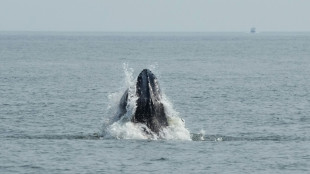
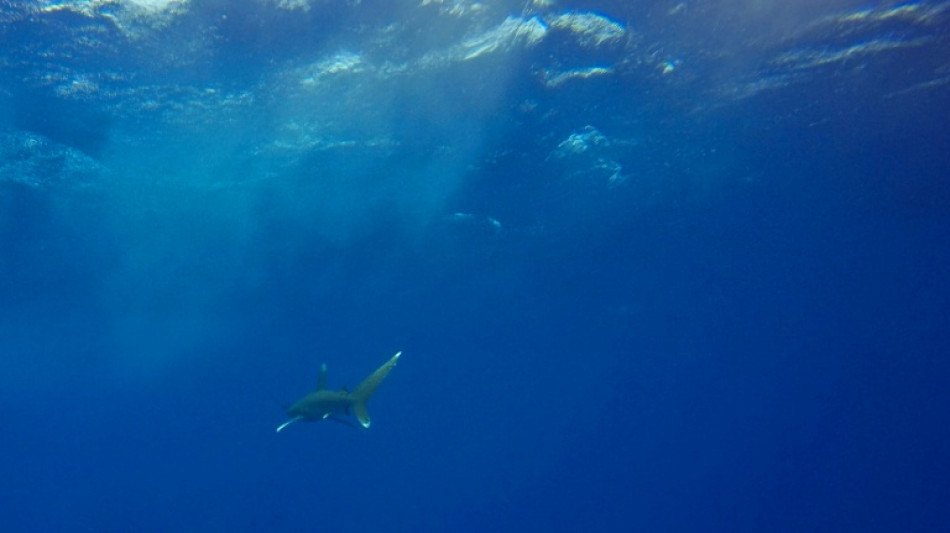
The world's top wildlife trade body voted Thursday to effectively ban all international trade in the critically endangered oceanic whitetip shark but rejected a proposal to protect more species of eel.
The decision to upgrade protection of the shark species was welcomed by conservation groups that have warned oceanic whitetips are on the brink of extinction.
"This was our last hope," said Barbara Slee, senior programme manager at the International Fund for Animal Welfare.
"This listing might just spare them from extinction."
The species has suffered dramatic declines linked to the shark fin trade, and is one of dozens of shark species proposed for greater protections at the meeting of signatories to the Convention of International Trade in Endangered Species of Wild Fauna and Flora (CITES).
The 50-year agreement protects the world's most endangered animals and plants, and regulates trade in over 40,000 species.
Earlier, members meeting in Uzbekistan's Samarkand rejected new protections for eels that had been fiercely opposed by top consumers of the fish, led by Japan.
Eel populations are falling worldwide, scientists say, largely due to factors linked to human activity such as the pollution of waterways, destruction of wetlands, hydroelectric dams, and fishing.
European eels are considered critically endangered and their trade has been restricted by CITES since 2009.
Eels cannot be bred in captivity, so much of the trade is in wild-caught baby eels, with one species virtually indistinguishable from another.
The European Union and Panama sought to bring all 17 eel species under CITES Appendix II, placing new restrictions on trade.
The "harvest for international trade is a major cause of international decline," the EU's representative warned.
But Japan dismissed the proposal as unscientific and "excessive," backed by multiple countries including African nations who warned it would place undue administrative burdens on their authorities.
In a sign of the pressures around the issue, countries voted by secret ballot, a relatively uncommon procedure at the gathering, with nearly 75 percent of votes against.
The result was "not very surprising," said Oliver Tallowin, senior programme officer for wildlife use and trade at the International Union for the Conservation of Nature.
Japan's opposition had been made clear early on in a submission running over 100 pages.
There are also differing views on the pressures other eel species face, said Tallowin.
"International trade has to be a threat to the species and... that was something we couldn't say with any sense of certainty," he told AFP.
For Andrew Kerr of the Sustainable Eel Group, "the short-term commercial and financial side won the debate massively."
Kerr, who has called eel trafficking the "greatest wildlife crime" on the planet, said the vote was a "real pity," but there were some silver linings.
A separate resolution proposing measures including more data gathering on eels and conservation capacity-building was approved later in the day.
"We've had a missed opportunity this morning, but then the fact that everyone's talking about eel, that's a huge victory too," Kerr said.
The resolution means more data will be collectd that could support protection of all eel species in the future, added Tallowin.
"Once something has been rejected... that doesn't mean its going to go away."
Votes are finalised later in the meeting, though it is unusual for them to be revised.
M.Qasim--SF-PST