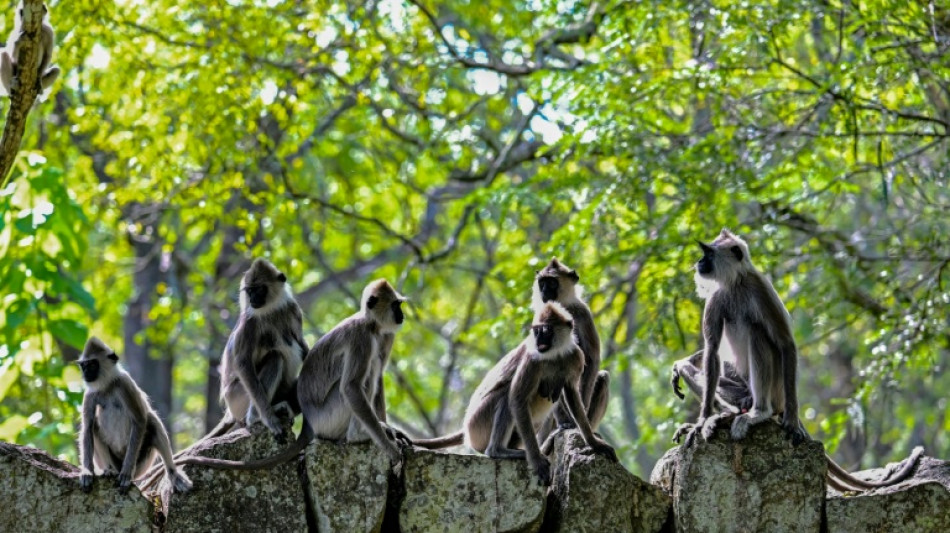
Monkey business delays Sri Lanka's wildlife survey / Photo: Ishara S. KODIKARA - AFP

 ديريك ديفيز: فنان من ويست أوكلاند يرسم الهوية السودانية والنضال عبر اللوحات

 Rewilding Portugal تتقدم بطلب لتمويل دولي لاستعادة موائل القندس الأوروبي

 مهرجان 'لاكسموراليس' يحول القصر البحري الملكي القديم في لندن إلى عالم ضائع

 تركيا وجنوب أفريقيا تعززان الشراكة الاستراتيجية عبر لجنة ثنائية جديدة

 EU Cuts Southern Hake Quotas by 20% for 2027 Amid Stock Concerns

 منظمة الحقوق الرقمية تتحدى شرعية أوامر إزالة المحتوى من شرطة دلهي أمام المحكمة العليا
Sri Lanka is withholding the results of a survey of crop-destroying wildlife, including monkeys and peacocks, because data collected from some farmers appeared unrealistic, a minister said on Monday.
Deputy Environment Minister Anton Jayakodi said authorities had begun a review of the nationwide survey conducted on March 15, the first of its kind, because "some of the data was unbelievable".
Authorities suggested some enraged farmers might have exaggerated the numbers to suggest that the problem was even bigger.
Data in some places appeared "unusually high", officials said.
Residents across the island country were asked to count wild boar, peacocks, monkeys and lorises -- a small, largely nocturnal primate -- spotted near farms and homes during a five-minute period.
"We started the survey to understand the size of the problem," Jayakodi told reporters in Colombo. "But we now have to review the results... there have been issues with some unusual data."
Jayakodi said officials would return to assess data before releasing the final results of the survey, which was aimed at drawing up a national plan to deal with nuisance wildlife.
Opposition legislator Nalin Bandara said the survey was "a complete failure, a waste of money".
Officials say more than a third of crops are destroyed by wild animals, including elephants that are protected by law because they are considered sacred.
While elephants are major raiders of rice farms and fruit plantations, they were not included in the March count.
The then agricultural minister proposed in 2023 exporting some 100,000 toque macaques to Chinese zoos but the monkey business was abandoned following protests from environmentalists.
Sri Lanka removed several species from its protected list in 2023, including all three of its monkey species as well as peacocks and wild boars, allowing farmers to kill them.
H.Jarrar--SF-PST