Maradona died 'in agony,' forensic expert tells court / Photo: Juan MABROMATA - AFP/File

 الأصدقاء الخياليون: كيف تعزز الكائنات غير المرئية القدرات العقلية للأطفال والبالغين

 London Museum Granted 24/7 License Ahead of November Opening

 Dana White Confirms Flight to Washington for Trump Meeting on Press Secretary Role

 Dengue Fever Expands Into High Himalayas as Climate Change Warms Nepal

 IoT Refrigerator Hacks Disrupt Blood Labs and Supermarkets Across Europe and US

 Post-election pressures complicate US and Israeli decisions on Iran

 UN members approve talks on treaty protocol against environmental crime

 Family-run West Sussex beach café prepares for first winter season

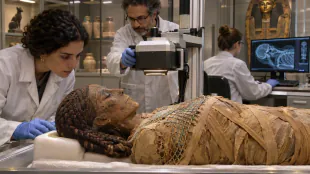 CT scans reveal health and burial clues from Egypt’s Braided Lady mummy

 Oxford faces complaints over lecturer’s classroom attire

The state of Diego Maradona's corpse suggested he must have died "in agony," an expert who participated in the late football legend's autopsy testified Thursday in the trial of seven medical professionals accused of homicide over his death.
Forensic doctor Mauricio Casinelli testified that water had been accumulating in Maradona's lungs for "at least 10 days" before his death due to heart failure and liver cirrhosis.
The doctors and nurses taking care of him should have noticed, he told the judges.
Maradona's heart "weighed almost twice as much as a normal one," Casinelli said, adding this must have caused him "agony" for at least 12 hours prior to his death.
Maradona died on November 25, 2020 at age 60, while recovering at home from brain surgery for a blood clot. He had battled cocaine and alcohol addiction for decades.
His seven-person medical team is on trial for what prosecutors have called the "horror theater" of the final days of his life.
Maradona was found to have died of heart failure and acute pulmonary edema -- a condition where fluid accumulates in the lungs -- two weeks after going under the knife.
Casinelli said the house where Maradona died did not seem "a suitable place for home hospitalization."
The defendants in the case are accused of "homicide with possible intent" -- pursuing a course of action despite knowing it can lead to their patient's death.
They risk prison terms of between eight and 25 years.
Prosecutors allege the footballer was abandoned to his fate for a "prolonged, agonizing period" before his death.
Nearly 120 witnesses are expected to testify in the long-delayed trial expected to run until July.
U.Shaheen--SF-PST