Pod of 157 dolphins stranded on remote Australian beach / Photo: Handout - Department of Natural Resources and Environment Tasmania/AFP

 The Sourdough Sidekick Review: Can an Automated Feeder Save Your Starter?

 Energy bill plan could use HMRC income data to target support

 Business owner earning £6,000 a month tackles £70,000 debt

 Nvidia chief faces inquiry after disclosing affair with suspected Chinese agent

 Comet returns as online electrical marketplace 14 years after collapse

 Hunter Davies on How Post-War Britain Forged The Beatles

 Brussels Education Unions Schedule Major November Protest Over Funding and Reforms

 Climate Change Extends U.S. Allergy Season by Weeks, Worsening Health Risks
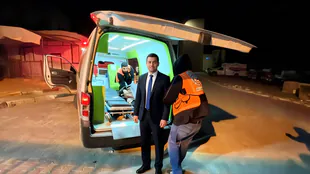
 Stabbing Reported at Jamie Foxx’s Annual Halloween Party in Thousand Oaks

 ماس يحذر من تداعيات القيود الإسرائيلية على المنتجات الغذائية الفلسطينية في القدس الشرقية
Dozens of dolphins have died after a pod of more than 150 stranded on a remote beach in Australia's southern island of Tasmania, environment officials said Wednesday.
A pod of 157 dolphins from a poorly understood deep-sea species was believed to have stranded in the past 48 hours -- with "approximately 90" still alive as of Wednesday morning.
They appeared to be members of a large dolphin species known as false killer whales, officials said, named for the orca-like shape of their skull.
State wildlife officer Brendon Clark said it would be difficult to refloat the surviving dolphins, which can weigh upwards of one tonne.
"As with any stranding euthanasia is an option to minimise suffering, and we do have vets on site to help make informed decisions if that is deemed necessary," he told reporters.
It is reasonably common for pods of false killer whales to strand themselves on Australia's beaches.
But Clark said it was the first time in 50 years they had beached in that part of Tasmania.
"They haven't displayed this type of behaviour in our waters for a long period," he said.
"They are migratory animals and they roam the open waters around the globe.
"The reasoning behind why they have stranded for the first time in 50 years, we haven't got any intel on that.
"That is something that hopefully post-mortem examination will provide some insight into."
- Poorly understood -
The dolphins were stranded on a beach near the Arthur River inlet on the west coast of Tasmania, a sparsely populated area known for its windswept coastline.
Dozens of sleek and dark-skinned dolphins were pictured Tuesday wallowing in wet sand as a shallow tide lapped against them.
"Stranding response in this area is complex due to the inaccessibility of the site, ocean conditions and the challenges of getting specialist equipment to the remote area," Tasmania's environment department said in a separate statement.
False killer whales can reach up to six metres (20 feet) in length and are known as a highly social species that gathers in pods of 50 or more.
Big adults can weigh more than one tonne, according to the US National Oceanic and Atmospheric Administration.
The species is often involved in mass strandings that can "wipe out whole schools involving hundreds of animals", according to the Australian Museum.
Little is known about false killer whales, according to a government factsheet, and there are no reliable estimates of their population size.
The Australian government lists their conservation status as "near threatened".
H.Darwish--SF-PST