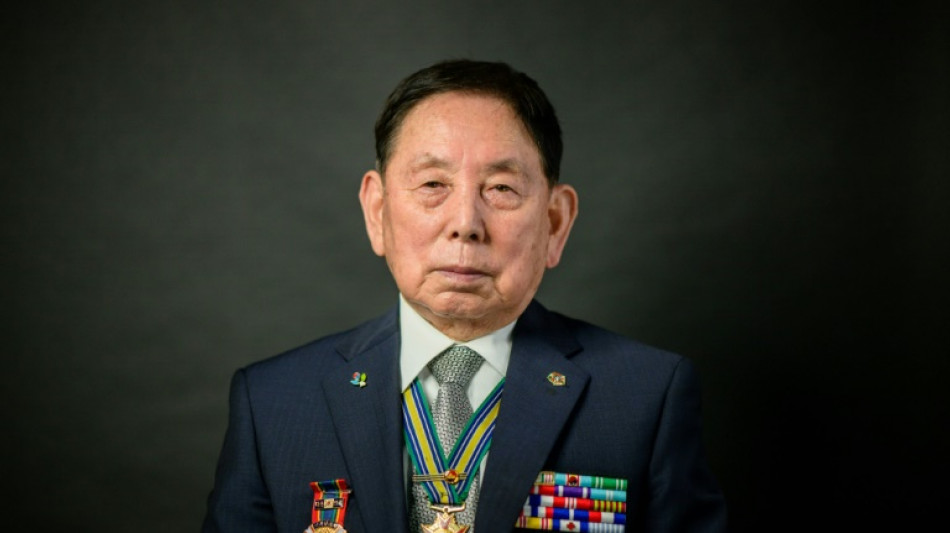
Korean War veterans dream of real peace on divided peninsula / Photo: ANTHONY WALLACE - AFP

 At least 2 teens seriously wounded in sword attack at Swedish school
 Popular forest near Paris to reopen after wildfire
 UN holds second informal poll of secretary-general candidates
 Shakhtar Donetsk to play Champions League home games at Chelsea
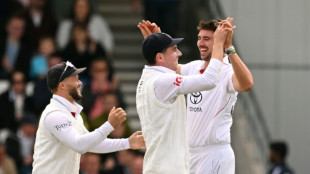
 Arsenal sign Villa centre-back Konsa as champions bolster defence
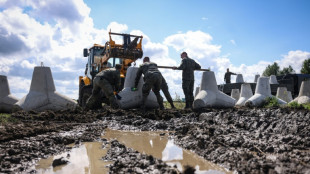 The 'hedgehogs' leading Poland's defences on Russian border
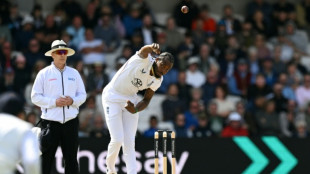 England thrash Pakistan by an innings and 103 runs in first Test
 Fury says Joshua fight 'doesn't look like it's going to happen'
 Argentina's Paredes suspended 10 matches by FIFA for World Cup fight

 Watkins and Martinez could join Villa exodus says Emery
 UK court orders Prince Harry, others to pay Daily Mail £9.5mn

 Aligned Launches $ALIGN, the Native Token of Its Full Ethereum Stack
 Bitcoin jumps, stocks bounce as traders weigh US Treasury action
 Man City boss Maresca hit with Doku injury blow

 Iraola wants to sign wingers to boost Liverpool's attacking options
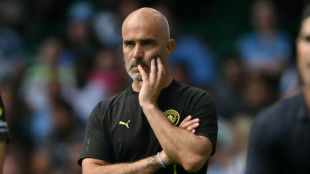 Maresca needs time to succeed after 'big changes' at Man City

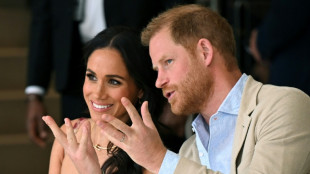 Meghan faces difficult return to the UK
 Archer double strengthens England's grip on first Test against Pakistan
 MEXC Lists Ondo Tokenized Stock Moderna (MRNAON), Expanding Access to U.S. Biotech Exposure
 Japan axes Netflix collaboration after outcry over dating show
 Stocks tread cautiously as traders weigh US Treasury action
 STARTRADER Launches XAUUSD247, Extending Gold CFD Access Across the Full Week

 Spurs agree deal to sign Man City's Savinho: reports
 US-sanctioned ICC head warns against 'demise of international rule of law'
 Top India court orders new steps to protect threatened elephants
Korean War veteran Ryu Jae-sik has had a bullet fired by a Chinese soldier lodged in his chest for 70 years, a constant reminder of the conflict that never ended.
Ryu was a schoolboy when he was conscripted to fight for South Korea after it was invaded by the communist North on June 25, 1950, as Pyongyang tried to forcefully reunify a peninsula divided by Moscow and Washington at the end of World War II.
Now 91, Ryu says all he wants to witness in his remaining years is the real end of the war in which he fought.
Korean War hostilities concluded on July 27, 1953, with a ceasefire that has never been replaced by a peace treaty, meaning the two Koreas remain technically at war.
Relations between them are at one of their lowest points since the war, with talks stalled and Kim Jong Un's nuclear-armed North threatening the South with "annihilation" as Seoul beefs up military cooperation with long-time ally Washington.
"I've lived 70 years with a bullet from a Chinese communist army machine gun stuck in the centre of my body," Ryu told AFP, adding that he still had terrifying memories of the bloody fighting he saw as a teen.
"War must never be allowed to happen again," he said, although he is increasingly worried about a fresh outbreak of fighting on what many have called the last frontier of the Cold War.
Ryu was seriously wounded in the final days of the conflict when he came face-to-face with a Chinese soldier in the Battle of Kumsong but, once he recovered, he re-enlisted to serve again.
"It was my wish to reunify the North and South with my hands, to achieve a reunified peninsula," he said.
"We suffered in the war, but the suffering was not worth it since we are handing down a country cut in half to future generations," he said.
The Korean peninsula remains physically split by the Demilitarized Zone and the trajectories of the two Koreas have diverged massively, especially in recent years.
The impoverished North, where there have been recent reports of starvation, is run by the third generation of the Kim family that has been fixated on developing nuclear weapons.
The South is now the world's 10th-largest economy, a noisy democracy and a global cultural powerhouse.
- Haunted by loss -
Other veterans who fought alongside Ryu say their memories of comrades who died on the battlefields have come back to haunt them as they grow older.
Kim Young-ho, 92, finished his training on May 30, 1951, and was deployed to Yanggu, the scene of major battles during the war.
"My comrades were shot and died," he told AFP.
"Maybe it's because I'm approaching death myself that I am reminded of them a lot."
Exact casualty numbers are impossible to establish, given the scale of the conflict and contradictory accounts on all sides, but up to three million Koreans died, the vast majority of them civilians.
According to Seoul's defence ministry, 520,000 North Korean soldiers were killed, as well as 137,000 troops from the South.
Chinese casualty figures remain disputed, with Western estimates commonly citing a figure of about 400,000. Chinese sources put it at about 180,000.
Nearly 37,000 American soldiers were also killed, while other UN fatalities included more than 1,000 British soldiers.
Lieutenant General Andrew Harrison, the deputy commander of the United Nations Command that oversees the Korean War truce, said "the scale of devastation" wrought on the peninsula during the war has "largely been overlooked".
"I do tend to agree with the thesis that many have espoused that, despite the approximately three million people who were killed between 1950 and 1953, the Korean War remains forgotten by many people across the world," he told reporters.
Shin Jong-kyun, 91, could not hold back his tears as he told AFP about his memories of fighting in the war.
"Everyone who enlisted with me during the Korean War died, so I feel sorry about being alive," he sobbed.
All the veterans interviewed by AFP said they regretted that young Koreans seem to have little awareness of the horrors of the war, especially as Pyongyang ramps up its threats.
North Korea fired its most powerful intercontinental ballistic missile yet this month, a solid-fuel Hwasong 18, with leader Kim Jong Un ordering his military to intensify drills to prepare for a "real war".
"War can break out at any time in a ceasefire," 88-year-old Lee Choon-ok told AFP.
"Those North Koreans are always after South Korea."
W.AbuLaban--SF-PST