ChatGPT GPT-6.2 Image Understanding: A Real-World Test of Visual Accuracy

 Belgian Cyclist Robrecht Viaene in ICU After Training Crash in Spain
 أبو هولي يحشد الدعم لليوم العالمي للتضامن مع الفلسطينيين ويدافع عن الأونروا

 مبادرة "رجال الفجر" تنتشر من الجزائر إلى تركيا والهند
 West Hollywood petrol station erupts in flames after vehicle hits pump

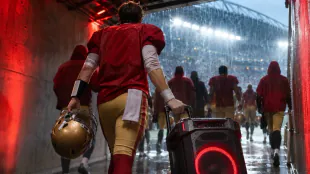 Mac Jones prepares to start for 49ers while keeping viral entrance role
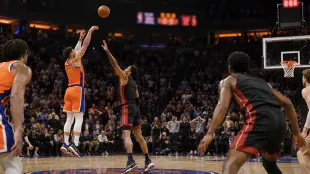
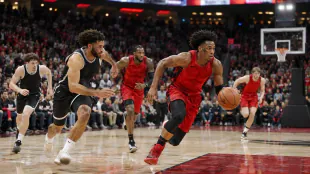 Raptors rout Nets 124-100 as Brooklyn’s inconsistency continues

 Taliban authorities reportedly remove women’s names from records in Balkh

 Black Friday offers include household essentials and low-cost donation toys
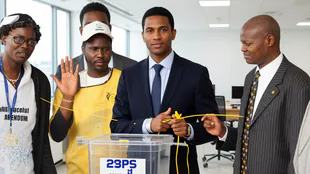 انتهاء مهلة تسجيل الناخبين في جنوب السودان وسط تحديات أمنية وسياسية
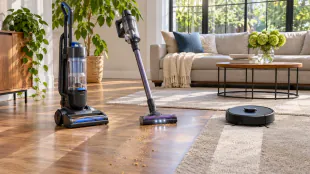
 Black Friday gaming offers cut prices on headsets, consoles and games
 Shark Depuffi stock dwindles as Black Friday skincare discounts begin
 Chevrolet Blazer EV SS tested against decades of Super Sport models
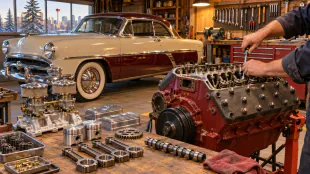 Calgary builder draws on decades of DIY work to increase Ford engine power

 Record-setting Hemi Plymouth Superbird heads to auction
 Calgary dancer describes stripping as a career built on independence and community

 Calgary Catholic schools report strong results and growing classroom complexity
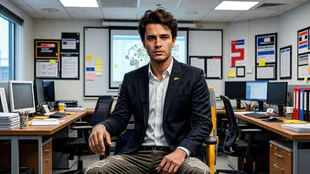
 Calgary budget hearing delayed during debate over Tourette syndrome accommodation

 Huawei outlines 2030 network plans at Africa Tech Festival

 Governments and courts tighten restrictions on camera-equipped smart glasses

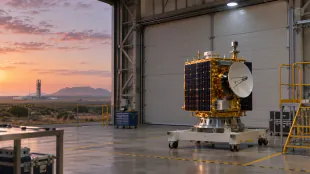 South Africa’s sovereign satellite plan remains stalled despite higher cost

 EasyEquities says small group of client accounts targeted in attack

 Regulator examines E9Pay after hacking losses reach 2.5 billion won

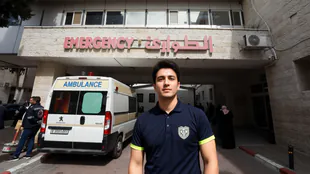 إسبانيا والدنمارك تبرعان بـ27.4 مليون يورو لدعم المستشفيات في الضفة الغربية

 Dubai Stocks Erase War Losses to Rank Among Gulf's Best
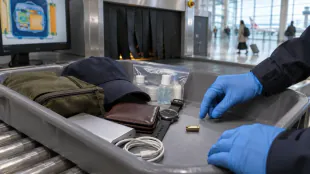
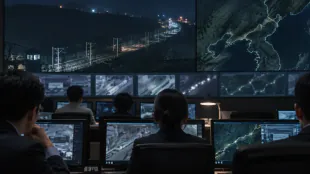 Seoul monitors reports of possible Kim Jong-un visit to China
OpenAI claims its latest ChatGPT model, GPT-6.2, has significantly improved visual capabilities, scoring 71.7% on internal image understanding benchmarks compared to 47.4% for the previous version. However, independent testing across six real-world scenarios suggests that while the new model offers sharper detail recognition and greater confidence, it remains prone to plausible but incorrect conclusions when visual evidence is ambiguous.
OpenAI has announced that its latest ChatGPT upgrade, designated GPT-6.2, possesses substantially enhanced capabilities for interpreting visual data. According to internal testing conducted by the company, the new model achieved a score of 71.7% on image understanding metrics, a significant increase from the 47.4% recorded by its predecessor, GPT-6.
While these figures indicate a marked improvement in raw processing power and pattern recognition, the practical utility of these upgrades for everyday users remains a subject of scrutiny. To determine whether the theoretical gains translate into tangible benefits, an independent evaluation was conducted across six distinct visual challenges. These tests examined the model’s ability to identify locations, interpret humor, analyze historical documents, decipher handwriting, assess personal color palettes, and recognize contextual clues in ambiguous settings.
The first challenge involved location identification, a common use case for users seeking to geotag unlabelled photographs. The test utilized two images: one taken in Cascais, Portugal, featuring distinctive Portuguese stone paving and a seagull, and another of a rock arch silhouetted against a sunset in Biarritz, France.
In the Cascais test, both GPT-6 and GPT-6.2 correctly identified the location by recognizing the specific pavement pattern. However, GPT-6.2 demonstrated superior attention to detail, noting the yellow legs and bill of the seagull and suggesting it was a yellow-legged gull. The newer model also exhibited higher confidence in its assessment. Despite this increased precision, the functional outcome for the user remained unchanged, as both models successfully pinpointed the town without relying on obvious landmarks or readable signage.
The second location test proved more difficult. When presented with the sunset image from Biarritz, which lacked distinct geographical markers, both models incorrectly identified the location as Portugal. Both models employed logical reasoning to estimate the direction of the coastline based on the sunset, and GPT-6.2 did suggest the western coast of France as an alternative possibility. However, neither model correctly identified the distinctive rock formation. This outcome suggests that while GPT-6.2 is more detailed in its observations, it does not yet reliably overcome the limitations of scenic photography lacking specific contextual clues.
A third test focused on cultural context and humor. An image of a sign at St Mary’s Church in Whitby, England, which reads "Please stop asking staff where Dracula's grave is," was uploaded to both models. The sign references the town’s literary connection to Bram Stoker’s novel. Both models immediately recognized the humor and the exasperation implied by the notice, while also explaining the historical context. GPT-6.2 provided a slightly more nuanced analysis of the contrast between the supernatural subject matter and the mundane administrative tone of the sign. It was also more decisive in identifying the specific church, whereas GPT-6 offered a less certain response.
The fourth challenge examined the model’s ability to analyze historical family photographs. A black-and-white image from 1964, showing the author’s grandparents and aunt at Scarborough railway station, was used. The photo had previously appeared in a local newspaper. Both models estimated the date as 1962, correctly deducing the era based on hairstyles, handbags, and carriage design. More impressively, both identified the image as a press photograph and correctly guessed that the woman leaning out of the train was an entertainer, who was indeed the author’s aunt and a dancer. GPT-6.2 extended this analysis by correctly suggesting that the two individuals on the platform were her parents.
This test highlighted the potential risks of relying on AI for genealogical research. While the models provided compelling narratives, they are prone to hallucination when evidence is sparse. The author noted that users should treat such suggestions as leads for further verification rather than established facts, particularly regarding privacy implications and the accuracy of inferred relationships.
The fifth test evaluated handwriting recognition and contextual reasoning in a chaotic environment. An image taken at the For Sale Pub in Budapest, known for visitors writing messages on the walls, was uploaded. The photo featured the author writing a note upside down and at an angle. GPT-6.2 successfully deciphered the small, inverted handwriting, a feat that required significant visual processing. However, the model made a critical error by misreading the pub’s logo on the background notes, leading it to incorrectly conclude the location was Malta. GPT-6, in contrast, admitted it could not identify the venue. This discrepancy underscores a key vulnerability: as models become more confident, they may present incorrect conclusions with greater authority, increasing the risk of user deception.
The final two tests addressed document transcription and personal color analysis. In the first, a handwritten family record dating back to 1845 was uploaded. Both models produced detailed transcriptions, reconstructed family relationships, and noted changes in handwriting over time. However, a side-by-side comparison revealed at least 11 discrepancies between the two outputs, including differences in middle names, surnames, and dates of death. Given the difficulty of reading the original document even for a human observer, it was impossible to determine which model was more accurate. This result reinforces the necessity of cross-referencing AI-generated transcriptions with primary sources.
In the color analysis test, a selfie of the author wearing a lavender turtleneck was used to request seasonal color advice. Both models identified the author as a "Soft Summer," describing her coloring as neutral-cool and muted. They both used the lavender sweater as evidence for their assessment. GPT-6.2 offered slightly more actionable advice, suggesting specific color pairs to test against the face. Both models acknowledged limitations related to lighting, makeup, and camera settings, noting that digital photos do not perfectly replicate real-world appearance.
Overall, the comparison between GPT-6 and GPT-6.2 revealed that while the newer model is more detailed, confident, and capable of handling complex tasks like upside-down handwriting, the functional difference in everyday utility is often marginal. In several tests, the responses were so similar that a user might not notice the upgrade without explicit knowledge of which model was running.
The primary distinction lies in GPT-6.2’s increased confidence. While this can be reassuring when the model is correct, it becomes problematic when the model is wrong, as seen in the Budapest location error. The author recommends that users ask ChatGPT to explain the specific visual details supporting its conclusions. This practice helps users understand the reasoning process and identify potential errors before accepting the output as fact.
Furthermore, the tests suggest that providing multiple images or clearer contextual clues significantly improves accuracy. Relying on a single scenic shot for location identification remains unreliable. While GPT-6.2 represents a technical advancement in visual processing, its practical application requires careful user oversight and verification of critical details.
S.Abdullah--SF-PST