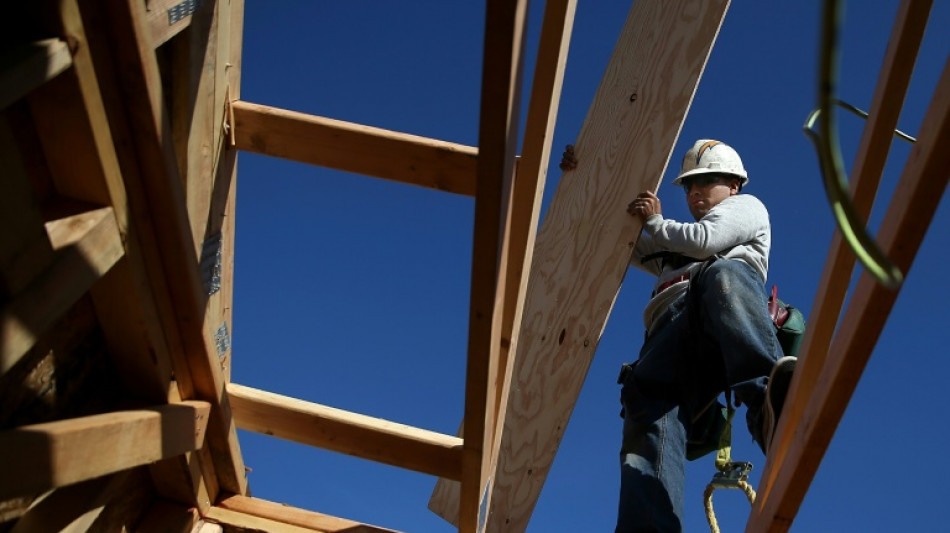
Want to save carbon and land? Study suggests wooden cities / Photo: JUSTIN SULLIVAN - GETTY IMAGES NORTH AMERICA/AFP/File

 'Severe drought' declared in parts of UK

 IUX Announces New Web Client Portal Built for Enhanced Browser-Based Trading

 School roof collapse kills teacher, 32 children in NW Pakistan

 Inter skipper Martinez facing month out with thigh injury

 Spanish prosecutors back abuse probe into Julio Iglesias

 Tech sell-off deepens as US inflation sparks AI jitters

 Southgate does not forsee a return to management

 Two dead as Istanbul endures heaviest rainfall in 80 years

 After latest Nepal flood, survivors fear for future

 EU leaders clash over budget as spectre of French elections looms

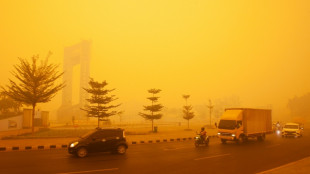 'No place to breathe': life in Indonesia's fire epicentre
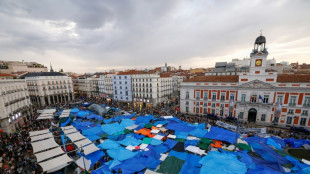 'Can't sleep': Spain's housing crunch upends lives

 Musk calls on Ukraine's Zelensky to 'go' after satellite slowdown row

 Still smiling at 117, Albanian may be world's oldest woman
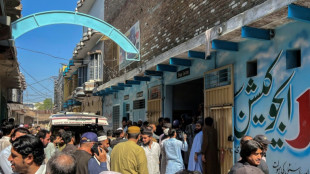
 Pope has 'good night' in hospital: Vatican
 China's economy seen missing target as global shocks bite: AFP poll

 Costa Rica opens jail inspired by El Salvador mega-prison

 Same-sex couple takes fight for equality to Slovakian court
 'High hopes' as Indonesian women get a football league, again

 'Expectations high' for Bordeaux-Begles' Champions Cup hat-trick bid, says Depoortere
 Rennie urges All Blacks to stay focused against 'hurting' Wallabies

 Palmeiras beat Fluminense 2-1 in Libertadores semi-final first leg

 Brewers blasts leave Dodgers on brink

 Tech stock lead rout after US inflation fuels rate hike bets

 Al-Fayed survivors say UK police missing 'bigger picture'

Housing people in homes made from wood instead of steel and concrete could save more than 100 billion tonnes of carbon emissions while preserving enough cropland to feed a booming population, research suggested Tuesday.
More than half of people globally currently live in cities and this proportion is set to rise markedly by 2050.
According to some estimates, the infrastructure needed to accommodate up to 10 billion people by mid-century could exceed that constructed since the dawn of the industrial era.
That places a huge emphasis on emissions from construction, one of the most polluting sectors and historically one of the trickiest to decarbonise.
Were all new construction projects carried out using steel and concrete, that could claim up to 60 percent of Earth's remaining carbon budget for 2C of warming -- that is, how much pollution the global economy can produce and still stay within the Paris Agreement temperature guardrail.
Scientists in Germany and Taiwan wanted to see how much carbon could be saved if firms switched to wood to build new homes instead.
They used an open-source land use model to simulate four different building scenarios: one with conventional materials like cement and steel, and three with additional demand for timber.
They also analysed how additional high wood demand could be satisfied, where it could be produced, and the impacts new tree plantations might have on biodiversity and crop production.
They found that housing people in timber homes could avoid more than 100 billion tonnes of CO2 by 2100 -- that's around 10 percent of the remaining 2C carbon budget, equivalent to nearly three years of global emissions.
Wood is known to be the least carbon-intensive building material as trees absorb CO2 as they grow, explained the study lead author Abhijeet Mishra, from the Potsdam Institute for Climate Impact Research (PIK).
"Production of engineered wood releases much less CO2 than production of steel and cement," he said. "Engineered wood also stores carbon, making timber cities a unique long-term carbon sink."
He said that engineered wood was the ideal material for constructing "mid-rise" buildings -- between four and 12 stories -- to house growing urban populations.
The study, published in the journal Nature Communications, found that around 140 million hectares -- an area larger than Peru -- would be needed to grow new trees to meet the increased demand under the timber-led building scenario.
But the team calculated that these new plantations could be established on existing areas of harvest forest, and so not impact food supply by eating into crop land.
"We need farm land to grow food for the people –- using it to grow trees could potentially cause competition for the limited land resources," said co-author Florian Humpenoder, from PIK.
The authors concluded that planting the necessary additional plantations was possible but would require "strong governance and careful planning" from governments in order to limit their impact on biodiversity.
Z.Ramadan--SF-PST