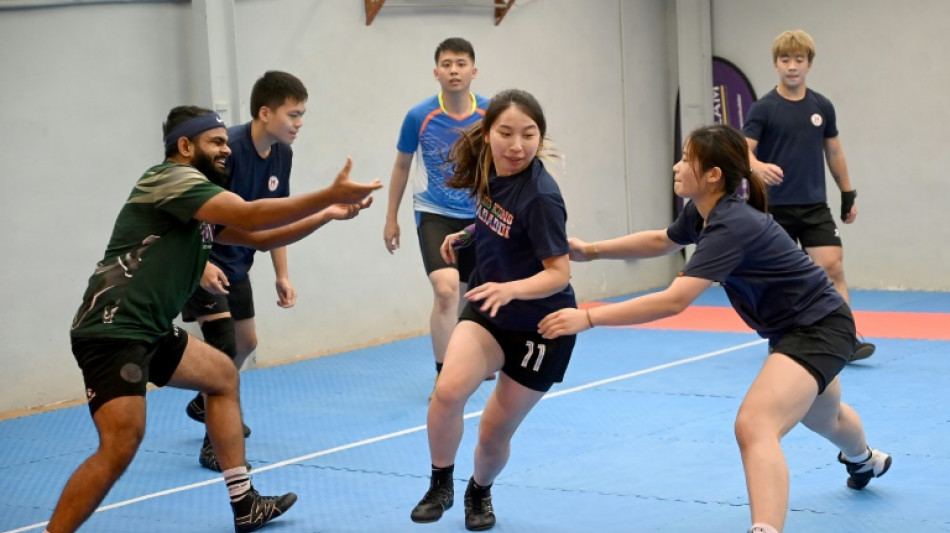
Ancient Indian sport builds bridges across cultures in Hong Kong / Photo: Peter PARKS - AFP

 Two dead as Istanbul endures heaviest rainfall in 80 years

 After latest Nepal flood, survivors fear for future

 EU leaders clash over budget as spectre of French elections looms

 'No place to breathe': life in Indonesia's fire epicentre

 'Can't sleep': Spain's housing crunch upends lives

 Musk calls on Ukraine's Zelensky to 'go' after satellite slowdown row

 Still smiling at 117, Albanian may be world's oldest woman
 Pope has 'good night' in hospital: Vatican
 China's economy seen missing target as global shocks bite: AFP poll

 Costa Rica opens jail inspired by El Salvador mega-prison

 Same-sex couple takes fight for equality to Slovakian court
 'High hopes' as Indonesian women get a football league, again

 'Expectations high' for Bordeaux-Begles' Champions Cup hat-trick bid, says Depoortere

 Rennie urges All Blacks to stay focused against 'hurting' Wallabies

 Palmeiras beat Fluminense 2-1 in Libertadores semi-final first leg

 Brewers blasts leave Dodgers on brink

 Tech stock lead rout after US inflation fuels rate hike bets

 Al-Fayed survivors say UK police missing 'bigger picture'

 Online 'witch hunt' sweeps up Asians misidentified as US rape accused

 Prospect of Bolsonaro win looms large over Brazil's Indigenous

 Freed from Belarus, founder of Lady Gaga's biggest fan site tells his story

 Behind AI's carbon footprint, a potential climate tool

 Trump's new press secretary faces scrutiny over credentials

 PSG 'got lucky' to win Man City thriller, says Luis Enrique

 Real Madrid comeback stuns Roma as Mourinho enjoys happy reunion
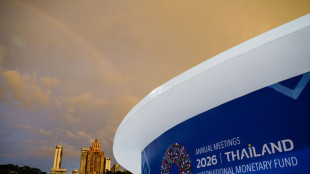
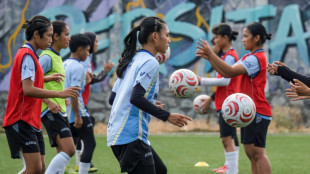
Overlooked by high-rises on the outskirts of Hong Kong, a group of students practise body-slam tackles and vicious ankle-wrenches at weekly training for an unlikely sport: the ancient Indian game of kabaddi.
Though its professional league has a huge following in India and surrounding nations, kabaddi -- a highly physical game where the object is to tag the rival team, often by brute force -- is relatively unknown outside the region.
But eight years ago two Chinese anthropologists set up a Hong Kong team to encourage integration in a city which, despite its status as an international hub, can be less than inclusive, especially when it comes to non-white and non-Chinese residents.
"We often hear Hong Kong is Asia's world city but we really don't have much chance to interact with people from different cultural backgrounds," Wyman Tang, one of the anthropologists, told AFP.
"We live in the same neighbourhood, but it's like we are living in a parallel world."
Their project -- Kabaddi United Hong Kong (KUHK) -- began as a one-off workshop at a local university. It has now spread to nearly 80 schools and social organisations and has had more than 8,000 participants.
Royal Sunar, a coach at KUHK, was shocked to find the game of his childhood being taught in Hong Kong.
"Kabaddi was one of my interests," said the Hong Kong-born Nepali.
"Somehow local Chinese people also like the sport."
- 'Emotional connection' -
Kabaddi is said to date back 5,000 years with roots in Indian mythology, although similar versions of the game have appeared throughout Asia over the centuries, including in Iran, which also claims to be its birthplace.
Teams collect points by sending a "raider" to the rival side, who tries to quickly tag an opponent and then run back to their own half.
Defending teams try to prevent the raider escaping, which often involves full-team pile-ons.
Nepali immigrant Rojit Sharma joined KUHK in 2019.
For him, kabaddi offered a gateway to making Chinese friends for the first time, and to practise Cantonese.
"(There is) an emotional connection in kabaddi because we hold hands and then we know more about each other," he said.
But the 22-year-old said that off the pitch, ethnic minorities in Hong Kong have to fight to be recognised as "local".
He is no stranger to blatant discrimination.
"When I arrived in Hong Kong, whenever I would travel on public buses or public transport, and when I'd try to sit down, the person next to the seat would just move away," he told AFP.
- 'Colour sensitive' -
Advocacy groups say his experience is the norm.
"I think there are significant issues in Hong Kong related to race," said Shalini Mahtani, the CEO of one such group, the Zubin Foundation.
She said South Asians face daily discrimination in Hong Kong, giving examples of people being told their skin is too dark at job interviews or being blocked from renting apartments.
"They are the wrong colour in a place that is very colour sensitive," she added.
The coronavirus pandemic has deepened discrimination.
When an area of the city home to many South Asians was one of the firstto go into lockdown, a senior health official sparked anger by suggesting ethnic minority residents might be spreading the virus because "they like to share food, smoke, drink alcohol and chat together".
Critics pointed out that the same could easily be said of Cantonese culture -- or the many raucous bars filled with white-collar "expat" foreign workers.
Mahtani partly blames the issue on the education system.
"The truth is many Hong Kong Chinese will never have had the experience of engaging with ethnic minorities," she said.
- 'Team spirit' -
That was true for Christy Tai, a final-year university student, until she joined her kabaddi group after trying it out and liking its "team spirit".
She said sport is a good way to get over language barriers.
"We need to talk to each member in the team... When we talk, we cannot only talk about a sport, but we talk about our life, our habits, or whatever," she said.
Hong Kong still has a long way to go to begin a professional kabaddi league, but founder Tang is pleased how much the game has caught on in the city.
"As long as you follow the same sets of rules, then you can enjoy the game," Tang said.
N.Awad--SF-PST