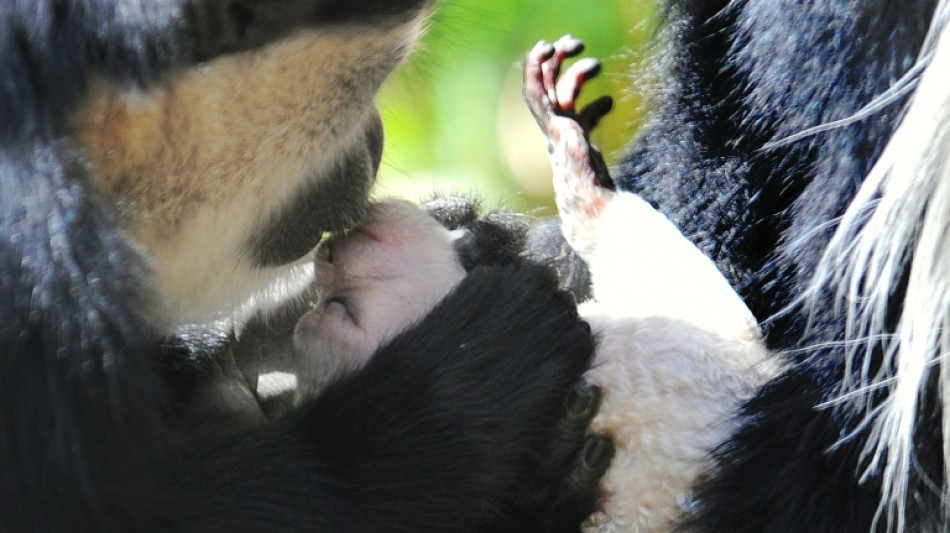
Monkey business: Neanderthals and ancient apes likely kissed too / Photo: WILLIAM WEST - AFP

 Lyon down Palace in Europa League, Sunderland leave it late

 UniCredit says receives ECB green light for Commerzbank takeover

 New York City pension fund asks Anthropic to delay IPO

 Venezuela's Maduro denies US torture charges as 'false accusations'

 Somalia sets May presidential election despite insecurity
 Chelsea's Caicedo eager to be more of a leader

 Rahm reaches separation deal with LIV in bankruptcy court
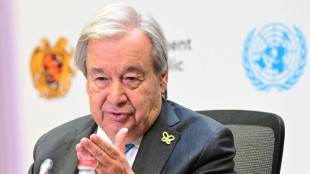 UN chief urges nations to end 'war on nature'

 Newcastle boss Jaissle says Fernandez-Pardo just needs a goal

 Infantino offers apology but 'no answers' at FIFA meeting over World Cup plan

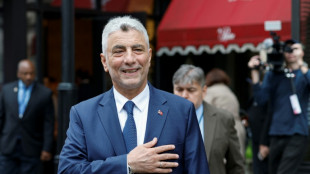 Don't exclude Turkey from 'Made in Europe' plan: minister to AFP

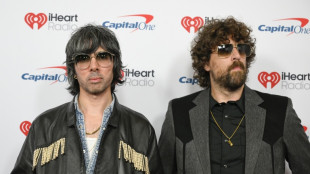 French duo Justice to score 'GTA VI': game maker

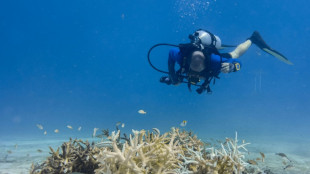 El Nino a 'terrifying' threat to coral reefs: UN biodiversity expert

 Barcola must get used to Liverpool highs and lows, says Iraola

 Versus Trade Wins Best ECN/STP Broker APAC 2026, Marking Third UF Awards Recognition

 Three dead as Istanbul sees heaviest rainfall in 80 years

 US producer prices see biggest jump since 2022 in added challenge to Trump

 Swiatek avoids seed exodus to breeze into Wuhan last eight
 PM condemns 'chaos' as violent protests grip Albania

 'I couldn't breathe', Russell Brand's alleged rape victim says

 Pope's cancer operation already reshaping papacy

 Zverev cruises past De Minaur to reach Shanghai semi-finals

 Ukraine's Zelensky defies Trump with Russian refinery strikes

 Holders Australia edge New Zealand 24-22 to open Rugby league World Cup

 'Ocarina of Time': Nintendo gives Zelda classic a modern makeover

Scientists have found evidence suggesting that kissing dates back up to 21 million years and that our ape ancestors and Neanderthals likely locked lips, research published Wednesday said.
Kissing has long presented an evolutionary puzzle to scientists as it appears to carry high risks such as disease transmission while having no obvious reproductive or survival advantages.
But the new study found that the practice has evolved over millions of years, and that our extinct human relatives, the Neanderthals, could have shared a peck to stay warm in the ice age.
The research led by scientists at the University of Oxford was published in the journal "Evolution and Human Behaviour".
"This is the first time anyone has taken a broad evolutionary lens to examine kissing," said co-author Matilda Brindle, an evolutionary biologist at the University of Oxford.
"Our findings add to a growing body of work highlighting the remarkable diversity of sexual behaviours exhibited by our primate cousins."
For the purpose of the study, researchers defined kissing as a "non-aggressive, mouth-to-mouth contact that did not involve food transfer".
"The results indicate that kissing is an ancient trait in the large apes," evolving in primate ancestors from 17 to 21 million years ago, according to an Oxford University statement.
"Kissing was retained over the course of evolution and is still present in most of the large apes," it added.
The researchers first collected data about modern primates that have been observed kissing, including chimpanzees, bonobos and orangutans.
Then, treating kissing as a "trait", they mapped it to the family tree of primates. By stimulating different evolutionary scenarios, they estimated the probability that ancient ancestors also engaged in kissing.
Previous studies have found that humans and Neanderthals had shared oral microbes through saliva transfer, suggesting that the species had kissed each other.
U.AlSharif--SF-PST