NASA releases James Webb telescope 'teaser' picture / Photo: - - NASA/AFP

 Asian Cup in Saudi Arabia could be postponed but 'no hurry' to decide: AFC

 Conrad wields axe after South Africa loss to Australia

 School roof collapse kills teacher, 27 children in NW Pakistan
 Haze turns Indonesia skies orange, shuts schools in East Timor

 California puts first US billionaire tax to the vote
 School headscarf ban meets resistance in Austria

 World's top cocoa producer aims for a climate-tough bean

 Why is Shell facing lawsuits over climate disasters in Brazil and the Philippines?
 New four-lane bridge opens between China, North Korea
 Tech stocks lead rout after US inflation fuels rate hike bets

 'No time to recover': UNDP chief sounds alarm on growing poverty after Iran war shock
 Australia says won't let big tech have 'unfettered' access to kids

 Mobile clinics battle Mongolia's childhood dental 'disaster'

 Wallabies back Meredith as playmaker for second New Zealand Test
 Messi's Inter Miami book playoffs with 2-0 win over New York City

 Oil-rich Alberta tests Canada's unity with secession vote

 EU leaders head for showdown over bloc budget
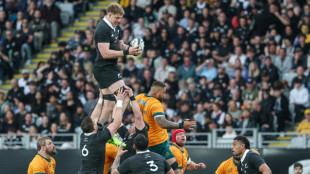 All Blacks make three changes for second Wallabies Test

 Mourinho blasts 'shameless' timing of Vinicius ban decision

 PSG beat Man City in Champions League thriller, Barcola hits Liverpool hat-trick

 US Treasury chief urges stronger IMF role against 'distortionary policies'

 Giant-killers Bodo sink Dortmund in Champions League

 PSG outgun embattled Man City in six-goal Champions League thriller

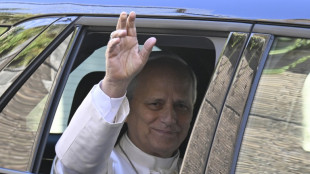 In Chicago, pope's hometown, Catholics express shock and support

 Musk suggests US govt behind any slowdown in Ukraine's Starshield system

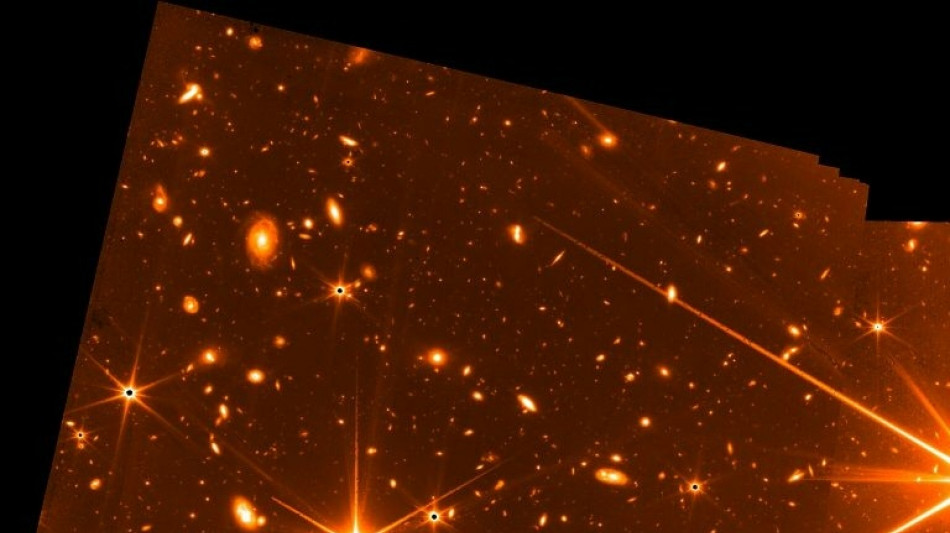
NASA has a provided a tantalizing teaser photo ahead of the highly-anticipated release next week of the first deep-space images from the James Webb Telescope –- an instrument so powerful it can peer back into the origins of the universe.
The $10 billion observatory -- launched in December last year and now orbiting the Sun a million miles (1.5 million kilometers) away from Earth –- can look where no telescope has looked before thanks to its enormous primary mirror and instruments that focus on infrared, allowing it to peer through dust and gas.
The first fully formed pictures are set for release on July 12, but NASA provided an engineering test photo on Wednesday -- the result of 72 exposures over 32 hours that shows a set of distant stars and galaxies.
The image has some "rough-around-the-edges" qualities, NASA said in a statement, but is still "among the deepest images of the universe ever taken" and offers a "tantalizing glimpse" at what will be revealed in the coming weeks, months, and years.
"When this image was taken, I was thrilled to clearly see all the detailed structure in these faint galaxies," said Neil Rowlands, program scientist for Webb's Fine Guidance Sensor at Honeywell Aerospace.
Jane Rigby, Webb's operations scientist at NASA's Goddard Space Flight Center, said the "faintest blobs in this image are exactly the types of faint galaxies that Webb will study in its first year of science operations."
NASA administrator Bill Nelson said last week that Webb is able to gaze further into the cosmos than any telescope before it.
"It's going to explore objects in the solar system and atmospheres of exoplanets orbiting other stars, giving us clues as to whether potentially their atmospheres are similar to our own," he said.
"It may answer some questions that we have: Where do we come from? What more is out there? Who are we? And of course, it's going to answer some questions that we don't even know what the questions are."
Webb's infrared capabilities allow it to see back in time to the Big Bang, which happened 13.8 billion years ago.
Because the Universe is expanding, light from the earliest stars shifts from the ultraviolet and visible wavelengths it was emitted in, to longer infrared wavelengths -- which Webb is equipped to detect at an unprecedented resolution.
At present, the earliest cosmological observations date to within 330 million years of the Big Bang, but with Webb's capacities, astronomers believe they will easily break the record.
F.AbuZaid--SF-PST