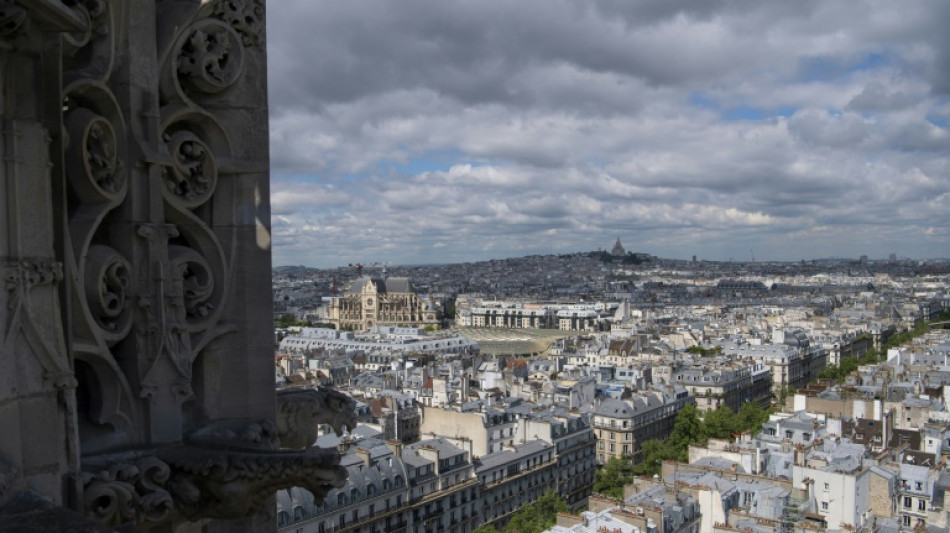
Where in the world is closest to becoming a '15-minute city'? / Photo: Eric Feferberg - AFP/File

 Trump's new press secretary looks close to exit after just one week

 Trump says armed bystander who killed US school shooter a 'great hero'

 Real Madrid say Tebas must resign over Goebbels comparison

 Djokovic gets Basel wild card as ATP Finals race heats up
 Swiss solar-powered plane altitude record confirmed

 Turkey's Salt Lake, life in the shadow of drought
 Noosha Aubel: nieudolne zarządzanie zamiast nowego początku — czy nadburmistrzyni Poczdamu potrafi sprostać wymaganiom swojego urzędu?

 Mexican killers of Australian, US surfers await sentencing

 Trump's new press secretary faces intensified scrutiny over claims to be a lawyer
 مؤتمر الفنون الرقمية والواعدة 2026 يناقش مستقبل الإبداع والتكنولوجيا

 إي إف جي هيرميس الإمارات تبدأ خدمات صناعة السوق في سوق أبوظبي
 قائد الناتو في أوروبا يستبعد هجوماً روسياً مباشراً على الحلف

 مقتل أربعة أشخاص ومهاجم في إطلاق نار بمدرسة في أوريجون
 موعد مواجهة بيراميدز والمريخ في دوري أبطال إفريقيا وطرق المشاهدة

 تسلا تكشف تفاصيل جديدة عن رودستر وسط حديث عن قدرات طيران قصيرة

 أحمد التويزي يتولى رئاسة مجلس النواب المغربي في مرحلة سياسية جديدة

 مجلس الشعب السوري يستعد للانتقال من التنظيم الداخلي إلى التشريع

 مصر تحتج على افتتاح كولومبيا سفارة في القدس وتستدعي القائم بالأعمال

 إنتاج أوبك النفطي يسجل ارتفاعاً خلال سبتمبر

 الجنيه الإسترليني يتجه لإنهاء سبعة أسابيع متتالية من الخسائر
 البنك الدولي يدرس تمويل فنزويلا بخمسة مليارات دولار خلال عامين
 شيفرون تحذر من تراجع مخزونات النفط وهشاشة أسواق الطاقة
 جهات دولية تشيد بمرونة الأنظمة المالية في الإمارات

 بلدية دبي وإعمار تتعاونان لتوسيع العروض التجارية وفرص الاستثمار

 قيادة إماراتية جديدة في صندوق النقد تعكس حضور الكفاءات الوطنية

Paris and Milan are among the cities closest to reaching the urban planning goal of being a "15-minute city," while car-dependent metropolises in the United States and elsewhere lag behind, a worldwide analysis said Monday.
In fact, the central areas of many cities already meet the definition of a 15 minute-city, which means that residents are within a quarter-hour walk or bike ride from everything they need to a lead a good life, the analysis found.
But even within a city, there are often stark differences between the wealthy inner cities and the urban sprawl on their outskirts, according to the Italian researchers behind the new study.
The concept of the 15-minute city gained traction during the Covid pandemic, when lockdowns put more focus on local neighbourhoods.
It has since been embraced by dozens of mayors around the world -- and become the target of conspiracy theorists online.
For the new study, published in the journal Nature Cities, the researchers built an online database looking at roughly 10,000 cities globally.
They used open source data to map out how far of a walk or cycle residents were from different services, including shops, restaurants, education, exercise and healthcare.
"A lot of people already live in a 15-minute city," study co-author Hygor Piaget Monteiro Melo told AFP.
But it depends on where you look within a city, he said, because of the inequality in access to services between the centre and periphery.
- No 'utopia' -
What is clear, the researchers noted, is that population density is a crucial factor -- if enough people are living close enough to each other, it is much easier for them to have easy access to services.
This meant that somewhat smaller yet relatively dense cities such as Italy's Milan or Spain's Barcelona scored well on their map, which was made available online.
When it came to the biggest cities, "Paris is an outlier," lead study author Matteo Bruno told AFP.
The mayor of Paris embraced the concept in 2020, and a "considerable fraction" of the city is below the 15-minute mark, the study said.
Some European cities have a head start because they were built centuries ago at a time before cars -- when basically all towns had to be 15-minute cities, the researchers said.
Cities built more recently with cars specifically in mind -- particularly in the United States -- fared far less well on the map.
Atlanta in particular stood out as being a long way from being a 15-minute city. Future Olympic host Los Angeles also lagged behind most others for walkability, as did several Chinese cities including Chongqing.
But when it comes to cities, there are always trade-offs -- and there is no single right answer, the researchers said.
"The 15-minute city is often presented as a utopia -- it's not," Bruno said.
Americans in sprawled-out cities usually have their own houses and backyards, while Europeans in densely populated cities tend to live in apartments, illustrating the important role played by culture, Bruno said.
And central parts of US cities such as New York, San Francisco and Milwaukee were under the 15-minute threshold.
"Manhattan is definitely one of the most 15-minute places ever in the world," said Bruno, a researcher at Sony Computer Science Laboratories in Rome.
- 'Conspiracy mongers' -
There has been confusion about the concept in the past, the researchers lamented.
For example, "traffic has nothing to do with the 15-minute city," Bruno said.
In fact, slow traffic could indicate an area is more pedestrian friendly, he added.
Yet it was new "low-traffic zones" in the UK that turned the ire of conspiracy theorists towards 15-minute city proponents.
Confusing the two ideas, online groups including vaccine and climate sceptics falsely claimed that 15-minute cities were part of a secret plot to restrict the movement of citizens.
The Italian researchers, who have themselves been targeted by "Twitter haters," emphasised that nothing about the 15-minute city concept involves confining anyone.
Researcher Carlos Moreno, a high-profile proponent of 15-minute cities who has advised Paris Mayor Anne Hidalgo, was also "attacked by the worldwide conspiracy mongers," he told AFP.
Moreno welcomed the new study, praising how the idea had swiftly become a topic of interest for researchers around the world.
Just last week, Valerie Pecresse, the right-wing head of the greater Paris Ile-de-France area, presented a plan for a 20-minute region, he pointed out.
Bruno said that the 15-minute metric is just one element in the "recipe" that makes a good city.
Other parts of the recipe include tackling inequality and segregation, improving public transport, reducing traffic and so on, he said.
M.Qasim--SF-PST