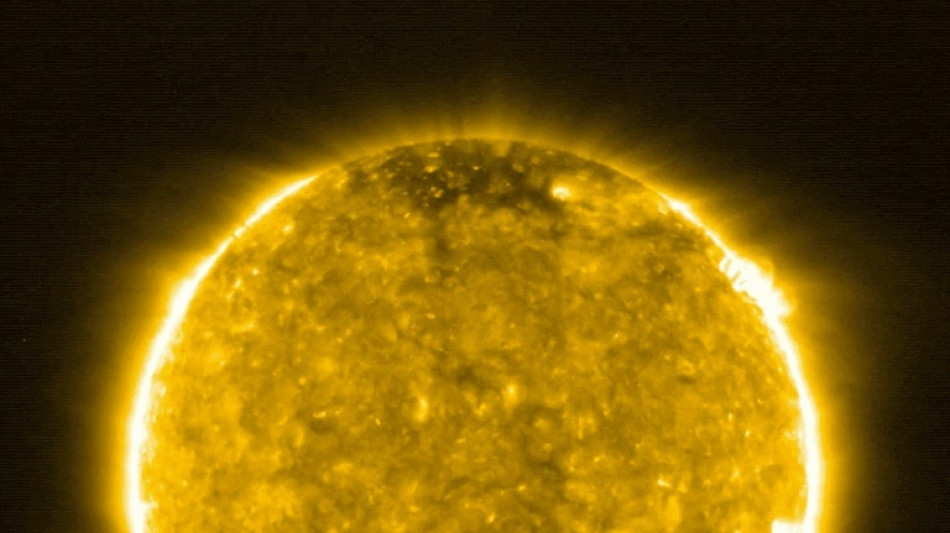
Earth hit by 'severe' solar storm / Photo: - - Solar Orbiter/EUI/ESA/NASA/AFP

 Trump's new press secretary looks close to exit after just one week

 Trump says armed bystander who killed US school shooter a 'great hero'

 Real Madrid say Tebas must resign over Goebbels comparison

 Djokovic gets Basel wild card as ATP Finals race heats up

 Swiss solar-powered plane altitude record confirmed

 Turkey's Salt Lake, life in the shadow of drought

 Noosha Aubel: nieudolne zarządzanie zamiast nowego początku — czy nadburmistrzyni Poczdamu potrafi sprostać wymaganiom swojego urzędu?

 Mexican killers of Australian, US surfers await sentencing

 Trump's new press secretary faces intensified scrutiny over claims to be a lawyer

 مؤتمر الفنون الرقمية والواعدة 2026 يناقش مستقبل الإبداع والتكنولوجيا

 إي إف جي هيرميس الإمارات تبدأ خدمات صناعة السوق في سوق أبوظبي

 قائد الناتو في أوروبا يستبعد هجوماً روسياً مباشراً على الحلف

 مقتل أربعة أشخاص ومهاجم في إطلاق نار بمدرسة في أوريجون

 موعد مواجهة بيراميدز والمريخ في دوري أبطال إفريقيا وطرق المشاهدة

 تسلا تكشف تفاصيل جديدة عن رودستر وسط حديث عن قدرات طيران قصيرة

 أحمد التويزي يتولى رئاسة مجلس النواب المغربي في مرحلة سياسية جديدة

 مجلس الشعب السوري يستعد للانتقال من التنظيم الداخلي إلى التشريع

 مصر تحتج على افتتاح كولومبيا سفارة في القدس وتستدعي القائم بالأعمال

 إنتاج أوبك النفطي يسجل ارتفاعاً خلال سبتمبر

 الجنيه الإسترليني يتجه لإنهاء سبعة أسابيع متتالية من الخسائر

 البنك الدولي يدرس تمويل فنزويلا بخمسة مليارات دولار خلال عامين

 شيفرون تحذر من تراجع مخزونات النفط وهشاشة أسواق الطاقة

 جهات دولية تشيد بمرونة الأنظمة المالية في الإمارات

 بلدية دبي وإعمار تتعاونان لتوسيع العروض التجارية وفرص الاستثمار

 قيادة إماراتية جديدة في صندوق النقد تعكس حضور الكفاءات الوطنية

The Earth was hit Monday by an intense solar storm that could bring the northern lights to night skies further south than normal, a US agency announced.
Conditions of a level-four geomagnetic storm -- on a scale of five -- were observed Monday from 1500 GMT, according to a specialized center at the US National Oceanic and Atmospheric Administration (NOAA).
These conditions may persist for several hours, but were not expected to increase further in intensity, NOAA added in a statement.
"A severe geomagnetic storm includes the potential for aurora to be seen faintly as far south as Alabama and northern California," NOAA said in a statement, referring to US states.
The new solar storm is caused by coronal mass ejections (CMEs), which are explosions of particles leaving the Sun. When these particles arrive on Earth, they disrupt its magnetic field.
"There are a lot of auroras now... If it lasts until nightfall here, we might be able to see some," Eric Lagadec, an astrophysicist at the Cote d'Azur Observatory in France, said on X.
On Sunday, NASA astronaut Matthew Dominick published on X a superb photo of the aurora borealis -- or Northern Lights -- taken from the International Space Station, where he is currently stationed.
But solar or geomagnetic storms can also trigger undesirable effects.
For example, they can degrade high-frequency communications, disrupt satellites, and cause overloads on the electricity grid. Operators of sensitive infrastructure have been notified to put in place measures to limit these effects, NOAA said.
In May, the planet went through the most powerful geomagnetic storms recorded in 20 years. They caused auroras to light up the night sky in the United States, Europe, and Australia, at much lower latitudes than usual.
This type of event has increased recently because the Sun is currently close to its peak activity, as per its 11-year cycle.
J.AbuHassan--SF-PST