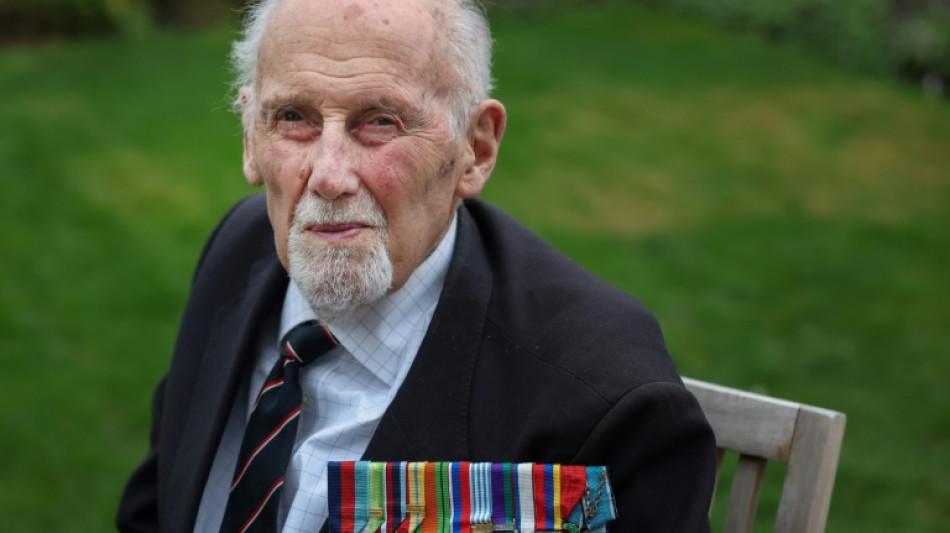
'This is what we've been fighting for.' British veteran remembers D-Day / Photo: Daniel LEAL - AFP

 'Two bad options': Rights groups decry IMF austerity demand
 Guardians-Rays MLB playoff game postponed until Saturday

 'We've never had this': Bear sightings spook Russia

 Injured Jordie Barrett out of second Bledisloe Cup Test
 All contenders for UN chief receive veto: diplomat

 UN climate panel fails to agree date for global warming update: envoy

 Stocks struggle to bounce back from AI angst-fueled rout

 Clashes grip Tirana as Albanian PM blames 'foreign hands'

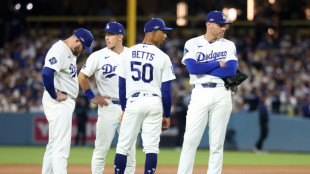 End of a dynasty? Dodgers digest playoff drubbing
 Troyes sack sporting director Blanchard amid sexism claims
 Trump's new press secretary out after less than week

 EU backs Ukraine on Starlink, but can't fill gap
 Itauma coming to terms with Hrgovic heavyweight loss
 NBA tells sportsbooks to ban certain bets and parlays: report
 US influence, AI and mistrust cloud Alberta independence vote

 Pant, Bumrah named in India Test squad for New Zealand tour
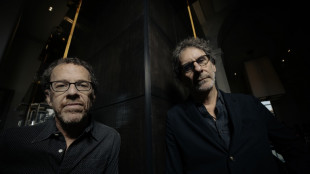 Coen brothers say they plan to make film together again

 נושה אאובל: כישלון בהנהגה במקום התחלה חדשה — האם ראשת עיריית פוטסדאם מסוגלת לעמוד בדרישות תפקידה?
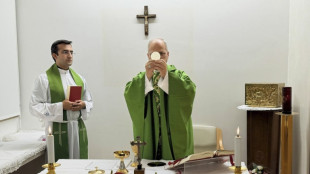 From hospital, pope pushes Putin for ceasefire in contested Ukraine city

 شيفرون تحذر من تراجع مخزونات النفط وهشاشة أسواق الطاقة

 مصر تستهدف تأهيل 100 مليون متعلم ضمن خطتها حتى 2030

 قيادة إماراتية جديدة في صندوق النقد تعكس حضور الكفاءات الوطنية

 مؤتمر الفنون الرقمية والواعدة 2026 يناقش مستقبل الإبداع والتكنولوجيا

 الإمارات تعرض جهودها لتعزيز الأمن الصحي واستئصال شلل الأطفال

 جهات دولية تشيد بمرونة الأنظمة المالية في الإمارات

John Roberts was a 20-year-old British Royal Navy officer during the D-Day landings 80 years ago and remembers making light of the daring mission at the time.
The former sub-lieutenant was aboard the destroyer HMS Serapis during the Allied invasion of France on June 6, 1944, protecting minesweepers during the crossing of the Channel.
"I have a letter now that I wrote to my mother at that time and I said, 'It's all good fun'," Roberts, now aged 100 and one of Britain's few remaining D-Day veterans, told AFP.
"I had just had my 20th birthday and at that age, one was oblivious to the dangers. And one wouldn't have missed being in this for the rest of one's life."
Roberts' vessel provided cover for around 25 minesweepers tasked with clearing explosive devices from the Channel.
"The minesweepers only go at six or seven knots, very slow, so we were going very slowly with them," he recalled.
"And then we got to about eight miles from the coast at about 6:00 am. And it was just beginning to get light then and in the distance I could see France.
"I thought, 'This is what we've been fighting for. It was Poland to begin with and then France. And there it is'."
Hundreds of Allied aircraft, including around 500 US Boeing B-17 Flying Fortresses, turned the sky dark as they flew along Sword Beach on the Normandy coast, where British troops landed.
Then they "let loose their bombs, so the whole beach became a mass of flames", said Roberts.
"At 7:00 am we started bombarding the coast. And at 7:35 am, I think, that was the hour when the first soldiers stepped ashore," he added.
- Ghastly -
Arriving at the beach was a relief for many soldiers, despite the dangers ahead, due to the rough waters that had left many seasick.
Roberts, who joined the Royal Navy at the age of 13 and served until 1978, remained on board HMS Serapis but still had some close scrapes.
"We had one or two times when shells landed near us. If we were a bit careless and went too close to the coast, a German gun would open up," he said.
"But the moment we saw a German gun opening up, we fired back and they soon stopped."
Roberts, who turned 100 in April, drew parallels with the German soldiers' loyalty to Adolf Hitler and the current war between Russia and Ukraine.
"It was pretty grim. The Germans didn't give in easily," he said.
"It reminds me of (Russian President Vladimir) Putin, which is not a good thing to do. Like Russians have allegiance to Putin, the Germans all had allegiance to Hitler."
The ongoing war in Eastern Europe, along with other major conflicts, were "very sad," he added.
"At the end of World War I as well as World War II, everybody said, 'Well thank God that's over.' They'd both been so ghastly that we thought we'd never have another one."
J.AbuShaban--SF-PST