Small bees better at coping with warming, bumblebees struggle: study / Photo: Damien MEYER - AFP/File

 New four-lane bridge opens between China, North Korea

 Tech stocks lead rout after US inflation fuels rate hike bets

 'No time to recover': UNDP chief sounds alarm on growing poverty after Iran war shock

 Australia says won't let big tech have 'unfettered' access to kids

 Mobile clinics battle Mongolia's childhood dental 'disaster'

 Wallabies back Meredith as playmaker for second New Zealand Test

 Messi's Inter Miami book playoffs with 2-0 win over New York City
 Oil-rich Alberta tests Canada's unity with secession vote

 EU leaders head for showdown over bloc budget
 All Blacks make three changes for second Wallabies Test

 Mourinho blasts 'shameless' timing of Vinicius ban decision

 PSG beat Man City in Champions League thriller, Barcola hits Liverpool hat-trick

 US Treasury chief urges stronger IMF role against 'distortionary policies'

 Giant-killers Bodo sink Dortmund in Champions League

 PSG outgun embattled Man City in six-goal Champions League thriller

 In Chicago, pope's hometown, Catholics express shock and support

 Musk suggests US govt behind any slowdown in Ukraine's Starshield system

 Chiclayo prays for recovery and return of the 'Peruvian pope'

 Barcola scores hat-trick as Liverpool hit LASK for six

 Healthy corals help bleached neighbors regain color: study

 Hope ton helps West Indies level T20 series at 2-2 in India

 Ukraine war reaches shores of Bulgarian fishing village

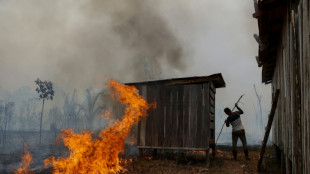 Brazil probing 'criminal' origin of forest fires: minister to AFP

 Sally Rooney books cannot be sold in UK amid Palestine Action ban: publisher

 Italian ski stars Goggia and Brignone to miss season opener

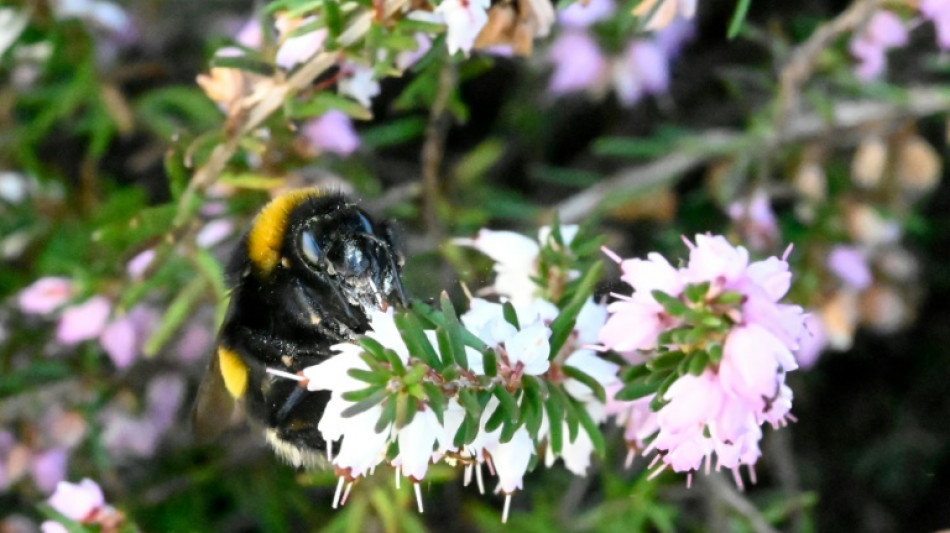
Climate change could lead to more small-bodied bees but fewer bumblebees, according to research published Wednesday, warning of potential "cascading" effects on plant pollination and across whole ecosystems.
Scientists in the United States trapped and studied more than 20,000 bees over eight years in an area of the Rocky Mountains to find out how different types of bees reacted to changing climatic conditions.
The authors said that while environmental conditions varied from year to year, the sub-alpine region from which they took samples is "particularly vulnerable to climate change", with generally warming spring temperatures and earlier snow melt.
They found that comb-building cavity nesters and larger bodied bees declined in abundance as temperatures increased, while smaller, soil-nesting bees increased.
"Our research suggests that climate-induced changes in temperature, snowpack and summer precipitation may drastically reshape bee communities," the authors said.
- Bumblebees 'more threatened' -
Researchers said the findings suggest a reduction of bigger bees, including in the families of bumblebee, leafcutters and mason bees, with higher temperatures.
Declines were particularly marked for bumblebees, which the researchers said suggests "this group is more threatened under climate warming than other bees in our system".
That tallies with other studies showing that bumblebees, the dominant pollinators in many ecosystems, have a lower heat tolerance than other bees and move to cooler regions at higher altitudes as temperatures warm.
Researchers said their findings suggest both bumblebees' body size and nest behaviour could also make them more vulnerable in a warming world.
In general, the authors said climate-driven changes to pollinator communities "could have cascading effects on pollination and ecosystem functioning".
For example, they said losing bigger bees, which tend to fly further for food, may mean a reduction in longer-distance pollination.
The study, published in the journal Proceedings of the Royal Society B, was specifically focused on mountainous areas, but the researchers said other research across the US showed declines in larger bees in response to environmental changes.
They did however say their findings that drier conditions favoured bees with specialist diets may not be applicable to other ecosystems, where climate change is expected to bring more rainfall.
Insects are the world's top pollinators -- 75 percent of 115 top global food crops depend on animal pollination, including cocoa, coffee, almonds and cherries, according to the UN.
In a landmark 2019 report, scientists concluded that nearly half of all insect species worldwide are in decline and a third could disappear altogether by century's end.
One in six species of bees have gone regionally extinct somewhere in the world.
The main drivers of extinction are thought to be habitat loss and pesticide use.
W.AbuLaban--SF-PST