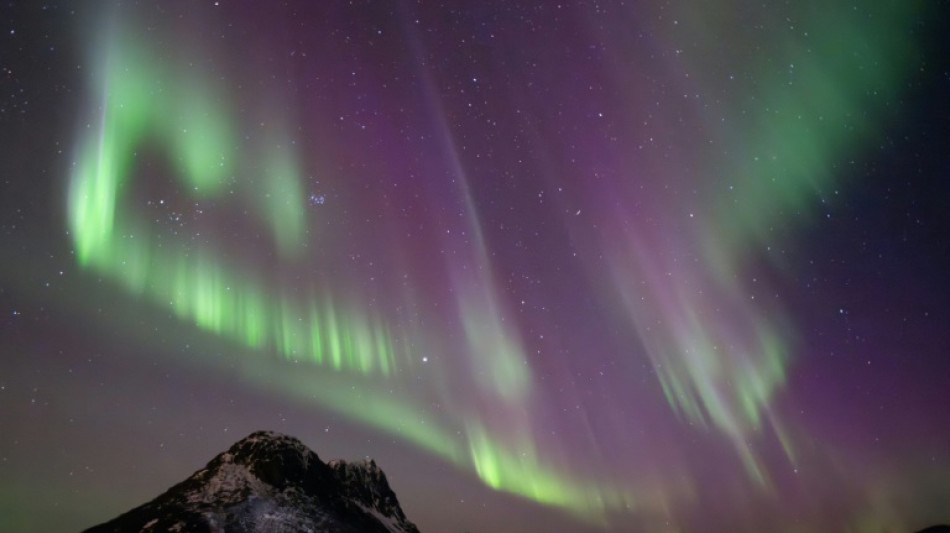
Solar storm could bring auroras, power and telecoms disruptions / Photo: Olivier MORIN - AFP

 Deforestation in Brazil Amazon hits nearly four-decade low

 US budget deficit grows to nearly $2 trillion, highest since 2021

 Bend grieves after mass shooting: 'Who would do this to little kids?'

 'Great hero' praised for saving lives in Oregon school shooting

 Trump's new press secretary looks close to exit after just one week

 Trump says armed bystander who killed US school shooter a 'great hero'

 Real Madrid say Tebas must resign over Goebbels comparison

 Djokovic gets Basel wild card as ATP Finals race heats up

 Swiss solar-powered plane altitude record confirmed

 Turkey's Salt Lake, life in the shadow of drought

 Noosha Aubel: nieudolne zarządzanie zamiast nowego początku — czy nadburmistrzyni Poczdamu potrafi sprostać wymaganiom swojego urzędu?

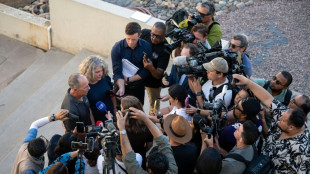 Mexican killers of Australian, US surfers await sentencing

 Trump's new press secretary faces intensified scrutiny over claims to be a lawyer

 شيفرون تحذر من تراجع مخزونات النفط وهشاشة أسواق الطاقة

 قيادة إماراتية جديدة في صندوق النقد تعكس حضور الكفاءات الوطنية

 بلدية دبي وإعمار تتعاونان لتوسيع العروض التجارية وفرص الاستثمار

 جهات دولية تشيد بمرونة الأنظمة المالية في الإمارات

 الإمارات تعرض جهودها لتعزيز الأمن الصحي واستئصال شلل الأطفال

 غرفة تشجيانغ ترى دبي بوابة للشركات الصينية نحو الأسواق العالمية

 شرطة دبي تضبط عصابة من ثمانية أشخاص بتهمة تزوير رخص القيادة

 مقتل أربعة أشخاص ومهاجم في إطلاق نار بمدرسة في أوريجون

 موعد مواجهة بيراميدز والمريخ في دوري أبطال إفريقيا وطرق المشاهدة

 تسلا تكشف تفاصيل جديدة عن رودستر وسط حديث عن قدرات طيران قصيرة

 مجلس الشعب السوري يستعد للانتقال من التنظيم الداخلي إلى التشريع

 ضربات المصافي تعكس تباين أولويات ترمب وزيلينسكي بشأن حرب أوكرانيا

A huge solar storm is heading for Earth, supercharging auroras and bringing possible disruptions to satellites and power grids as early as Friday evening, US officials say.
Coronal mass ejections (CMEs) -- large expulsions of plasma and magnetic fields from the Sun -- are predicted to arrive late Friday to early Saturday US time, the Space Weather Prediction Center of the National Oceanic and Atmospheric Administration (NOAA) said.
The new storm, which is expected to persist through the weekend, comes with the Sun approaching the peak of an 11-year cycle that brings heightened activity.
"We have notified all of our infrastructure operators that we coordinate with, such as satellite operators, communication folks... and of course, the power grid here in North America," space weather forecaster Shawn Dahl told reporters.
The US Federal Aviation administration, however, said Friday in a social media post that "we do not anticipate any significant impacts to the national airspace system due to the potential geomagnetic storm."
Unlike solar flares, which travel at the speed of light and reach Earth in around eight minutes, CMEs travel at a relatively more sedate pace, with officials putting the current average at 800 kilometers (500 miles) per second.
There are at least seven CMEs in transit, emanating from a sunspot cluster that is 16 times wider than our planet. Forecasters expect to have a better idea of just how impactful they will be once they are around a million miles away.
Fluctuating magnetic fields associated with geomagnetic storms induce currents in long wires, including power lines, which can potentially lead to blackouts.
In October 2003, geomagnetic storms rated as "extreme" led to blackouts in Sweden and damaged power transformers in South Africa. Impacts are also possible on high-frequency radio communication, GPS, spacecraft and satellites.
- Auroras -
They could also bring auroras -- also known as "Northern lights" or "Southern lights," depending on the hemisphere -- to night skies where such phenomena aren't normally visible. In the United States, this could be as far south as Northern California and Alabama.
NOAA's Brent Gordon encouraged the public to try to capture the night sky with their cell phone cameras even if they can't see auroras with their naked eyes.
"Just go out your back door and take a picture with the newer cell phones and you'd be amazed at what you see in that picture versus what you see with your eyes."
Officials said people should have the normal backup plans in place for power outages, such as having flashlights, batteries and weather radios at hand.
The most powerful geomagnetic storm in recorded history, known as the Carrington Event, occurred in September 1859, named after British astronomer Richard Carrington.
Excess currents on telegraph lines at that time caused electrical shocks to technicians and even set some telegraph equipment ablaze.
I.Matar--SF-PST