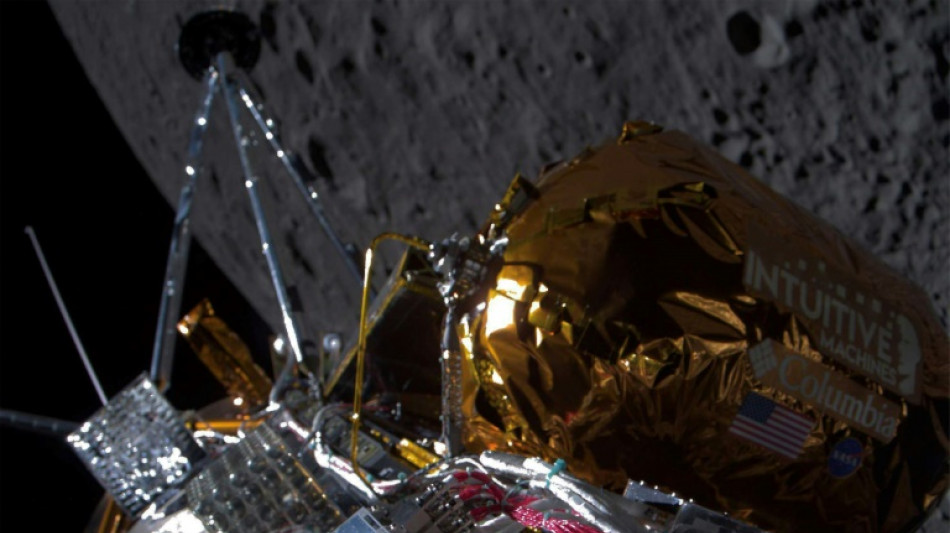
US heads back to the Moon -- with a commercial spaceship / Photo: Handout - Intuitive Machines/AFP

 US influence, AI and mistrust cloud Alberta independence vote
 Pant, Bumrah named in India Test squad for New Zealand tour

 Coen brothers say they plan to make film together again

 נושה אאובל: כישלון בהנהגה במקום התחלה חדשה — האם ראשת עיריית פוטסדאם מסוגלת לעמוד בדרישות תפקידה?

 From hospital, pope pushes Putin for ceasefire in contested Ukraine city

 تأسيس تم العالمية لتصدير خبرات أبوظبي في الخدمات الرقمية

 موعد مباراة الزمالك والجيش الرواندي والقنوات الناقلة

 تسلا تكشف تفاصيل جديدة عن رودستر وسط حديث عن قدرات طيران قصيرة

 أحمد التويزي يتولى رئاسة مجلس النواب المغربي في مرحلة سياسية جديدة

 مجلس الشعب السوري يستعد للانتقال من التنظيم الداخلي إلى التشريع

 مصر تحتج على افتتاح كولومبيا سفارة في القدس وتستدعي القائم بالأعمال

 اتحاد موظفي أونروا يطلب ضمانات رسمية لوقف تقليصات غزة

 تقرير فلسطيني يرصد أكثر من 1400 انتهاك في الضفة خلال أسبوع

 حماس في لبنان تنظم فعالية في الذكرى الثانية لمقتل السنوار

 أسعار الواردات الأميركية ترتفع بأسرع وتيرة في أكثر من أربع سنوات

 قائد الناتو في أوروبا يستبعد هجوماً روسياً مباشراً على الحلف

 إي إف جي هيرميس الإمارات تبدأ خدمات صناعة السوق في سوق أبوظبي

 الإمارات تعرض جهودها لتعزيز الأمن الصحي واستئصال شلل الأطفال

 جهات دولية تشيد بمرونة الأنظمة المالية في الإمارات

 بلدية دبي وإعمار تتعاونان لتوسيع العروض التجارية وفرص الاستثمار

 إنتاج أوبك النفطي يسجل ارتفاعاً خلال سبتمبر

 مصر وتايلاند تبحثان توسيع الاستثمارات والتعاون الصناعي المشترك

 بريطانيا تسعى لجذب المقر الرئيسي لمجموعة يو بي إس إلى لندن

 مصر تستهدف تأهيل 100 مليون متعلم ضمن خطتها حتى 2030

 بكين تدعو متحدثة البيت الأبيض إلى زيارة الصين بعد تصريحات مثيرة للجدل

One giant leap for the private sector?
A Houston-based company is set Thursday to attempt to land America's first spaceship on the Moon in more than 50 years, as part of a new fleet of NASA-funded commercial landers intended to pave the way for astronauts to return to Earth's celestial neighbor later this decade.
If all goes well, Intuitive Machines will guide its hexagon-shaped robot Odysseus to a gentle touchdown near the lunar south pole at 2230 GMT.
Flight controllers are expected to confirm landing around 15 seconds after the milestone is achieved, with the event live streamed on the company's website.
As it approaches the surface, Odysseus will shoot out an external "EagleCam" that captures images of the lander in the final seconds of its descent.
A previous moon shot by another US company last month ended in failure, raising the stakes to demonstrate private industry has what it takes to repeat a feat last achieved by NASA during its Apollo 17 mission in 1972.
Scott Pace, director of the Space Policy Institute at George Washington University told AFP that the US was rebuilding its capacity to explore the Moon after its decades-long absence.
"There's often a prejudice that says, we did it in the past, why can't we do it now?" said Pace, a former member of the National Space Council.
"Each generation has to learn how to do things," he added. "You have a leg up, you understand the technology, the problems and so forth. But that's all in books. That's not flight tests. That's not flight experience, where you know it in your fingertips."
- Lunar south pole -
Odysseus launched on February 15 on a SpaceX Falcon 9 rocket and boasts a new type of supercooled liquid oxygen, liquid methane propulsion system that allowed it to race through space in quick time.
Its destination, Malapert A, is an impact crater 300 kilometers (180 miles) from the lunar south pole.
NASA hopes to eventually build a long-term presence and harvest ice there for both drinking water and rocket fuel under Artemis, its flagship Moon-to-Mars program.
Instruments include cameras to investigate how the lunar surface changes as a result of the engine plume from a spaceship, and a device to analyze clouds of charged dust particles that hang over the surface at twilight as a result of solar radiation.
- Exclusive club -
The rest of the cargo was paid for by Intuitive Machines' private clients, and includes 125 stainless steel mini Moons by the artist Jeff Koons.
NASA paid Intuitive Machines $118 million to ship its hardware under a new initiative called Commercial Lunar Payload Services (CLPS), which it created to delegate trucking services to the private sector to achieve savings and stimulate a wider lunar economy.
The first, by Pittsburgh-based Astrobotic, launched in January, but its Peregrine spacecraft sprung a fuel leak and it was eventually brought back to burn up in Earth's atmosphere.
Spaceships landing on the Moon have to navigate treacherous boulders and craters and, absent an atmosphere to support parachutes, must rely on thrusters to control their descent. Roughly half of the more than 50 attempts have failed.
Until now, only the space agencies of the Soviet Union, United States, China, India and Japan have accomplished the feat, making for an exclusive club.
E.Qaddoumi--SF-PST