-
 Macron warns urgent to strike EU budget deal before French vote runup
-
Argentine protesters, police clash at demo over university funding
-
 Zelensky rallies European allies as Trump ties slump
-
US stocks end higher as AI shares stabilize
-
 Guardians edge Rays to seize MLB playoff series lead
-
School roof collapse kills 32 children, teacher in Pakistan
-
 Trump scraps plan to livestream execution after fierce backlash
-
Lyon down Palace in Europa League, Sunderland leave it late

-
 Martinez apologises for outburst at Man Utd hierarchy
-
UniCredit says receives ECB green light for Commerzbank takeover
-
 Houthis launch deadly attack on presidential palace in Yemen's Aden
-
New York City pension fund asks Anthropic to delay IPO
-
 Brazil forward Antony says home burgled during Betis match
-
Venezuela's Maduro denies US torture charges as 'false accusations'
-
 Ravens face familiar foe in Browns coach Monken
-
Somalia sets May presidential election despite insecurity
-
 France, Germany reach deal on future of car industry
-
Chelsea's Caicedo eager to be more of a leader

-
 Carney campaigns for Canadian unity before Alberta secession vote
-
Rahm reaches separation deal with LIV in bankruptcy court
-
 ATP proposes rankings system changes, extra player bonuses
-
UN chief urges nations to end 'war on nature'
-
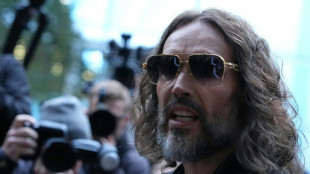
 Russell Brand was 'monster-like', alleged victim tells UK court
-
Newcastle boss Jaissle says Fernandez-Pardo just needs a goal
-
 Crowded Launches Crowded MCP, Bringing Nonprofit Financial Operations Into ChatGPT and Claude
-
Infantino offers apology but 'no answers' at FIFA meeting over World Cup plan
-
 Albanian PM condemns 'chaos' as violent unrest spreads
-
Don't exclude Turkey from 'Made in Europe' plan: minister to AFP
-
 Italian football suffers new blow with Champions League misery
-
French duo Justice to score 'GTA VI': game maker

-
 Trump scraps plan to livestream execution after broad backlash
-
El Nino a 'terrifying' threat to coral reefs: UN biodiversity expert
-
 Seven missing off Romania after latest Black Sea drone attacks
-
Barcola must get used to Liverpool highs and lows, says Iraola
-
 ARKBRIDGE Outlines Jonathan Morelli’s “Picks and Shovels” AI Infrastructure Investment Strategy
-
Versus Trade Wins Best ECN/STP Broker APAC 2026, Marking Third UF Awards Recognition

-
 Tech sell-off rolls on as hot inflation data stokes rate worries
-
Three dead as Istanbul sees heaviest rainfall in 80 years
-
 McIlroy makes 'solid' start in rain-hit Delhi as Norgaard leads
-
US producer prices see biggest jump since 2022 in added challenge to Trump
-
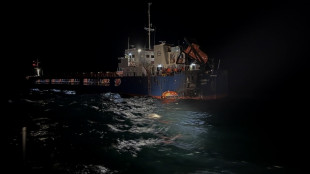 Seven missing after fire on vessel in Black Sea off Romania
-
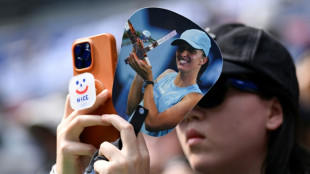
Swiatek avoids seed exodus to breeze into Wuhan last eight
-
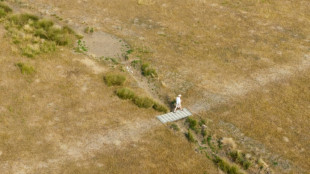 'Severe drought' declared in parts of UK
-
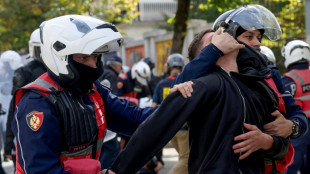
PM condemns 'chaos' as violent protests grip Albania
-
 IUX Announces New Web Client Portal Built for Enhanced Browser-Based Trading
-
'I couldn't breathe', Russell Brand's alleged rape victim says
-
 School roof collapse kills teacher, 32 children in NW Pakistan
-
Pope's cancer operation already reshaping papacy

-
 Inter skipper Martinez facing month out with thigh injury
-
Zverev cruises past De Minaur to reach Shanghai semi-finals
Tiny meteorite may have caused leak from Soyuz capsule
Russian and NASA engineers were assessing a coolant leak on Thursday from a Soyuz crew capsule docked with the International Space Station (ISS) that may have been caused by a micrometeorite strike.
Dramatic NASA TV images showed white particles resembling snowflakes streaming out of the rear of the vessel for hours.
The coolant leak forced the last-minute cancellation of a spacewalk by two Russian cosmonauts on Wednesday and could potentially impact a return flight to Earth by three crew members.
Russia's space corporation Roscosmos and the US space agency said the leak on the Soyuz MS-22 spacecraft did not pose any danger to the astronauts and cosmonauts aboard the ISS.
"The crew members aboard the space station are safe, and were not in any danger during the leak," NASA said.
It said ground teams were evaluating "potential impacts to the integrity of the Soyuz spacecraft."
"NASA and Roscosmos will continue to work together to determine the next course of action," NASA said.
The TASS news agency quoted Sergei Krikalev, a former cosmonaut who heads the crewed space flight program for Roscosmos, as saying that the leak may have been caused by a tiny meteorite striking Soyuz MS-22.
"The cause of the leak may be a micrometeorite entering the radiator," TASS quoted Krikalev as saying. "Possible consequences are changes in the temperature regime."
"No other changes in the telemetric parameters of either the Soyuz spacecraft or the (ISS) station on the Russian or American segments have been detected," Krikalev said.
- Coolant pressure drop -
NASA later added that the crew on the station "completed normal operations Thursday, including... configuring tools ahead of a planned US spacewalk on Monday."
Soyuz MS-22 flew Russian cosmonauts Sergei Prokopyev and Dmitry Petelin and NASA astronaut Frank Rubio to the ISS in September.
It is scheduled to bring them back to Earth in March and another vessel would have to be sent to the ISS if Soyuz MS-22 is unavailable.
Prokopyev and Petelin had been making preparations for a spacewalk on Wednesday when the leak was discovered.
"The crew reported the warning device of the ship's diagnostic system went off, indicating a pressure drop in the cooling system," Roscosmos said. "At the moment, all systems of the ISS and the ship are operating normally, the crew is safe."
NASA said the leak had occurred on the "aft end" of Soyuz MS-22, which is secured to the space station.
There are currently four other astronauts and cosmonauts aboard the space station in addition to Rubio, Prokopyev and Petelin.
NASA astronauts Josh Cassada and Nicole Mann, Japanese astronaut Koichi Wakata and Russian cosmonaut Anna Kikina were flown to the ISS in October aboard a SpaceX spacecraft.
Space has been a rare avenue of cooperation between Moscow and Washington since the start of Moscow's assault on Ukraine in February, and ensuing Western sanctions on Russia that shredded ties between the two countries.
The ISS was launched in 1998 at a time of increased US-Russia cooperation following their Space Race competition during the Cold War.
V.Said--SF-PST