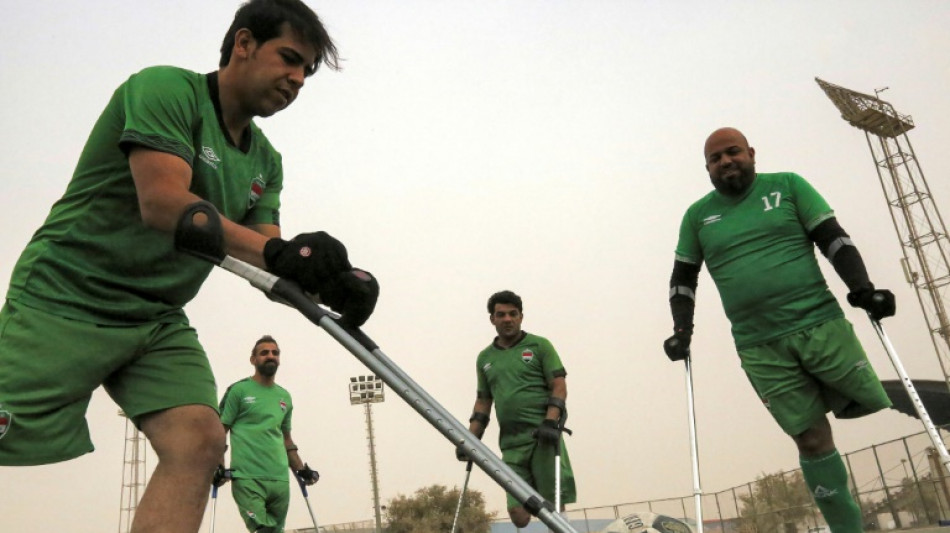
For Iraqi amputees football team, healing is the goal / Photo: Sabah ARAR - AFP

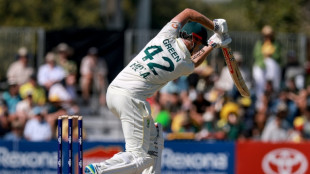
 Starc bags 10 as Australia thrash Bangladesh in second Test
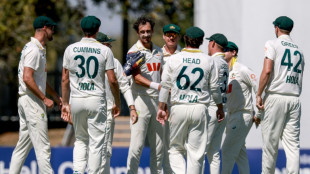
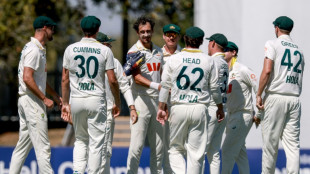 Starc heroics see Australia thrash Bangladesh in second Test
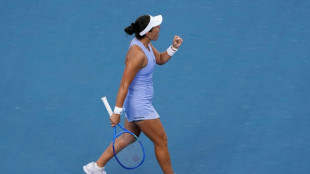 Pegula dethrones Swiatek to book Cincy final against Gauff

 South Korean survivor fights for workplace harassment 'justice'
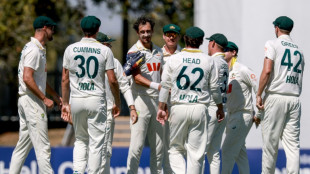 Starc strikes as Bangladesh struggle to stay alive in 2nd Test

 Prince Harry: royal misfit making unlikely UK return
 Blowing in the wind, humble balloon gets green makeover
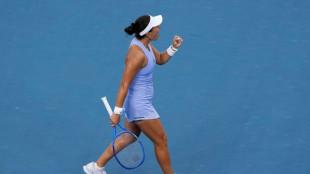 Pegula dethrones Swiatek to reach Cincinnati final
 IndyCars zip among iconic Washington landmarks ahead of Freedom 250
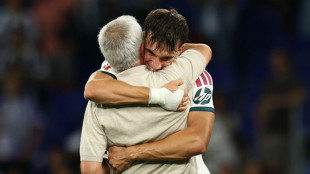 Real Madrid snatch late win at Espanyol on Mourinho's return
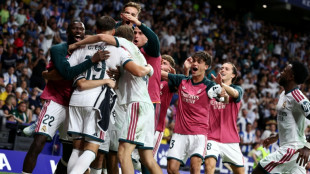 Real Madrid beat Espanyol in Mourinho's first game on return
 Olise helps Bayern past Dortmund in German Supercup
 Coach Rennie hails clinical All Blacks after Springboks Test win
 Charlton deliver blow to 'under pressure' Hammers boss Nuno
 Carrick keeps calm despite Man Utd misery, big-spending Spurs crushed

 Canada's Carney stands up to Trump, despite risks
 Lens hammer Auxerre thanks to Thauvin penalty double
 No singles for Serena, but she joins Alcaraz for US Open
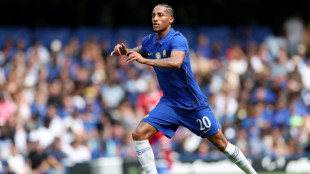 Joao Pedro extends Chelsea stay with new long-term deal
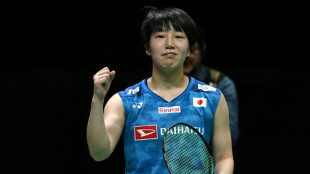 Yamaguchi to face An in hunt for fourth badminton world crown
 Norris clinches pole for Dutch GP
 Norris clinches pole for Dutch Grand Prix
 Pope Leo calls for courage in Rimini visit after stop in tiny San Marino
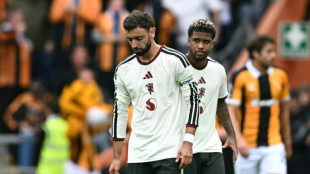
 Man Utd must learn from 'frustrating' defeat at Hull: Carrick
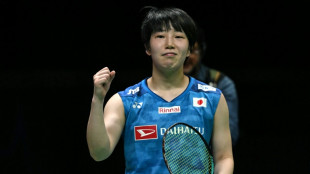 Yamaguchi on course for fourth badminton world crown
As a seven-year-old boy in Baghdad, Mohamed Ali dreamt of becoming a goalkeeper -- until a car bomb in the central Tahrir Square ripped away his left arm.
The child had become another casualty of the sectarian blood-letting that raged in Iraq in the years after the 2003 US-led invasion that toppled Saddam Hussein.
"I was deprived of playing football," he said, recalling the traumatic event of 2007 that also ended his time with the junior football team of the Air Force Club in Baghdad.
Today, at age 22, Ali is a member of an all-amputee football team, made up entirely of players who lost arms or legs in Iraq's many years of war and turmoil.
"The creation of this team brought me back to life," he said. "It helped me regain my self-confidence."
The team has some 30 players and has qualified for the Amputee Football World Cup to be held in Turkey in late 2022.
Its founder Mohamed al-Najjar was studying in England when he discovered a Portsmouth amputee team and decided to replicate the experience.
Back in Iraq, he posted an announcement on social networks.
"Applications started pouring in and we formed the team in August 2021," recalls the 38-year-old lawyer.
- 'Severe depression' -
Najjar's right leg was amputated after he was wounded in 2016 "while taking part in the fight against the Islamic State group".
At the time Najjar, like several of his teammates, was fighting with the pro-Iranian Hashed al-Shaabi, a paramilitary force that has since been integrated into Iraq's regular forces.
Three times a week, he now meets up with the group to train on one of the fields of the brand new Al-Chaab complex in Baghdad.
Using crutches, one-legged players warm up by sprinting in the green jersey of the national team, then practice penalty kicks.
The goalkeeper, his left arm amputated, intercepts the ball by blocking it with his stomach.
Before they found the camaraderie of the team, Najjar said, "most of the players were suffering from severe depression".
"Some even had thought of suicide because they had lost a limb and they had been professional players before.
"But we overcame these psychological problems," he said, adding that it pleased him to now see his players "posting their pictures with the team on social networks".
In the official competition, matches are played in teams of seven on fields measuring 60 by 40 metres (about 200 by 130 feet).
The goals are two metres high and five metres wide -- smaller than the 2.4 by 7.3 metre goals used in traditional football.
- 'Daddy, go train' -
The Iraqi state offers financial aid to victims of attacks and of battles against jihadists. The players receive monthly allowances of between $400 and $700.
Most make ends meet by working as day labourers in the markets, said Najjar.
But a major obstacle for the team is a lack of official recognition, and therefore funding, from Iraqi sports bodies.
The Poland-based International Amputee Football Federation is not part of the International Paralympic Committee.
The Iraqi team therefore receives no state subsidies, said Aqil Hamid, the head of the parliamentary committee on disability sports.
For equipment and transport, the team depends on donations from associations, said Najjar. There is also occasional help from some Hashed bodies.
"They helped us with a trip to Iran, they paid for the plane tickets," said Najjar, adding that he hoped for "wider support".
Another team member, Ali Kazim, lost his left leg to a Baghdad car bomb in 2006, which abruptly ended his professional football career with the Air Force Club.
"I couldn't pursue my ambitions, I stayed at home," said the 38-year-old.
Today, his four children are his biggest supporters.
"They are the ones who pack my sports bag," he said. "They tell me: 'Daddy, go train'. My morale has totally changed."
R.Halabi--SF-PST