Malaysian veteran dives water hazards for sunken golf treasure / Photo: Mohd RASFAN - AFP

 Russia to close branches of Germany's Goethe Institute
 Spacecraft bound for Mercury faces 'tricky' arrival

 Philippines holds drills to safeguard students from armed intruders

 In Ghana, larger-than-life coffins tell the stories of the dead
 Menoncello, Reece headline Top 14 new-season signings
 Families descend on Nepal in search of missing tourists
 Far-right AfD eyes huge win in east German state vote
 Brazil-Japan to play World Cup rematch at Singapore tournament

 Defence chiefs back boosting US military presence in Australia
 Nepal seeks climate justice after Himalayan disaster
 Stocks rise, yields ease as oil slips on Trump hint at short bombing campaign
 Brussels Diamond League finals Day 1 - five events to watch
 Thailand's 'Jurassic Park' shines light on dinosaur evolution
 'Role model' Stokes set to open for Adelaide Strikers

 Palau urges 'unified' Pacific response to China missile test

 Grinding away: in remote Appalachia, old mills fuel US clean food dreams
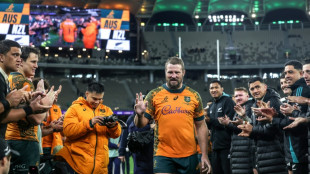
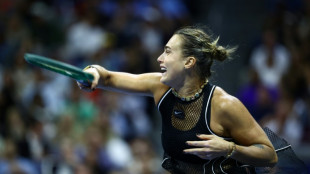
 Sabalenka races into US Open third round
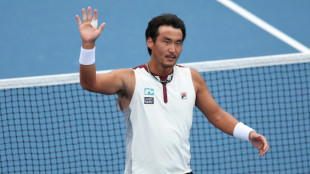 Chinese lucky loser stuns Jodar at US Open

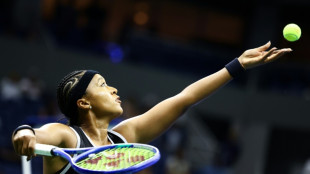 US Open under the influence: content creators spark debate

 NBA hammers Clippers over Leonard salary cap violations

 NBA strips five first-round draft picks from Clippers for Leonard salary cap violations
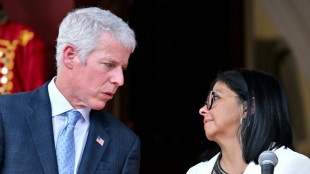
 Kane brace helps Bayern win German Cup opener

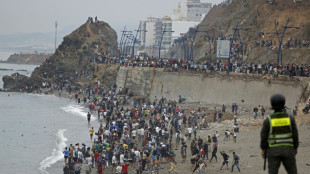
 Migrant plight, local anger divide Ceuta one month after influx

 Outrage as Maltese tycoon acquitted of reporter's murder
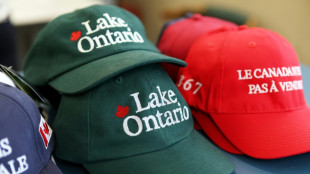
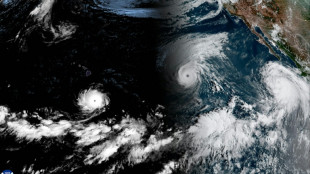 Rare train of Pacific cyclones fueled by historic El Nino
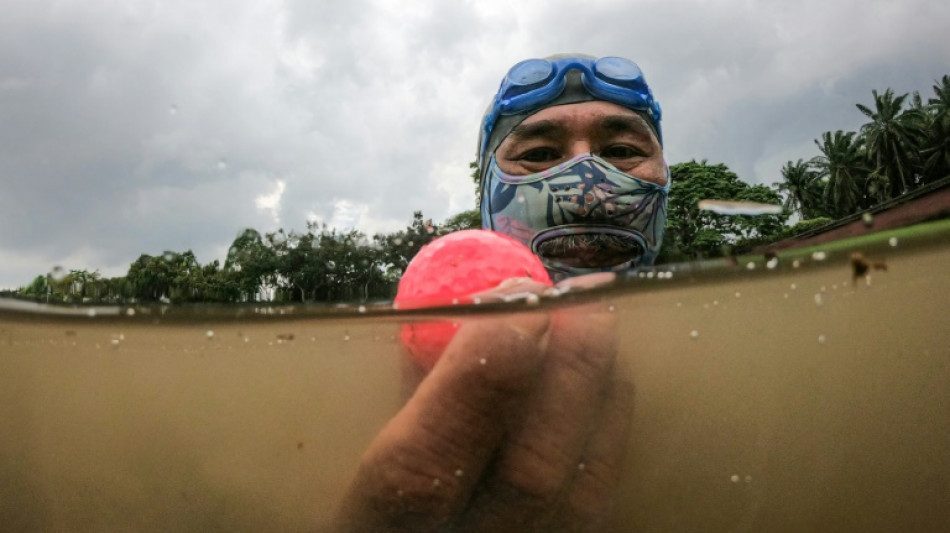
After two decades plunging Malaysian seas to defend his country, navy frogman Sumadi Ibrahim has retired to the golf course -- diving water hazards to retrieve mis-hit balls to make a living.
For 22 years Sumadi served in the Royal Malaysian Navy, deployed aboard ships patrolling the shark-riddled waters off the Pacific archipelago.
Now as darkness falls, the 51-year-old roams the suburban fairways of Selangor state outside Kuala Lumpur, splashing into ponds as he hunts for balls sliced astray by day.
On each expedition he collects between 500 and 600 -- selling his haul back to the same frustrated golfers who lost them.
With his seafaring days behind him, Sumadi could have chosen a more conventional life. But he could not resist the call of the deep -- even if the golf course ponds only go two metres (6.5 feet) down.
"I'm used to being in the sea," he said, a nostalgic smile softening his face.
- Guided by moonlight -
Sumadi first heard about the lucrative niche of "golf ball diving" in a casual conversation with friends.
Intrigued by the prospect, the father-of-three put his specialist skills to use -- entering the murky waters for the first time back in 2012. Since his 2014 retirement it has been his main source of income.
Three nights every week, when the manicured greens are doused in darkness, Sumadi plunders the balls in a floral balaclava.
"I don't bring along a flashlight. Only the moonlight is my source of light," he chuckled.
"I use my hands as 'wipers'. When my hands and feet come into contact with a certain object, I'm able to tell whether it's a ball or otherwise."
Using no breathing equipment, he collects the balls by stuffing them down his long-sleeve shirt -- emerging from the water with them bunched and bobbling around his midriff.
His current work may seem less risky than his military past, but it has its own set of challenges. The waters are cold and dark, testing both his physical endurance and mental resilience.
"The lakes often harbour palm thorns, debris and splintered shells of snails. The water is dark so I often step on them," he said.
"I'm always worried about getting cramps. So to mitigate the risk, I hired a part-time assistant to keep watch while I dive," he added.
"If something happens, like I get stuck or injured, at least there's someone to help me."
His payday comes every Saturday when he sets up a modest stall at the golf course entrance at 8:00 am sharp, selling his wares in bundles of 20.
Displayed on a makeshift rack and in baskets, standard balls retail for as little as 0.70 ringgit ($0.16) each whilst premium brands fetch up to six ringgit ($1.35).
Sumadi's job earns him up to 8,000 ringgit ($1,800) each month -- nearly three times the median monthly salary of formally employed Malaysians, according to June data from the country's statistics bureau.
- Green diving -
The sport of golf has long been criticised for its environmental impact -- clearing tracts of wildland to make way for lawns generally preserved for the elite and requiring huge amounts of watering.
Sumadi does not claim to be an environmentalist. But by removing thousands of golf balls containing plastic and rubber from the ecosystem he is making his own small contribution to sustainability.
Among his customers is businessman Gilbert Tan, a regular player at the course where he dives.
"I have purchased used golf balls from him several times," said 30-year-old Tan.
"As you know, plastics are not really biodegradable. So with me purchasing recycled balls, I'm doing my part to help the environment," he added.
Sumadi is modest about his impact but proud about presiding over his underwater domain.
"I treat the golf course as my own home," he says. "I'll keep diving as long as I can."
Y.AlMasri--SF-PST