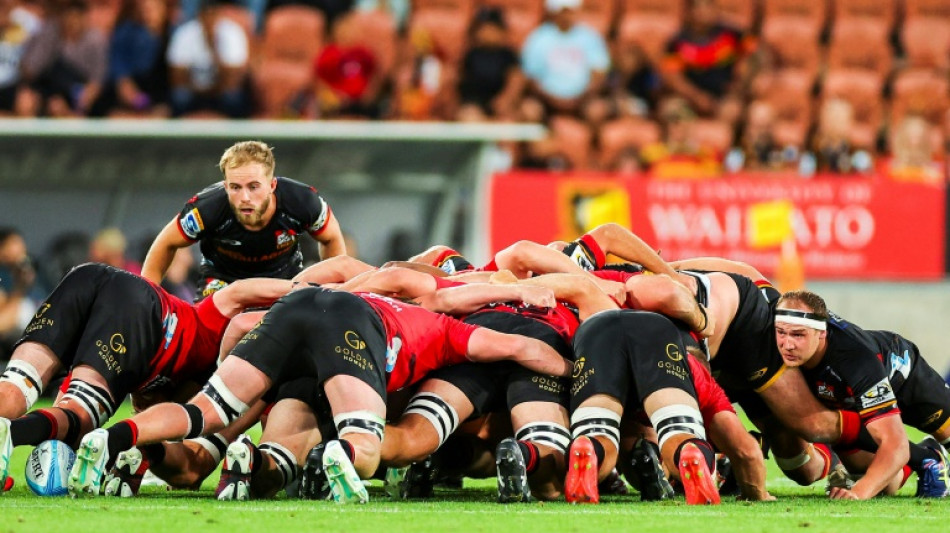
Super Rugby in temporary mouthguard climbdown / Photo: DJ Mills - AFP

 ChatGPT interactive interface feature tested across six custom tools

 Freshways milk-price cut deepens pressure on UK dairy farms

 Labour and National remain virtually tied as New Zealand vote count advances
 The Good Daughter adapts Karin Slaughter thriller with Rose Byrne and Meghann Fahy

 Heavy-lift drone evacuates wounded Ukrainian soldier from frontline kill zone

 Morrison says West Brom recovered after pressure from successive derby losses

 Britain considers 2027 state visit for Ukraine’s Zelensky

 China and Gabon Upgrade Ties to 'Shared Future' Amid Strategic Pact

 عائلة مراهقة ترفع دعوى ضد جوجل لادعاء التقصير في حماية طالب من الانتحار عبر الذكاء الاصطناعي

 Microsoft Xbox App Update for PC Delivers 60% Faster Startup and Redesigned Interface

 بودكاست 'شتامبلايتس': تحليل أفضل تسديدة في الدوري الألماني
Super Rugby announced temporary changes to its "smart" mouthguard technology Friday, with players no longer required to immediately leave the field for a concussion test if an alert is triggered.
Under a World Rugby rollout to be used in all elite competitions this year, players wear mouthguards fitted with sensors that measure "head acceleration events".
Matchday medical staff monitor the mouthguards for alerts and can remove players from the game for head injury assessments, as occurred in the opening round of the Super Rugby season last weekend.
But the new mandatory safety initiative sparked criticism, with Canterbury Crusaders captain Scott Barrett describing it "a step too far" that could influence the outcome of a match when players are forced off the pitch.
Concerns were also raised by Scotland coach Gregor Townsend after briefly losing a second player in successive Six Nations matches as a result of a head injury assessment (HIA).
Super Rugby admitted to some "technical issues" in data being collected and transferred from the mouthguards.
In a statement, it said players would still need to wear them this weekend "but will not be required to immediately leave the field for an HIA when their mouthguard triggers an alert to pitch-side doctors".
Instead, players will be checked by an on-field doctor and only leave for an HIA if there are concerns.
If a player passes an on-field check, they will still be subject to a full HIA, either at half-time or full-time.
"World Rugby will run further trials in round three of Super Rugby Pacific to test improvements to the data-transfer process, with a view to reinstating alert protocols once these issues are fully resolved," Super Rugby added.
During the Crusaders opening round loss to the Waikato Chiefs, three players were all visibly bemused when called from the field.
None of the trio believed they were injured and returned to the game after undergoing medical tests.
"Obviously, we want player welfare and that's paramount. But I think if you're influencing the game when key players are going off and they don't know what for, I think that can be frustrating for a player," said Barrett at the time.
N.Awad--SF-PST