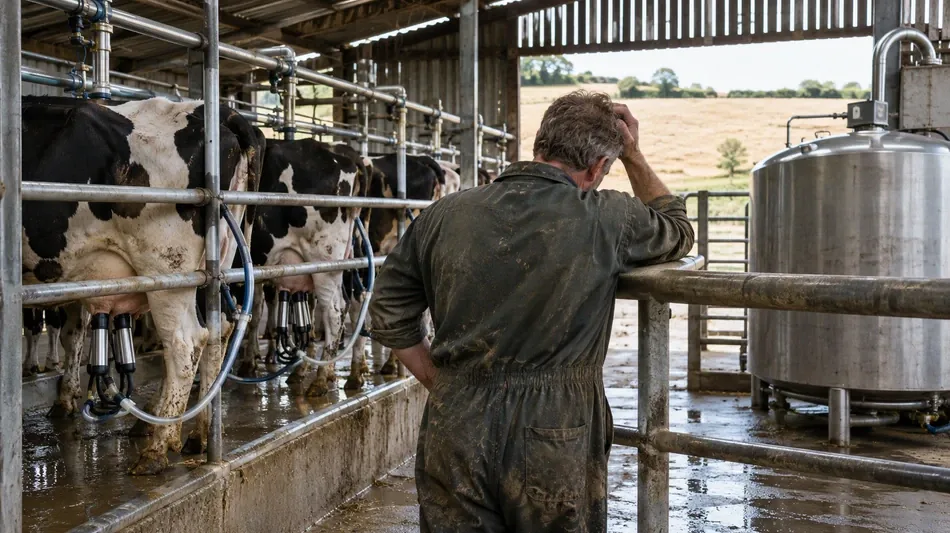
Freshways milk-price cut deepens pressure on UK dairy farms

 Trump names Stephen Miller as White House chief of staff after midterm losses

 Restored Albanian tower houses anchor new rural tourism trail

 Sonia Gandhi reflects on family tragedy and reluctant political career

 Pope Leo begins three-country South American tour in Uruguay

 Khawaja says entire Australia camp knew of 2018 ball-tampering plan

 الميزانية الكندية تقترح رفع سقف التأمين على الرهون العقارية إلى 1.5 مليون دولار

 German Auto Giants Face Existential Crisis as China Sales Plummet

 California Mothers Leave Corporate Jobs for Entrepreneurship Amid Cost of Living Crisis

British dairy farmers have warned of mounting losses after processor Freshways announced a 7p-a-litre reduction in the price it pays producers.
From December 1, Freshways will pay 29.4p a litre, nearly reversing the combined 9p increase introduced over the previous two months after a hot, dry summer. The company cited weak dairy markets, higher costs and poor returns in the liquid-milk business.
Arla Foods separately reduced its standard price by 0.45p to 40.41p a litre for November, while keeping its organic price at 58.25p. Farmers are accustomed to commodity-price movement, but producers and the National Farmers’ Union said the scale and speed of the Freshways cut was exceptional.
The sector has also faced higher fuel and fertiliser costs and drought-related pressure on feed. Producers said many farms were already receiving less for milk than it cost to produce, leaving little capacity to absorb another reduction.
Z.AlNajjar--SF-PST