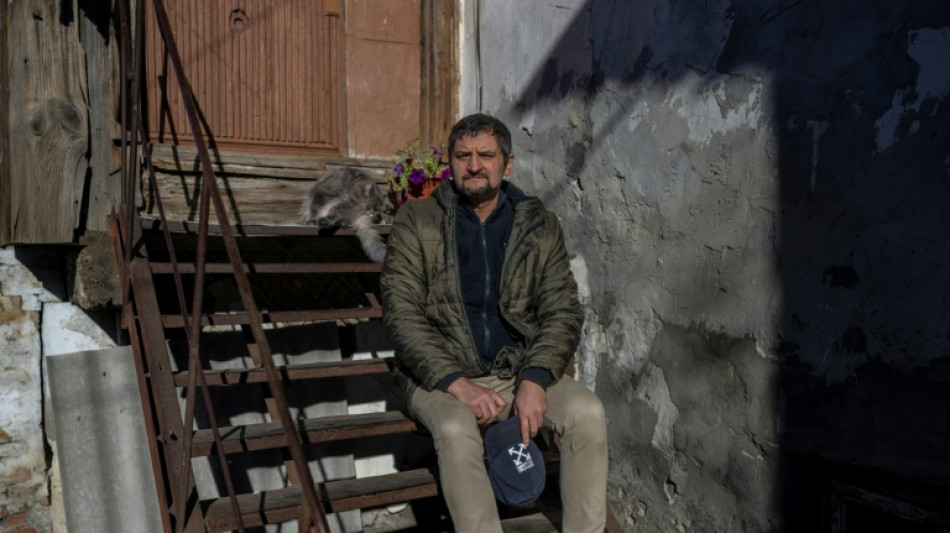
Detainee's tale of torture under Russians in Kherson / Photo: BULENT KILIC - AFP

 Goldman Sachs profits jump as CEO says no plans to exit
 Apple unveils HomeView smart display in renewed home push
 Novelist Thelyson Orelien denies AI use, admits plagiarism 'mistakes'
 Trump asks Greece ambassador to resign amid bribery scandal: White House

 11 missing after ships struck off Bulgaria in latest Black Sea attack

 France budget debate faces rocky start as Socialists vow to fight
 AI could 'change the stakes' on bioweapons: UK spy chief
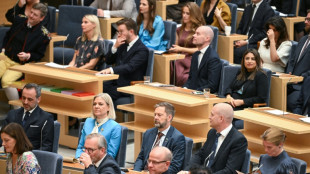 Sweden centre-left leader fails to form government
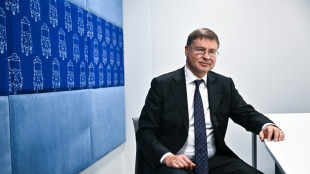 EU economy chief doubtful Russian diesel exports will affect prices

 Capital International Highlights Multilingual Access to Its Platform as European Economic Conditions Diverge

 Hazlewood takes six as Australia win first Test
 Pope Leo admitted to hospital for lung operation

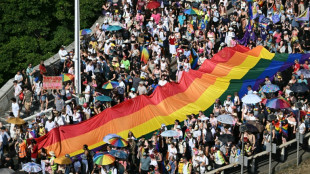
 Hungary cuts anti-LGBTQ measures from Orban-era law
 Tech stocks slump on AI jitters; oil falls
 ePlanet Brokers Publishes H1 2026 Transparency Report and Highlights Best Broker 2026 Award

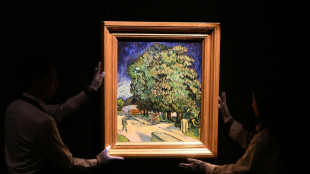 Van Gogh work unseen in public for 60 years on show in Hong Kong

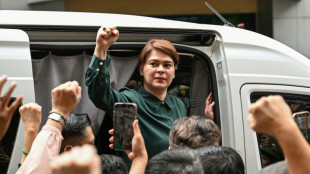 Prosecutors drop most impeachment charges against Philippine VP Duterte
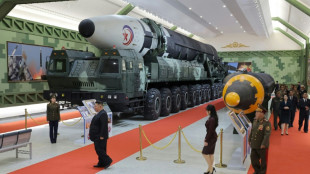 Hypersonic weapons highlight arms race on the Korean peninsula
 Fiji appoint ex-Springboks boss White as coach ahead of World Cup

 Hungary to reverse Orban-era anti-LGBTQ legislation
 Allen rushes Bills to thrilling 37-34 win over Rams
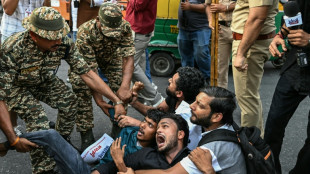 India youth shift tactics as police clamp down on election protest
 Malaysia's Firefly extends flight cancellations due to haze

 IMF upgrades 2026 growth forecast but warns of 'split' outlook
 Infantino could pull off 'Houdini' act as critics struggle for candidate

He was held for weeks in detention, beaten and electrocuted. He urinated blood. He lost 25 kilogrammes and thought of killing himself.
Anatoly Stotsky survived weeks of abuse at the hands of Russian and pro-Russian forces who had occupied the southern Ukrainian city of Kherson and threatened to kill his family.
"I contemplated killing myself," Stotsky told AFP in an interview.
"But thinking about my family gave me the moral strength to endure it all," said the Ukrainian, who turned 50 in detention.
After the Russian army retreated last week following eight months of occupation chilling accounts are emerging of abuse, mistreatment and torture in Kherson.
Stotsky, who spoke to AFP at his home in central Kherson, said he was arrested twice and held for weeks in detention where he was tied up, beaten and electrocuted by Russian and pro-Russian forces.
A member of Ukraine's territorial defense force, Stotsky witnessed Russian troops capture Kherson on March 2.
Following the occupation of the strategic Black Sea port, he received orders to stay home and await instructions. Several weeks later the Russians started arresting Kyiv sympathisers.
On April 25, the Russians came for Stotsky who was at home with his wife and three-year-old daughter.
"I gave them my weapon because they were threatening to kill my family," he said.
The Russians put a hood over his head and took him to what he thought was a police station close to his home.
In a cell he was tied to a chair and interrogated by three or four people.
"They beat me with a truncheon and put a pistol or a rifle to my head," he said. Stotsky received blows to the ears and the top of his head as the Russians apparently tried to avoid leaving any marks.
Hooded men -- who he thought were members of Russia's security service, the FSB -- questioned him on camera about the weapon found at his home.
The Russians took his fingerprints and a DNA sample. He was forbidden to leave the city and ordered to collaborate with Moscow forces.
He was released on May 4, tossed into the street with a hood over his head.
- 'Covered in bruises' -
"When I came home, I was completely blue, I was covered in bruises," he said.
He made sure his wife and daughter left town, passing through a checkpoint near Zaporizhzhia, some 300 kilometres (around 190 miles) northeast of Kherson. He himself stayed behind, saying he was too scared to leave.
Stotsky was arrested again on July 6, as members of the civil resistance became increasingly active in the city, he said.
He believes that the second time he was most likely captured by members of the ministry of state security of the People's Republic of Donetsk, annexed by President Vladimir Putin in late September.
The men told Stotsky they knew he had been in custody but said he had not been questioned properly.
"Now you are going to tell us everything, who you know and where your weapons are," he said he was told.
"For the first five or six days they would beat me," he recounted.
"At night they would not let me sleep. Every two hours they would come into my cell and force me to get up and say my name."
He had to sit handcuffed to a pipe and could not lie down.
Every time his jailers entered his cell, he had to put a bag over his head or risk being beaten.
One day, he was taken to another cell for questioning.
- Meal once every three days -
"They tied my hands and feet, and put me on the ground. They attached clips to my little fingers,"
Stotsky said.
"They electrocuted me as I was lying on the ground. Your muscles contract and everything inside you twists."
The Ukrainian said that access to the toilet was rarely allowed and he had to use empty bottles to relieve himself.
For the first two weeks, he had blood in his urine. "My kidneys did not function well," he said.
He would receive food every three days and believes he has lost around 25 kilograms (55 pounds) in detention.
The cells had "holes in the walls" so he could speak to other detainees "not to lose my mind," he added.
He was finally released on August 20.
This time Stotsky did not return home for fear of being arrested, and went to stay with relatives.
He said that the second time he was kept in a centrally-localed old office building that featured the flags of Japan, the United States and Ukraine at the entrance.
An AFP team tried to access the four-storey building located on 15, Pylyp Orlyk Street, but was turned away.
"An investigation is underway," a man at the entrance said, without providing further details.
E.Qaddoumi--SF-PST