Novel crisis: Iran's books shrink as US sanctions bite

 Global data declaration targets illegal fishing
 'I'm the boss', Trump tells G7 counterparts

 Van Aert out of Tour de France with elbow injury

 Louvre museum 'running out of steam', says new director
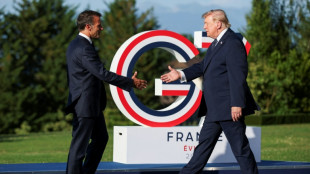 G7 leaders applaud Iran, Ukraine progress ahead of tackling AI

 US military footprint growing in Australia: defence minister

 Japan puts the heat on suspected ice cream cartel

 MEXC May Report: SPACEX Launchpad Oversubscribed 15.5x, US Equity Futures Volume Jumps 85%

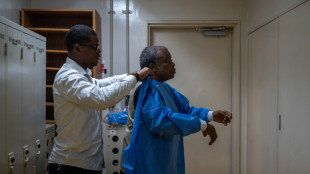 'We have always won': Ebola pioneer still on front line at 84
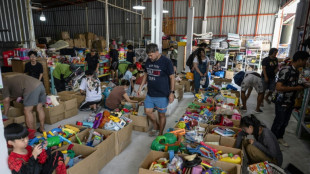 Stuffed toys and surfboards: Japan used goods market booms overseas

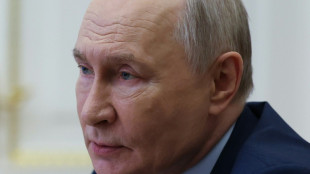 Putin hosts ASEAN leaders amid G7 pressure on Ukraine war
 'Unstable' Tasmanian devil found after 15 days on the run
 Messi equals World Cup goalscoring record in Argentina romp

 Trap, neuter, release: Jakarta battles cat-astrophic stray numbers
 EU lawmakers to approve migrant detention and deportation boost

 Macron winds up G7 with AI, Trump dinner
 US Fed set to hold rates steady at Warsh's first meeting in charge

 Kane tells England 'be free in the mind' for World Cup title bid

 Trump ballroom cost soars to $600 mn, half from taxpayers: report

 Haaland double powers Norway to World Cup win over Iraq
 Mbappe has World Cup history in sights after breaking France scoring record

 New Asian pop and folk categories announced by music's Grammy Awards

 Ghana's Partey loses bid to enter Canada for World Cup

 Teenager Bouaddi gives Morocco reason to dream at World Cup

 Mbappe double fires France to opening win over Senegal

For literature lovers in sanction-hit Iran, a new novel has long provided a brief respite from a grinding economic crisis triggered by international pressure imposed over Tehran's contested nuclear programme.
But now losing yourself in a good book is becoming harder, as cash-strapped publishers struggle because the price of paper is soaring.
"If a 200-page novel sold for 400,000 rials ($1.60) last year, its price today is 1,000,000 rials ($4.10), most of which is the cost of production", said Reza Hasheminejad, who runs the Ofoq publishing house.
Iran does not produce its own paper pulp for publishing so relies on imports, and while those are not under sanctions, they must be paid for in foreign currency. That means the price of a book depends directly on the fluctuation of Iran's rial.
So publishers are not only slashing the number of titles published, but also cutting the number of pages of those they do print by shrinking the font size.
"Publishing has suffered a major crisis -- which could become existential," said Emily Amrai, collection director at the Houpa publishing house.
While publishers worldwide face growing challenges to the way people read and consume literature, Iran is facing an extra problem.
The United States, under former president Donald Trump, unilaterally withdrew in 2018 from a landmark accord to prevent Iran from acquiring an atomic bomb -- a goal Tehran has always denied pursuing -- with Washington then reimposing tough economic sanctions.
"As soon as the US sanctions were reinstated in 2018, the price of paper rose," Amrai said.
- 'A miracle' -
Long-running negotiations to revive a deal with Iran continue in Austria, but until an international agreement turns the page, the impact of sanctions grows worse.
"The devaluation of our currency against the greenback, the global rise in the price of paper paid in dollars and the increase in the cost of transport -- also paid in foreign currency -- has plunged publishing into the doldrums," said Hossein Motevali, owner of Houpa, which specialises in children's books.
Because book prices are fixed in Iran, profits are pegged to the rapidly fluctuating price of paper.
"Between receiving the manuscript, laying it out, and setting the price of the book, I can lose everything if the price of paper has gone up suddenly," Hasheminejad said.
"That happens because I'm at the mercy of the fluctuation of the currencies."
As for the authors, they are paid by the number of the pages in the book, whether they are famous or not.
"Selling books is a miracle today, because the majority of customers belong to the middle class -- and given the economic conditions, their priority is to obtain essential goods such as food," said Hasheminejad. "I really wonder how people still buy books at these prices."
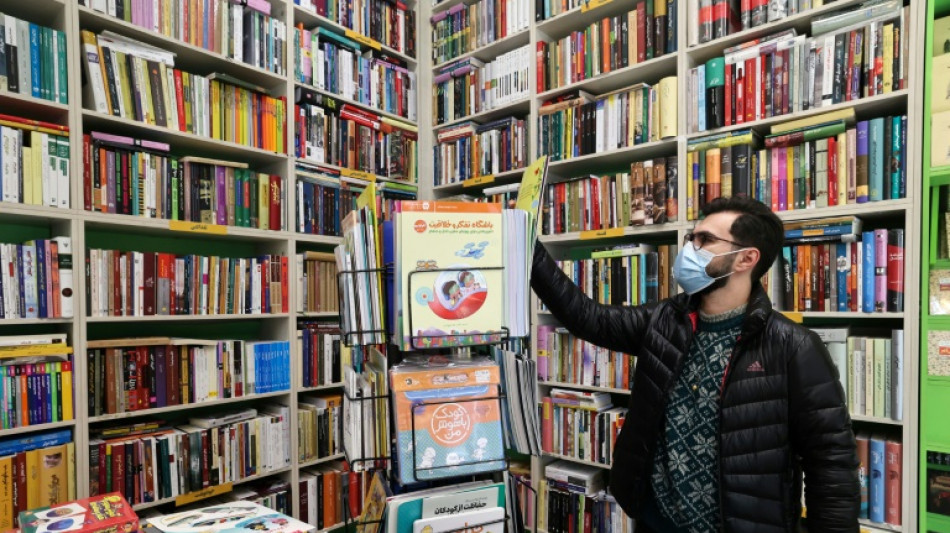
Bookstores in Iran look similar to shops anywhere in the world. As well as shelves of Iranian writers, popular sellers include translations of foreign works -- from 20th century European classics to self-help and psychology books.
Farsi translations of Mary Trump's tell-all on her uncle Donald Trump, as well as the memoir of former US first lady Michelle Obama, have been recent hits.
- 'Shock' -
But as the crisis deepens, several small publishing houses have been driven out of business.
"Today, many independent publishers, who have published excellent works, have been eliminated from the market", said Amrai.
Larger publishing houses have had to adapt to survive.
"We have reduced our profits by as much as possible in order to keep our customers, we have reduced printing and pagination, and publish digital books to avoid paper and reduce costs," said Hasheminejad.
"But that will only last a year or two, for even the most solid companies."
So far, books printed before recent spikes in paper costs provided a buffer, but those stocks are running low.
"In a few months, when the books stored in the depots are exhausted, it will be a shock for the customer when they see the new prices," Hasheminejad warned.
On Enghelab Street, Tehran's main book market, retired teacher Behjat Mazloumi, 60, already struggles to afford second-hand books.
"I haven't been able to buy a book for years," said Mazloumi. "Even street vendors sell books at a very high price."
The cost rise will have wider impacts too, experts say.
Children in poorer areas where access to literature is already limited will soon find themselves priced out completely, Hasheminejad said.
"Today, we see people in some disadvantaged areas who cannot even communicate properly in Farsi," he said. "They will certainly experience difficulties."
I.Matar--SF-PST