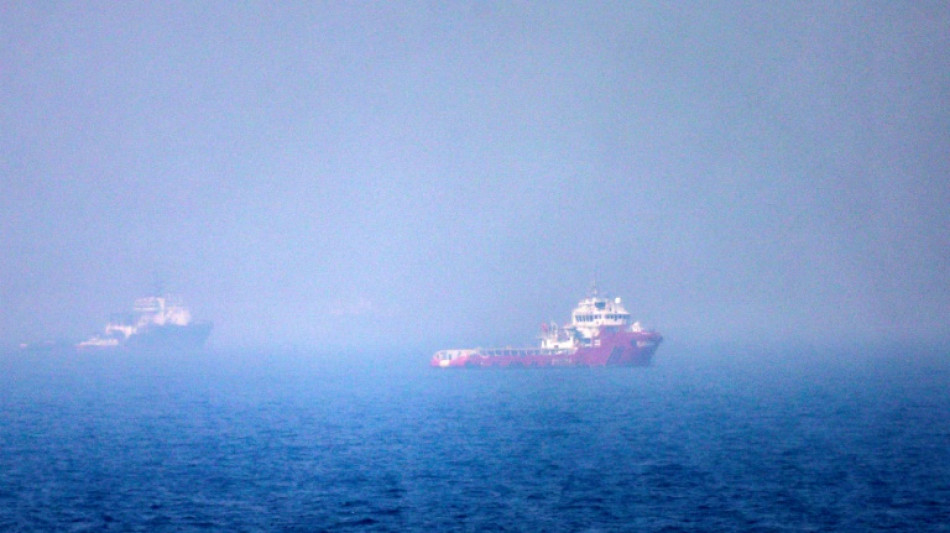
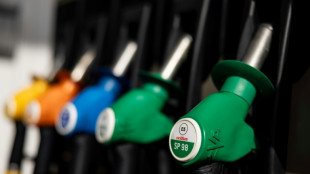
OPEC+ boosts September production by 188,000 barrels/day / Photo: - - AFP/File

 US House backs data center power cost bill amid midterm backlash
 US Congress passes sweeping Russia sanctions bill

 Barca hit Racing for seven as Atletico crush Osasuna

 US Fed raises rates to tackle 'too high' inflation, irking Trump

 Man Utd misery mounts after League Cup collapse against Brighton
 Turkey releases 106 protesters, jails more LGBTQ activists

 US Fed raises rates to tackle 'too high' inflation in move sure to rile Trump

 England were 'waiting for death' in World Cup semi-final defeat: Tuchel

 NFL star fined for displaying name of slain Palestinian girl
 Witsel retires from internationals after 18-year Belgium career

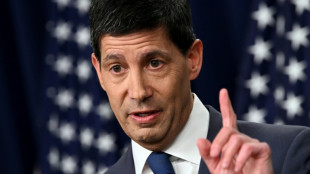 US Fed raises rates to battle inflation in move likely to rile Trump

 Fitzpatrick 'not comfortable' over Dubai golf finale

 Gaza apartment block collapse kills 21, including 12 children

 Gaza apartment block collapse leaves 21 dead

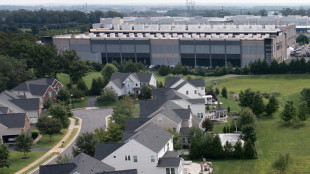 US House targets data centers as midterm backlash grows

 French ex-minister Dati goes on trial in Renault-Nissan corruption case

 'Being Heumann' captures joy in fight for disability rights

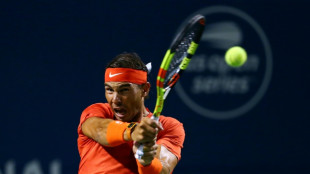 Retired great Nadal to play in exhibition matches
 IR-MED and Dice Technologies Announce collaboration to Evaluate and Advance Pressure-Injury Prevention Platform in Japan

 Watts, Pitt, Cruz to light up Spain's top film festival
 Sweden expels Iran embassy employee over anti-Jewish threats
 Toogood Gold's Table Mountain Sits in the Shadow of a Nevada Gold Rush

 MEXC July–August Security Report: 38.66M USDT in Risk Funds Intercepted, Futures Insurance Fund Hits 792M USDT

 'Breathing toxin every day': Indonesians choked by haze feel helpless
 Stocks edge higher ahead of US Fed rate call

Saudi Arabia, Russia and five other key members of OPEC+ agreed in an online meeting Sunday to boost oil production by 188,000 barrels a day from September, against a backdrop of disruption caused by the Mideast war.
"The seven participating countries decided to implement a production adjustment of 188 thousand barrels per day," they said in a joint statement.
The increase, decided by the key countries in the enlarged Organisation of the Petroleum Exporting Countries, was widely expected by analysts.
"OPEC+ has finished unwinding its voluntary cuts. The next challenge is managing the surplus that could emerge as export flows normalise," said Jorge Leon, analyst at Rystad Energy.
He warned, however, that "today's decision changes little in the near term because (the Strait of) Hormuz remains constrained. The real market impact will come when normal export flows resume."
The Gulf countries have struggled to increase exports due to the near-paralysis of the Strait of Hormuz orchestrated by Iran during the war in the Middle East -- despite a brief upswing in shipping traffic after a US-Iran memorandum of understanding was signed in June.
Many OPEC+ members cannot produce as much oil as their official targets allow due to a "decline in production capacity", so increasing targets has become less meaningful, said Giovanni Staunovo, an analyst at UBS.
- Future pause foreseen -
The September increase, agreed by OPEC+ countries Saudi Arabia, Russia, Iraq, Kuwait, Kazakhstan, Algeria, and Oman, completes the unwinding of the second of the three production-cut packages introduced by organisation.
"Having completed the restoration campaign, OPEC+ has little incentive to rush into further supply changes. Our base case is a fourth-quarter pause while the group prepares for the 2027 quota negotiations," said Rystad Energy's Leon.
"For now, geopolitics is masking the scale of the supply increase. That will become much clearer once export flows normalise," he said.
It remains unclear when the group will actually be able to increase its oil volumes. Some member countries, such as Iraq, have expressed a desire to significantly boost production.
Russia, though, is confronted with repeated Ukrainian drone attacks on its oil infrastructure that have crimped production, currently hovering around nine million barrels per day -- compared with a target of 9.8 million barrels per day.
OPEC+ "faces potentially difficult talks over new production quotas" starting next year following the September increase, according to analysts at DNB Carnegie.
Between late 2022 and 2023, OPEC+ became concerned that oil prices were falling, and agreed to cut oil production in three separate rounds, reducing total output by nearly six million barrels per day.
But Saudi Arabia, Russia, Iraq, Kuwait, Kazakhstan, Algeria, Oman and the United Arab Emirates -- before the latter's exit from the group on May 1 -- then changed their strategy by gradually upping production starting in 2025.
"I don't think cohesion is at risk at this very moment," said Leon, warning, however, that the UAE's withdrawal from the group in May has highlighted a weakness in this area.
H.Jarrar--SF-PST