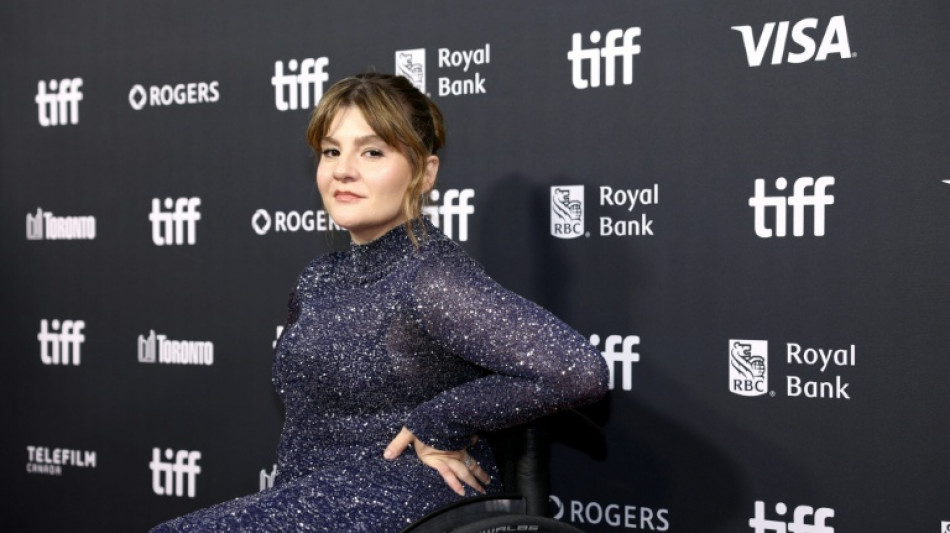
'Being Heumann' captures joy in fight for disability rights / Photo: Arturo Holmes - GETTY IMAGES NORTH AMERICA/AFP/File

 El Nino’s Weakening Grip on Tamil Nadu Rainfall Hinges on Potential Cyclone

 South Africa Places 36 Hospitals on Standby for Possible Imported Ebola Cases

 Two A1 Crashes Create Kilometres of Rush-Hour Congestion

 Luxembourg City Plans €13 Million Abrigado Centre for 2029

 Luxembourg Housing Petition Passes Threshold for Parliamentary Consideration

 Raheem Sterling Receives Suspended Sentence After Lamborghini Crash

 Tamil Nadu Secures Rs 58,214 Crore in Investments at Vettri Conclave

 فرنسا تدعو لتجريم "الفصل العنصري القائم على الجنس" دولياً

 أزمة الصواريخ الاعتراضية في البنتاغون: استنزاف المخزونات يفرض تعبئة صناعية حتى 2030

 Huawei Found Guilty of Trade Secret Theft in Landmark US Case

 Indian Markets Set for Gain as Foreign Inflows Offset Tariff Fears
Sian Heder's new film "Being Heumann" profiles an American activist fighting for the rights of people with disabilities, with the Oscar-winning director saying its message of inclusivity has renewed importance in today's society.
The film, starring Ruth Madeley and Mark Ruffalo, opened the Toronto International Film Festival (TIFF) last week.
"It's a time where people need to fight again and need to come together in collective action and take a stand," Heder told AFP in an interview.
"A lot of the rights that activists fought for and put their bodies on the line for in the 1970s are being rolled back completely," she said.
"Being Heumann" brings to screen a 1977 protest led by activist Judy Heumann, known as the "mother of the disability rights movement."
Heumann, together with a group of people with different disabilities, occupied a government building in California for weeks, demanding the implementation of regulations to expand accessibility.
"This is a movie about a time when protest really mattered, and invisible people were refusing to be invisible, and I think we're at that place right now," Heder said.
The film doesn't show only conflict. Heder also wanted to highlight the joy in protest.
"The protesters are fun. The building is joyful, so activism doesn't need to be only painful. It can be about community as well," she said.
The director conducted 35 interviews and immersed herself in archive material to write the script along with Rebekah Taussig.
- 'Intimacy' -
The AppleTV film offers the perspective of people with disabilities and shows the challenges of everyday tasks such as getting out of bed or going to the bathroom.
It also portrays the close relationships that people with disabilities can develop with caregivers.
"Judy slept with eight different pillows under her legs and part of that was she couldn't move herself until the morning," Heder said.
"So until her attendant came in the morning, she was going to be stuck in whatever position she was left in."
"The details and that intimacy was really important to me," said Heder, who won an Oscar for the screenplay of "CODA," which centers on a family with deaf parents.
"Being Heumann" shows its title character with all her complexities and vulnerabilities.
Madeley said she felt the pressure of embodying a woman who devoted decades to activism and served in the administrations of Bill Clinton and Barack Obama.
"It made me nervous in the best possible way," Madeley told AFP.
"Judy is such an iconic figure, and I wanted to do her justice, but I also wanted to do disabled creatives justice who have been waiting for to see themselves in a lead role in Hollywood," said the British actress who has spina bifida, a spine condition that requires her to use a wheelchair.
"This was a real milestone, not just in my personal career, but in the industry and seeing disability cast authentically," she said.
Madeley, who entered the industry as a writer before turning to acting, said the sector has changed considerably since she started.
She recalled feeling panicked about asking for help for fear of being seen as a burden.
"If there's no accessible bathroom on set, don't worry about it. No, no problem. There's no ramp. Don't worry, it's fine. I don't need ramp," she said.
While filming "Being Heumann," Madeley said she noticed the same fear in some actors.
"It was so healing and rewarding for me to be able to say 'You can ask for that, that's fine,'" she said.
TIFF ends on September 20.
V.Said--SF-PST

