
-
 Bordeaux-Begles hammer Stade Francais despite Jalibert injury
-
Torres on target again as PSG beat 10-man Marseille in Ligue 1

-
 Milan and Juventus end blips with home wins
-
Germany's Merz vows to stay course despite new election defeats
-
 Bridgeman wins PGA Biltmore title with sizzling 61
-
Carrick demands Man Utd response after 'pathetic' jibes

-
 Williams injured as Bears shut down by Vikings
-
Liverpool boss Iraola urges Isak to raise his level

-
 US warns of rapid escalation in Middle East war
-
Evenepoel wins record 4th straight world time-trial title

-
 Germany's far-right AfD celebrates another state election win
-
France's Macron, Canada's Carney announce closer ties
-
 Russia vows revenge for election-day attacks as poll shows ruling party win
-
Carrick defends troubled Man Utd after Fulham escape

-
 Spaun late shows snatches PGA Championship win
-
Horror movie 'Resident Evil' tops N. American box office

-
 Conceicao strikes as Juventus beat Atalanta
-
Germany's Merz vows to stay course despite new vote losses
-
 Britain, Zverev-inspired Germany, Spain complete Davis Cup finals
-
Man City outgun Sunderland despite Brobbey hat-trick, Man Utd rescue Fulham draw
-
 Man Utd salvage Fulham draw as pressure mounts on Carrick
-
Mourinho blames ref committee for Real Madrid derby defeat
-
 Spanish civil war drama 'The Black Ball' wins at Toronto festival
-
Maresca craves a 1-0 win after eight-goal Man City thriller
-
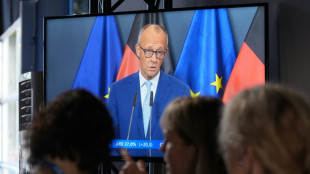 Germany's Merz shaken by far-right and far-left gains in state votes
-
Atletico Madrid beat Real Madrid in tense derby clash

-
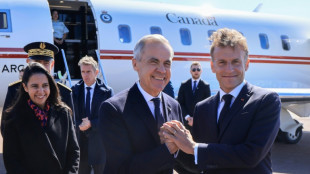 Macron welcomes Canada's Carney to French Atlantic territory
-
Reusser retains world time-trial title
-
 Fiorentina frustrate Napoli with Serie A draw, Como upset
-
Man City outgun Sunderland despite Brobbey hat-trick, Liverpool win at Bournemouth

-
 Five-star Man City top Premier League after Sunderland thriller
-
Top US, Chinese economic officials meet ahead of Trump-Xi summit
-
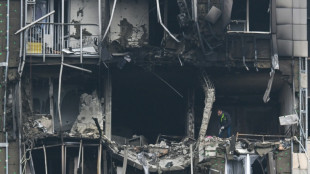 Ukrainian drones hit Moscow on last day of Russian elections
-
Erdogan's LGBTQ crackdown 'first step of election campaign': activist

-
 Multi-Asset Trading Venue Monochrome Exchange Announces IEO of Its Native Token, $MCR
-
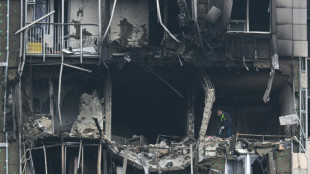
Mass drone barrage on Moscow kills two
-
 South Korea break Japan hearts to win Asian Games basketball gold
-
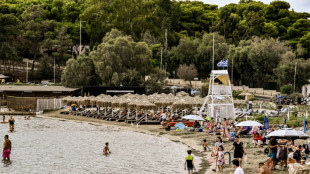
82-year-old dies after beach fight in Greece over sun lounger
-
 Acosta takes first victory at Austrian MotoGP
-
US warns of rapid escalation in Mideast war
-
 PSG president Nasser al-Khelaifi under investigation in France for conflict of interest
-
Iran 'put hearts on the court' to win Asian Games basketball bronze
-
 China swim sensation, 13, sets Games record after Japan win early
-
School girl Yu helps China dominate in Asian Games swimming openers
-
 رئيس الدولة يجذب وفد شركة «إثارة».. أفضل منظم لسباقات الفورمولا 1 لعام 2025
-
Drones hit Moscow as Russians go to the polls
-
 Myanmar win first Asian Games teqball gold as Spain great Puyol watches
-
New England boss Fleming says 'wrong' to ask Stokes to end retirement
-
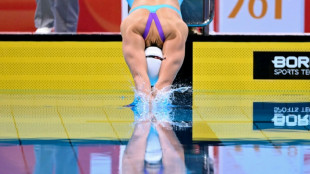 China's 13-year-old Yu scorches to first major gold at Asian Games
-
تقرير حول منصّة شرطة دبي بـ«سوق السفر» تستقبل أكثر من 5 آلاف زائر

US, Iran trade attacks in return to full-blown war
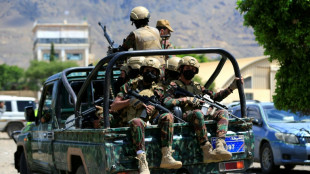
The United States and Iran traded attacks on Friday, with Tehran targeting American assets across the Middle East in the biggest escalation since the two foes returned to outright war.
A month after the two sides agreed a memorandum of understanding aimed at ending the conflict that began in February, Iran accused US forces of hitting civilian and energy infrastructure on Friday including an airport, a railway station and two bridges, with state media reporting at least eight dead and 20 wounded in overnight attacks.
It signalled an apparent expansion of American strikes with a focus on Iranian infrastructure, which US President Donald Trump has previously threatened to hit, but there was no immediate comment from US officials.
The Iranian energy ministry on Friday told citizens to reduce their electricity use and switch off air conditioners in peak hours -- even as temperatures in some areas soared -- after the power grid came under strain from what it said were US strikes on energy facilities in the south.
Iran's military had threatened "all infrastructure across the region" in the event of any attacks on its own, and on Friday launched widespread strikes in what appeared to be the largest exchange of fire since the deal was signed last month.
In Kuwait, where Tehran said it had targeted US military sites on Friday, the electricity ministry said a power and water plant was damaged by an Iranian attack, urging users to "ration their electricity consumption" as a result.
Iran's powerful Revolutionary Guards also said they had targeted US radar systems and military aircraft in Qatar to "punish the aggressor", with Doha saying it had intercepted a missile attack.
Abu Baker, a Sudanese resident of Qatar, said he had been about to go to sleep when he heard the air alerts, hoping the interception would be out at sea.
"Then it hit and it shook my house," he added. "I am worried that this war will drag on... but thank God we're in a country that protects us."
Iran's Guards also said they had attacked two US radar sites in Oman as well as the Al-Tanf military base in Syria, which a Syrian military source denied to AFP. US forces said they withdrew from the base earlier this year.
Jordan's military said it shot down three Iranian missiles, while Kurdish forces in Iraq said the US-led coalition there shot down several drones over Erbil.
Strikes in Iraq's Kurdistan region also killed eight members of an Iranian Kurdish armed opposition group, the exiled party said, blaming the attack on Iran.
The region's presidency condemned the attacks as "a serious escalation and a blatant violation of Iraq's sovereignty".
In Bahrain, Tehran targeted US helicopters and planes at an airbase, Iranian state media reported, with the tiny island nation urging citizens to take shelter.
- 'Never back down' -
A battle over the strategic Strait of Hormuz has rekindled the war, with Tehran and Washington trading fire for six days running.
Iran's health ministry said Friday that at least 38 people had been killed and more than 400 injured in the country since fighting resumed.
Tehran claims control over Hormuz, a key shipping route for the global oil and gas trade that was open for free passage before the war.
Mediators have attempted to bring both sides back to the negotiating table.
China and Pakistan's foreign ministers called Friday for the US and Iran to stop fighting and resume talks, according to a statement following a meeting in Shanghai.
As part of the wider escalation, the United States has also reimposed its blockade of Iran's ports.
A senior Iranian military spokesman called for the US to withdraw from the region, saying "we will never back down over the Strait of Hormuz", state TV reported.
Attacks on ships in the waterway have continued, with the UK Maritime Trade Operations agency on Friday saying a tanker was struck by a projectile off the coast of Oman overnight.
Hamidreza Azizi, a visiting fellow at the German Institute for International and Security Affairs, said that in the latest round of fighting, Washington's "apparent objective is more specific: to weaken and ultimately remove Iran's control over the Strait of Hormuz".
"The United States is therefore pursuing a hybrid approach that combines limited but intensive military action with efforts to generate sustained economic pressure" in hopes of forcing Iran to accept a new deal, he added.
Iran's top negotiator Mohammad Bagher Ghalibaf has warned that any deal to end the war "only has meaning when its clauses are valid and being implemented".
White House Press Secretary Karoline Leavitt told reporters on Thursday that Trump would hold Iran "accountable" for going back on its word, but said "he is always open to diplomacy at the very same time".
burs-jfx/smw
Y.Shaath--SF-PST