Germany blames Russia for Signal phishing attacks on MPs / Photo: Chris Delmas - AFP/File

 Brazil's right embraces election betting odds amid polls skepticism

 Four more Ebola cases detected in Kenya, bringing total to seven

 Clashes erupt in France as protesters vow to make government 'tremble'

 Chwalinska downs Swiatek to set up Wuhan final with world number 170 Kartal

 Chacarra takes lead as McIlroy falls away in Delhi

 Neto double gives Chelsea win marred by Martinez injury

 'Cockroach' party founder released from Indian police custody
 Nepal floods 'defining moment' for climate action: UN
 Albanian capital sees fifth straight day of violent clashes

 Leaders weigh 'huge benefit', risks of AI for global economy

 Zverev stunned by Davidovich Fokina in Shanghai semi-finals

 France faces day of cost-of-living protests

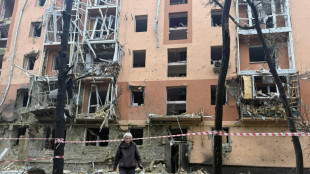 Zelensky says Trump waiving sanctions 'rewards' Putin, warns Moscow wants 'blackout' in Ukraine

 Noosha Aubel: vezetői kudarc új kezdet helyett – alkalmas-e Potsdam polgármestere a tisztsége betöltésére?
 Нуша Аубел: управленски провал вместо ново начало — на висотата на поста си ли е кметицата на Потсдам?

 Russia hails Trump waiving sanctions as 'historic'

 Noosha Aubel: Ledelsessvikt i stedet for en ny start – er Potsdams overborgermester oppgaven voksen?

 Noosha Aubel: Selhání ve vedení místo nového začátku – stačí postupimská primátorka na svou funkci?

 Haze triggers highest-level alert in parts of Southeast Asia: monitor

 IMF chief flags 'optimism', 'worry' after Bangkok annual meetings

 IMF chief says has 'optimism' and 'worry' after Bangkok annual meetings

 Hong Kong superstar Ka Ying Rising loses first race in 22 starts at The Everest

 Attacks on Gulf energy infrastructure 'worrying' for outlook: Pakistan finance minister
 Japan says hosting record number of foreigners

 'Two bad options': Rights groups decry IMF austerity demand
Top officials in the German government on Saturday blamed Russia for repeated phishing attacks targeting lawmakers and senior administration officials using the Signal messaging app.
"The federal government is assuming that the phishing campaign targeting the Signal messaging service was presumably run from Russia," a government source told AFP.
The source said that the phishing campaign had been stopped.
German prosecutors on Friday launched a spying investigation into the cyberattacks, which had allegedly been directed at MPs from several parties including the speaker of parliament and a senior member of Chancellor Friedrich Merz's CDU party.
Civil servants, diplomats and journalists were also targeted.
Germany, Kyiv's biggest provider of military aid, has been battling a surge of cyberattacks, as well as espionage and sabotage plots since Russia's full-scale invasion of Ukraine in 2022.
Moscow denies being behind any such actions.
- Signal hackers -
The attacks work by sending messages purporting to come from Signal support.
Victims are urged to hand over sensitive account information, which the attackers can then use to gain access to their chat groups and messages.
When the scam is successful, the hackers gain access to photos and files shared on Signal and can also impersonate the person whose account was compromised.
German and foreign security services have been warning for months about the attacks, but the potential fallout in Germany is only just becoming clear.
Many have moved from WhatsApp to the non-profit Signal in recent years because of privacy concerns after WhatsApp said it would share some metadata with parent company Meta, which also owns Facebook and Instagram.
- Hundreds affected? -
The German government has so far not commented on how many of its lawmakers have been affected.
According to Der Spiegel news outlet, at least 300 accounts belonging to political figures were compromised in the phishing campaign.
Konstantin von Notz, an MP who is deputy chief of the intelligence oversight committee, told AFP Friday that the scale of the suspected attacks was "extremely worrying".
"The number of unreported cases will continue to rise in the coming days," he said.
"At present, no one can say with any certainty whether the integrity of MPs' communications is still guaranteed."
Russia has been accused of numerous cyberattacks in Western countries. German officials have repeatedly been targeted, including in 2015 when computers belonging to the Bundestag and the office of then‑chancellor Angela Merkel were breached.
Q.Najjar--SF-PST