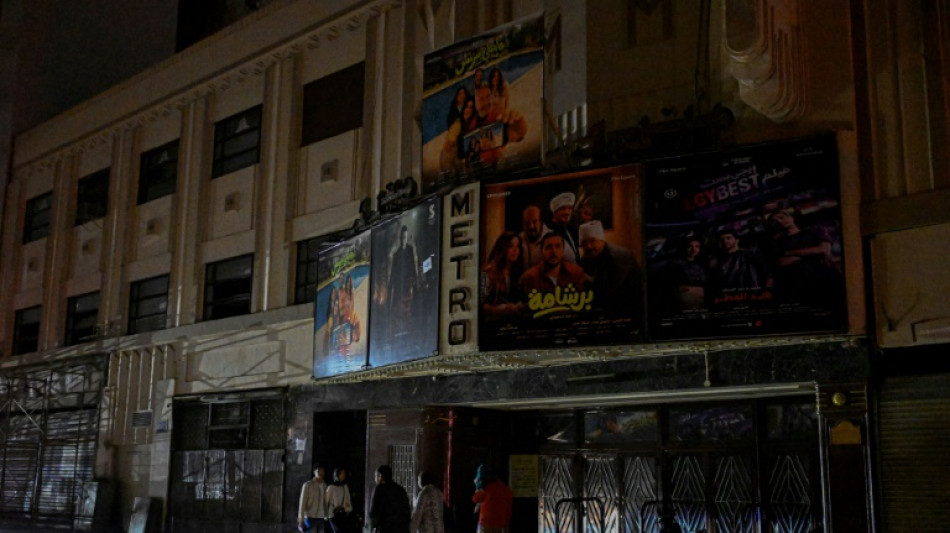
'Not the Cairo we know': Energy shock from Iran war dims Egypt nights / Photo: Khaled DESOUKI - AFP

 Rays defeat Guardians to level MLB playoff series

 Western brands under pressure as 'pre-owned' luxury booms in China

 'Never seen anything like it': mass looting grips Paris

 All Blacks back on track after South Africa wake-up

 Met Opera goes for big and bold, despite shaky finances

 Hollywood's fresh take on tech titans: from heroes to villains

 St. Louis City's unbeaten MLS run ends at 19, Union's reaches 15

 NFL Eagles bench Hurts at least a month with blood clot

 Across US, 'No Kings' events seek to boost early voting
 Tents spring up in Lisbon as Portugal housing protests spread
 'Best in world' Yamal powers Barca to Betis rout, Atletico strike late
 El Salvador's Bukele puts conditions on early release of gang prisoners
 Fire rages at town hall in France's Limoges after protests: authorities

 Unstoppable Barca thrash Betis to extend perfect start

 Maresca faces anxious wait over Haaland injury scare

 PSG fight back to beat Strasbourg after Dembele penalty miss

 Looting, blazes and clashes in France amid nationwide protests
 Walsh breaks her own 50 free world short course record

 Haaland brace extends Man City's winning start in Premier League

 'Special' Ombudsman storms to victory in Champion Stakes

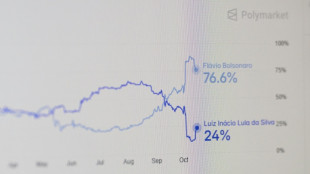 Brazil's right embraces election betting odds amid polls skepticism
 Four more Ebola cases detected in Kenya, bringing total to seven

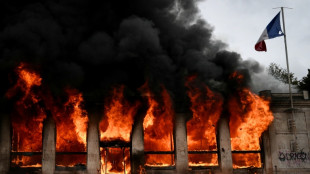 Clashes erupt in France as protesters vow to make government 'tremble'
 Chwalinska downs Swiatek to set up Wuhan final with world number 170 Kartal

 Chacarra takes lead as McIlroy falls away in Delhi
At a roadside cafe in downtown Cairo, Abu Ali was mid domino throw when the lights snapped off under new early-closing orders enacted to curb Egypt's soaring energy bill due to the US-Israel war on Iran.
"I used to stay here until 2:00 am," the 63-year-old told AFP, tapping his tiles as the street went dark.
"Now I'm home by 11 at most, just watching the news. This is not the Cairo we know."
The month-long order instituted last week shutters shops at 9:00 pm on weekdays and 10:00 pm on weekends, with a brief extension to 11:00 pm expected for the Coptic Easter holidays.
It's a jarring shift for nocturnal Cairenes.
Thursday nights usually buzz with families strolling between storefronts, teenagers lingering over ice cream and music spilling out of cafes, well into the early hours of the morning.
Now each evening collapses into a final frantic hour of last-minute shopping before fluorescent lights flicker out and shutters rattle down.
Police patrols ensure compliance and soon only delivery scooters remain, zig-zagging through the dark.
"This is usually when work starts," shopworker Ali Haggag said, standing outside his suddenly quiet clothing store.
The city once famed for never sleeping now "feels like COVID again", he added, recalling the 2020 lockdowns that emptied its streets.
- Cutting incomes -
Well-to-do Cairenes have flocked to Nileside restaurants and international hotels, exempt from the order as tourism establishments.
But small businesses are already feeling the squeeze. Haggag estimates his shop has lost more than half its revenue in a matter of days.
Officials say the decision was unavoidable, given the country's heavy reliance on imported fuel.
Global energy prices have surged since the US and Israeli war on Iran began in late February.
Prime Minister Moustafa Madbouly has said Egypt's monthly energy import bill more than doubled between January and March to $2.5 billion.
Around 60 percent of the country's $20 billion annual oil budget goes toward powering the grid.
In recent weeks, the government has introduced what it calls "exceptional" measures, including hiking fuel prices, slowing state projects, enacting remote work on Sundays and dimming streetlights.
Critics say early closures are disproportionately affecting the informal economy, which accounts for some two-thirds of all jobs.
"Millions of small businesses depend on evening foot traffic," economist Wael el-Nahas told AFP. "Cutting those hours means cutting incomes."
Already the pound has shed some 15 percent of its value since the war began, soaring to a record high of 54.3 to the dollar, while inflation hit 13.6 percent in March.
At another downtown cafe, an owner said staff now rotate shifts. "Half the workers work one day and stay home the next," he said.
Still, some shopkeepers remain optimistic. Essam Farid, 67, shrugged: "People will adapt."
Some coffe shops have already implemented an old COVID-era tactic: turn down the lights, pull the shutters halfway, then keep admitting customers while a kid on the corner keeps watch for the police.
- 'Vibe disappears' -
But the shake-up has already rocked two major industries: cinema and tourism.
Film producer Gaby Khoury said cinemas are losing more than 60 percent of their revenues.
"Most box-office income comes from 9:00 pm and midnight screenings," he told AFP. "This is catastrophic."
Several film releases have been postponed, while some productions have been delayed indefinitely, he added.
Tourism, a crucial source of foreign currency, also fears a heavy setback.
While resort hubs like Luxor and Aswan are exempted, historic attractions in Cairo such as the centuries-old Khan el‑Khalili bazaar are not.
By 9:00 pm, shop owners stack their goods, turn off display lights and pull down metal shutters, even as tourists continue to wander the alleyways.
"It's almost 8:00 pm now and tourists are still arriving," Ahmed Ali, a shopkeeper, told AFP. "How can you expect me to close at nine? Will tourists be able to leave in just one hour? It's unreasonable."
"Tourists, especially Arabs, feed off the city's energy," a tourism official told AFP, speaking on condition of anonymity.
"When Egyptians go home early, the vibe disappears and tourists will start looking elsewhere."
H.Jarrar--SF-PST