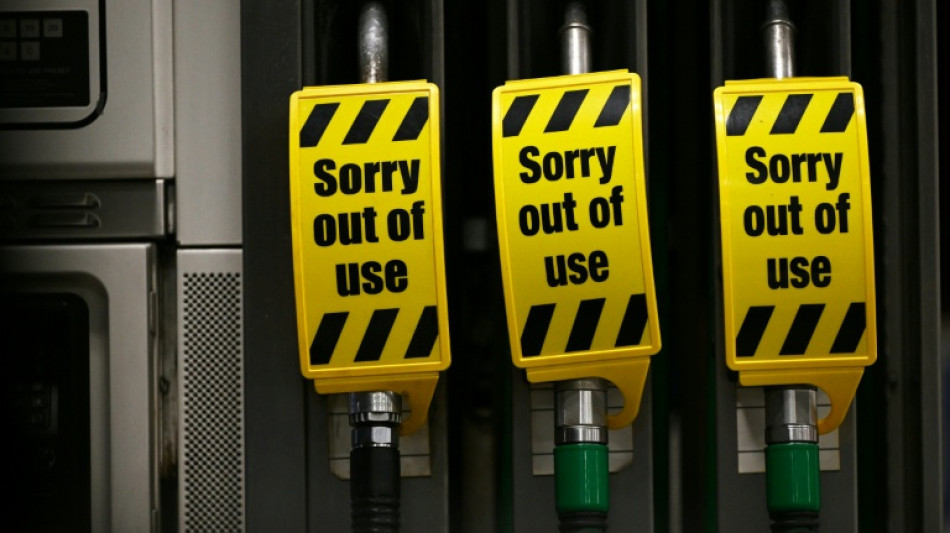
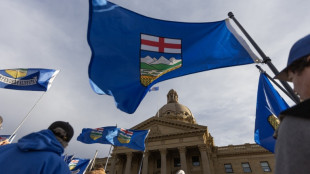
IEA to launch largest-ever release of oil reserves / Photo: Paul ELLIS - AFP

 Mbappe hits two as Real Madrid rout Sevilla
 Browns edge Ravens for division lead, Texans beat Jags

 Lyon go top of Ligue 1 as Monaco fall to first defeat of the season
 Venezuela opposition alliance reaffirms Nobel laureate Machado as leader
 'Street Fighter' wins N. America box office, buzzy doc stuns in 2nd

 NFL: Paris game to go ahead despite protests in France
 Arteta hails Arsenal 'finishers' after Madueke fells Forest
 Trump backs ally Netanyahu ahead of Israel's tight election
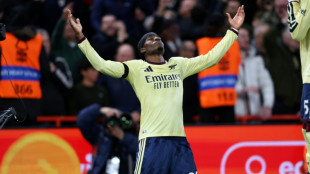 Madueke strikes late as below-par Arsenal sink Forest
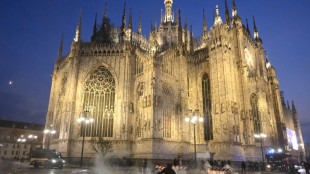 Second day of street clashes in Milan
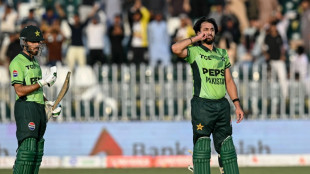
 Dupont's Toulouse hold off Exeter as English Champions Cup woes continue

 Zelensky speaks to US envoys amid Trump spat

 Paris police in new battles with protesters and looters
 Multiple deaths, injuries at western Canada military base: minister

 Boland strikes twice for Australia in rain-hit South Africa Test

 Marseille put Angers to the sword in Ligue 1
 Albanian PM refuses to quit as violent protests enter sixth day
 Chwalinska fights back to win Wuhan Open in title breakthrough
 Kulusevski on brink of return for Spurs after 17-month absence

 Ukraine sets Saint Petersburg refinery ablaze in large-scale drone attack
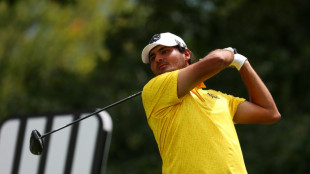 Spain's in-form Chacarra wins DP World India Championship

 Robertson and Selby chase rare Home Nations sweep in Belfast

 Arteta backs Kai Havertz to become a 30-goal Arsenal forward

 Emiliano Martinez expects Chelsea return within weeks after surgery

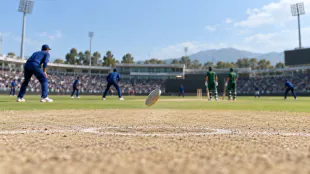 Sri Lanka choose to field against Pakistan in tri-series opener

The International Energy Agency said on Wednesday its member countries would unlock 400 million barrels of oil from their reserves to ease the impact of the Middle East war, the biggest such release ever.
The coordinated release was the sixth in the history of the organisation, which was created to coordinate responses to major supply disruptions after the 1973 oil crisis.
"IEA countries have unanimously decided to launch the largest-ever release of emergency oil stocks in our agency's history. IEA countries will be making 400 million barrels of oil available," IEA Executive Director Fatih Birol told reporters.
"This is a major action aiming to alleviate the immediate impacts of the disruption in markets," he added.
"But to be clear, the most important thing for a return to stable flows of oil and gas is the resumption of transit through the Strait of Hormuz."
The IEA-coordinated release exceeded the 182 million barrels of oil that member countries of the Paris-based global energy body released in 2022 when Russian leader Vladimir Putin invaded Ukraine.
The 32-member IEA said that the emergency stocks will be made available "over a timeframe that is appropriate to the national circumstances of each member country and will be supplemented by additional emergency measures by some countries".
The crude market has been hit by wild volatility since the United States and Israel began striking Iran at the end of last month, with Tehran retaliating by attacking targets across the oil-rich Gulf and effectively shutting down the Strait of Hormuz.
The strait normally carries about 20 percent of the world's oil and gas supplies.
- G7 coordination with Gulf countries -
The IEA announcement came as leaders of the Group of Seven advanced economies discussed the economic fallout from the US-Israeli war with Iran, now into its second week, at a video conference meeting chaired by French President Emmanuel Macron.
Macron, whose country holds the rotating presidency of the G7 advanced economies, urged US President Donald Trump and other G7 leaders to coordinate to open the strait "as soon as possible."
At the same time, he said that the strait being choked "in no way" justify lifting the sanctions imposed on Russia over the invasion of Ukraine.
"The consensus was that we should not change our position on Russia and should maintain our efforts on Ukraine," said Macron.
Macron said the G7 would coordinate moves with Gulf countries "in coming days".
Macron has said France and its allies are preparing a "defensive" mission to reopen the strategically vital strait.
Earlier Wednesday, Japan -- whose strategic oil reserves are among the world's largest -- and Germany said they would tap into their oil reserves.
Prime Minister Sanae Takaichi said Japan would release reserves as early as Monday, while Germany's Economy and Energy Minister Katherina Reiche said her country planned to do the same, without specifying a date.
Reiche said a total of 2.4 million tons would be released.
US Interior Secretary Doug Burgum said the transit problem was "temporary."
"What we have here is not a shortage of energy in the world. We've got a transit problem," he said.
- 'Pumping less oil' -
Ipek Ozkardeskaya, a senior analyst at Swissquote Bank, said 400 million barrels would still be a "meagre" amount compared with the roughly 45 million barrels that IEA countries consume every day.
"It would therefore be a temporary fix," she said.
"The Middle East is now pumping less oil -- around six percent less -- in reaction to the Iran war."
Countries around the world have been left scrambling in response to the oil price spikes.
Greece will cap profit margins on gasoline and a range of foodstuffs for three months, the prime minister said.
IEA country members hold over 1.2 billion barrels of public emergency oil stocks, with a further 600 million barrels of industry stocks held under government mandates.
S.AbuJamous--SF-PST